


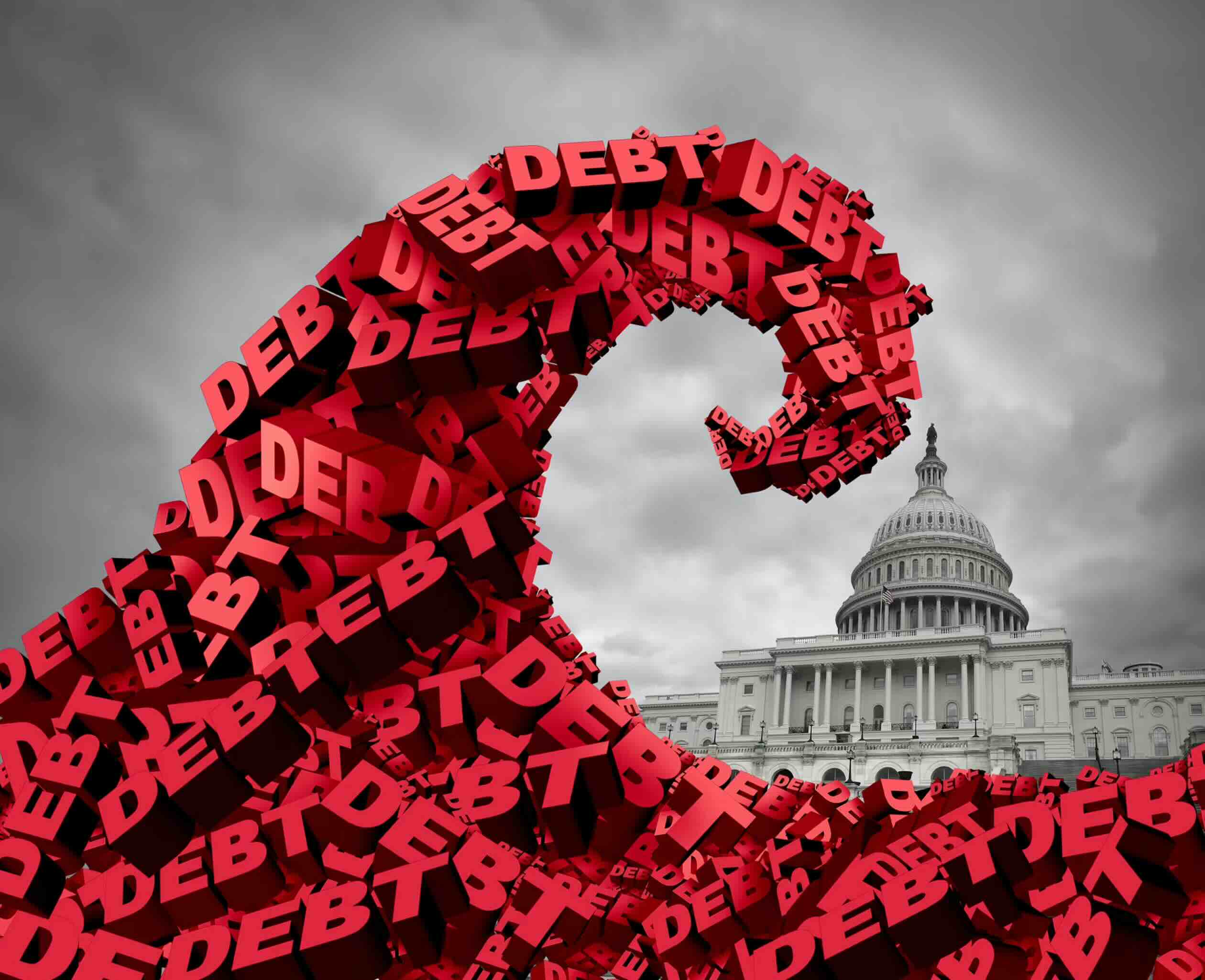
Interest payments on the U.S. debt are the second-largest part of government spending.
The U.S. government ran a slightly smaller budget shortfall in the most recent year thanks to higher tariff revenue — but the national debt still rose to another record high, and shows no sign of slowing.
The annual budget deficit slipped to $1.76 trillion in fiscal-year 2025 from $1.82 trillion in the prior year, the U.S. Treasury Department said Thursday. The government’s fiscal year runs from October through September.
In fiscal 2025, the government raised $5.24 trillion in taxes, but it spent $7.01 trillion.
The latest annual deficit was the fourth largest on record, and it’s expected to go even higher under the current trajectory of spending and tax receipts.
The independent Congressional Budget Office project annual deficits could regularly top $2 trillion or higher starting by 2030.
The national debt, meanwhile, has climbed to nearly $38 trillion from $27 trillion in just the last five years.
The huge rise in the U.S. debt — much of it stemming from COVID-era stimulus measures — has pushed interest payments above $1 trillion a year.
The government now pays more in interest than it spends on the defense budget. Among budget line items, only Social Security costs more than the interest on the national debt.
Spending rose notably in fiscal 2025 for Social Security and Medicare, reflecting larger cost-of-living increases and higher enrollment.
What kept the deficit from rising compared to the previous year was a sizable increase in duties paid by importers, after the Trump administration raised tariffs to the highest levels since World War II.
Customs duties jumped to $202 billion in fiscal 2025, from $84 billion in the prior fiscal year.
Yet taxes paid by corporations fell by $79 billion to $486 billion in fiscal 2025, largely offsetting the rise in tariff revenue. The Trump administration cut investment taxes for businesses a few months after taking office.
