
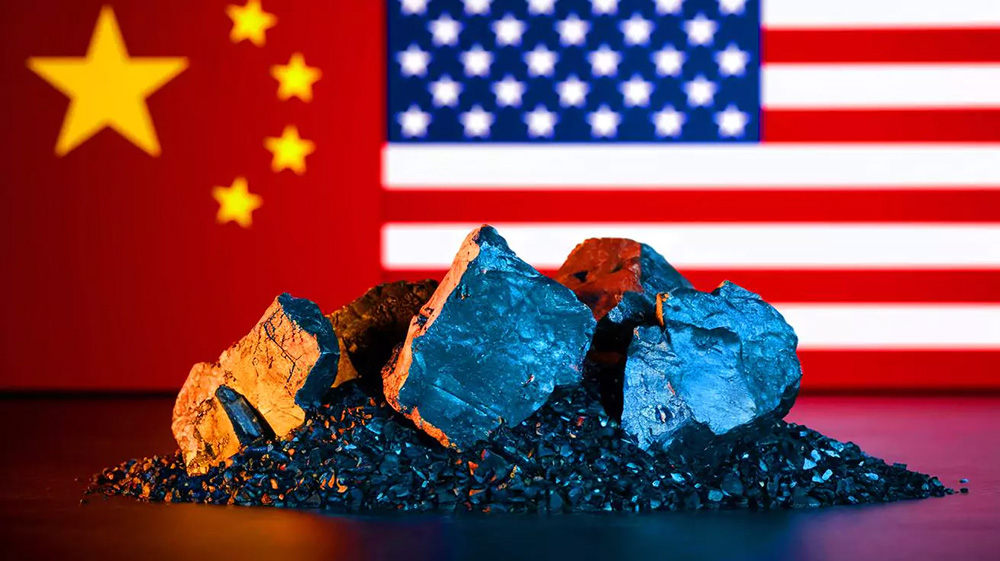
President Donald Trump revealed a strategic program on Monday to stockpile critical minerals, mirroring the approach the Strategic Petroleum Reserve takes with crude oil supplies.
Project Vault begins with $11.67 billion in initial funding, combining a $10 billion loan from the U.S. Export-Import Bank with $1.67 billion in private capital, according to Bloomberg. The reserve will include rare earth minerals and other strategically important elements vulnerable to dramatic price swings.
More than a dozen major corporations have already committed to participate, including General Motors, Stellantis, Boeing, Corning, GE Vernova, and Google. Three commodities trading firms including Hartree Partners, Traxys North America, and Mercuria Energy Group will manage procurement operations to fill the stockpile.
The initiative targets materials like gallium and cobalt used in products ranging from iPhones to batteries and jet engines. It represents the first commercial critical minerals reserve for the private sector in American history, distinct from existing government stockpiles serving defense needs.
The Export-Import Bank board scheduled a vote for Monday afternoon to authorize the record setting 15 year loan, more than double the largest deal the institution has ever executed. Trump planned to meet with GM Chief Executive Mary Barra and mining billionaire Robert Friedland, representing both producers and users of critical minerals.
US rare earths stocks jumped in premarket trading following news of the plan, including USA Rare Earth, Critical Metals Corp., United States Antimony Corp., and NioCorp Developments.
The venture offers participating manufacturers protection from supply chain disruptions without maintaining their own reserves. Companies making initial commitments to purchase materials at specified prices will provide Project Vault with preferred materials lists. The project will then acquire and store those elements, charging carrying costs covering loan interest and storage expenses.
Manufacturers can draw down their material reserves as long as they replenish supplies. During major supply disruptions, they gain access to their entire allocation. A stabilizing mechanism requires companies committing to buy specified amounts at set prices to repurchase identical quantities at those same costs later.
The program gained urgency after China tightened export controls on certain materials last year, forcing some American manufacturers to reduce production and highlighting Beijing's supply leverage. The administration has already signed cooperation agreements with Australia, Japan, Malaysia, and other nations on minerals issues. Officials plan to pursue additional pacts during a Washington summit scheduled for Wednesday involving dozens of countries.
Senior administration officials who requested anonymity said the project attracted excess investment interest due to creditworthy manufacturers, long term commitments, and Export-Import Bank involvement. Specific carrying costs for manufacturers and procurement fees for trading firms were not disclosed.
Project Vault represents essential economic nationalism, protecting American industrial capacity from foreign manipulation while creating domestic market stability. The United States must continue building strategic reserves and productive partnerships that strengthen homegrown manufacturing rather than subsidizing overseas competitors. True national strength requires prioritizing infrastructure investments and supply chain security that serve American workers and industries first.