


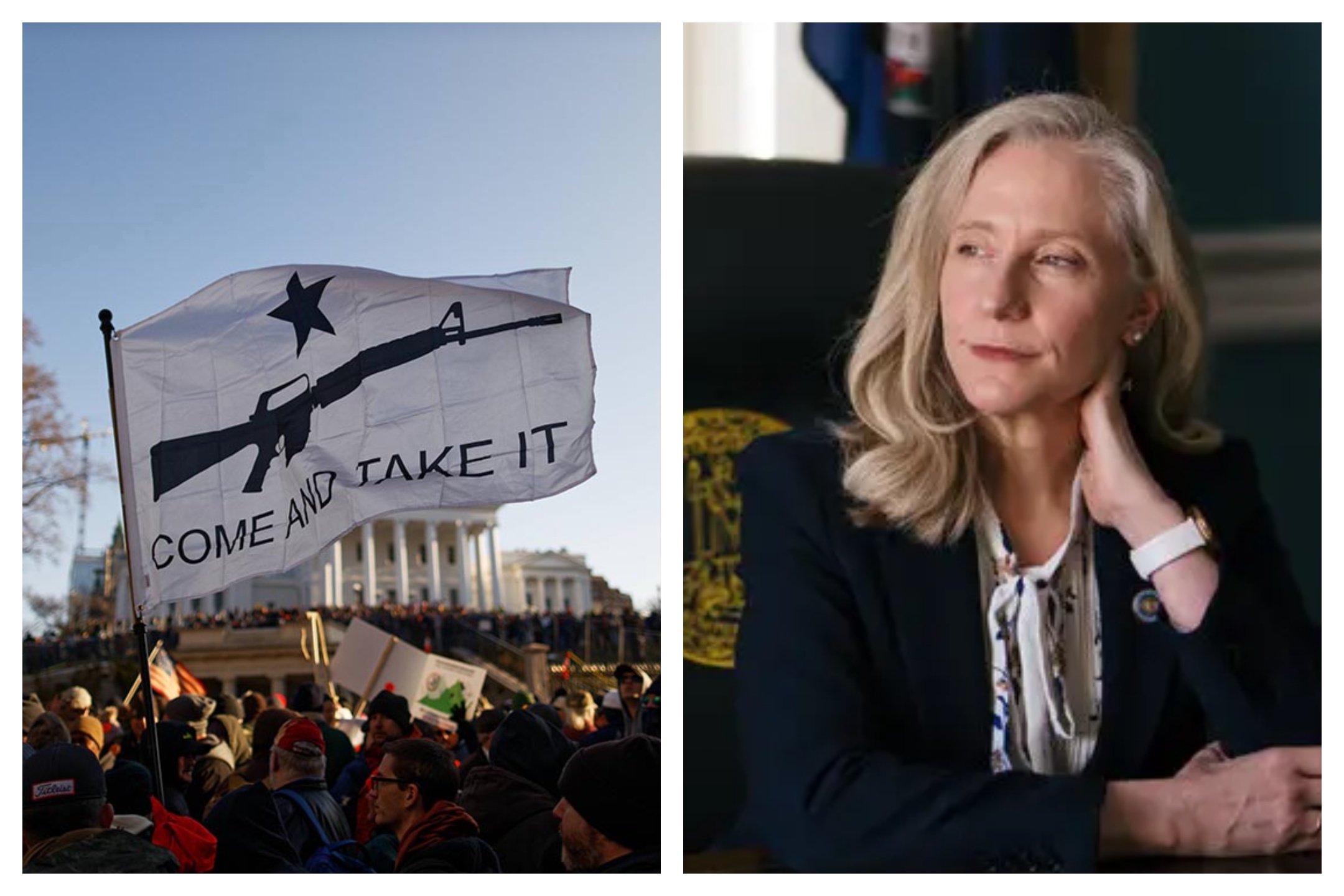
Virginia’s new ban on the sale, purchase and transfer of certain semi-automatic firearms is set to take effect July 1, but the law is already facing a fierce backlash from local prosecutors who say they will not enforce this unconstitutional attack on the Second Amendment.
The legislation, signed by Gov. Abigail Spanberger, prohibits future sales and transfers of certain so-called assault weapons and large-capacity magazines. The measure was written to punish law-abiding citizens, threaten gun retailers and violate constitutional protections recognized by the U.S. Supreme Court.
At least five conservative Commonwealth’s attorneys have publicly vowed not to prosecute violations of the statute, creating a showdown between state officials and local prosecutors. Their resistance underscores a long-running American principle: hostile acts by higher levels of government can be checked when officials closer to the people refuse to cooperate.
Ryan Mehaffey, the Commonwealth’s Attorney for Spotsylvania County, said the law cannot override the Constitution.
“The Second Amendment is the superior law of the land, it’s the supreme law of the land that supersedes any statute that the General Assembly passes,” Mehaffey said. “Any of the laws that come across my desk, it would be incapable of being enforced because it’s inconsistent with the Second Amendment.”
Other prosecutors, including officials in Culpeper and Loudoun counties, say they are still reviewing the statute. But the public refusal from several jurisdictions has drawn sharp criticism from State Sen. Saddam Salim, D-Fairfax, the bill’s sponsor.
“What I’m hearing from a lot of these Commonwealth’s attorneys is that if somebody commits a crime and becomes a criminal, they won’t prosecute and let them back on the streets,” Salim said. “Do you want to be a law-abiding Commonwealth’s Attorney’s office or be the de facto pick-and-choose?”
However, opponents of the law are backed up by the precedent of America’s founding-era revolution. Local resistance reflects the doctrine of interposition and nullification invoked by the Founding generation when governments exceeded constitutional limits. In the Kentucky Resolutions of 1798, drafted by Thomas Jefferson, he wrote that “where powers are assumed which have not been delegated, a nullification of the act is the rightful remedy.” In the Virginia Resolutions, James Madison argued that when the federal government exercises “deliberate, palpable and dangerous” powers not granted to it, the states are “duty bound, to interpose for arresting the progress of the evil.”
Although those resolutions addressed federal overreach, gun rights advocates say the principle remains relevant: when a government violates constitutional boundaries, resistance does not have to begin in Washington. It can begin with county prosecutors, sheriffs, local boards and citizens demanding that their rights be respected.
That is what makes Virginia’s fight significant beyond one statute. As July 1 approaches, Virginia is becoming a national test case — not only over gun control, but over whether local officials will serve as a final barrier when citizens believe the Constitution is under attack.
