


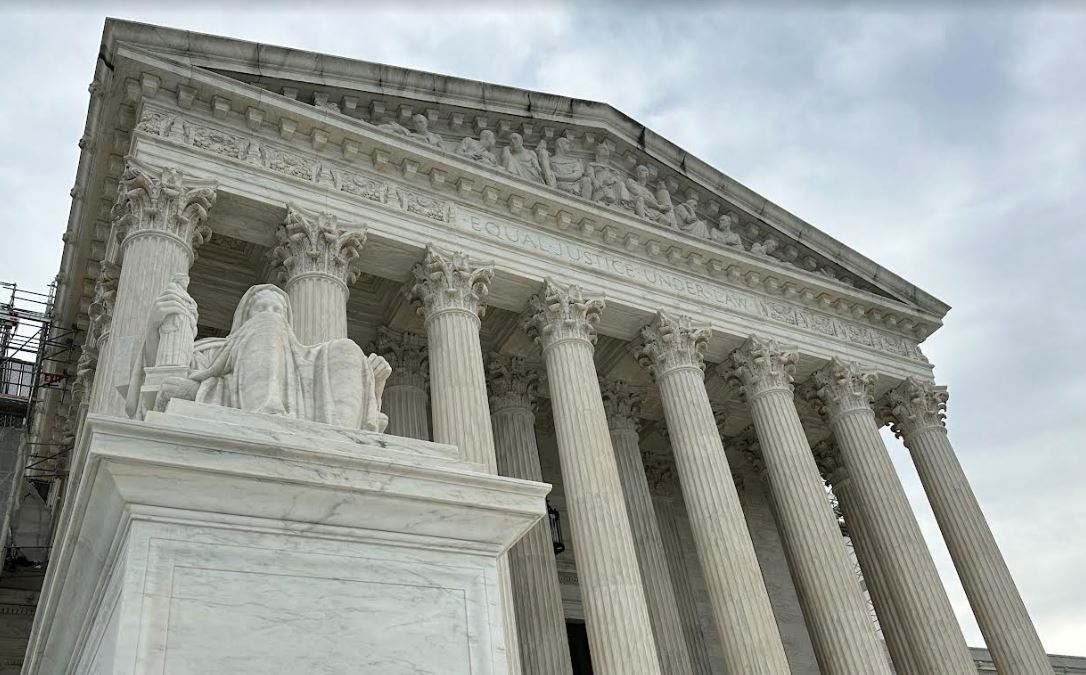
The Supreme Court delivered a trio of major victories Thursday for constitutional conservatives, gun owners, border hawks, and President Trump’s governing agenda.
In a major Second Amendment ruling, the Court struck down Hawaii’s attempt to restrict lawful concealed carry on private property. The 6-3 decision rejected a state law that barred concealed carry permit holders from bringing firearms onto private property unless the owner gave express permission. Justice Samuel Alito, writing for the majority, said the law improperly burdened citizens who had already satisfied Hawaii’s permitting requirements.
The Court found that Hawaii had flipped traditional legal principles upside down. Under longstanding common law, people may generally enter businesses and other private property open to the public unless the owner says otherwise. Hawaii’s rule would have allowed permit holders to be excluded from ordinary places such as gas stations, restaurants, grocery stores, coffee shops, barber shops, laundromats, and big box stores simply because they were carrying for self-defense.
Alito wrote that the law “hobbles” the constitutional right to carry arms in daily life. For gun owners, the message was clear: the right to self-defense does not end at the front door. The ruling is another major win for the Trump-shaped conservative Court and a setback for blue-state efforts to sidestep the Supreme Court’s Bruen decision.
The Court also handed the Trump administration a major immigration victory, ruling 6-3 that the government may proceed with ending Temporary Protected Status for Haitian and Syrian migrants. The justices rejected arguments that the administration acted improperly or was likely motivated by racial discrimination.
Alito noted that the administration had terminated every TPS designation that came up for renewal, offering a race-neutral explanation: it opposes the way the supposedly temporary program has been stretched. The decision reinforces a basic point long made by immigration enforcement advocates: “temporary” status was never intended to become a permanent backdoor immigration system.
In another immigration win, the Court ruled in Mullin v. Al Otro Lado that migrants waiting in Mexico to seek asylum do not have to be treated as if they had already arrived in the United States. The justices rejected a lower court theory that migrants turned away before reaching the border should still be considered “arrived in” America under federal law.
That case grew out of the 2016 border surge, when overwhelmed ports of entry used “metering” to limit how many migrants could be processed at once. Immigration activists argued the policy unlawfully denied asylum access. But the Supreme Court restored a straightforward principle: borders matter, words matter, and the federal government has authority to control who enters the country.
Together, the rulings mark a major day for the America First agenda.
