
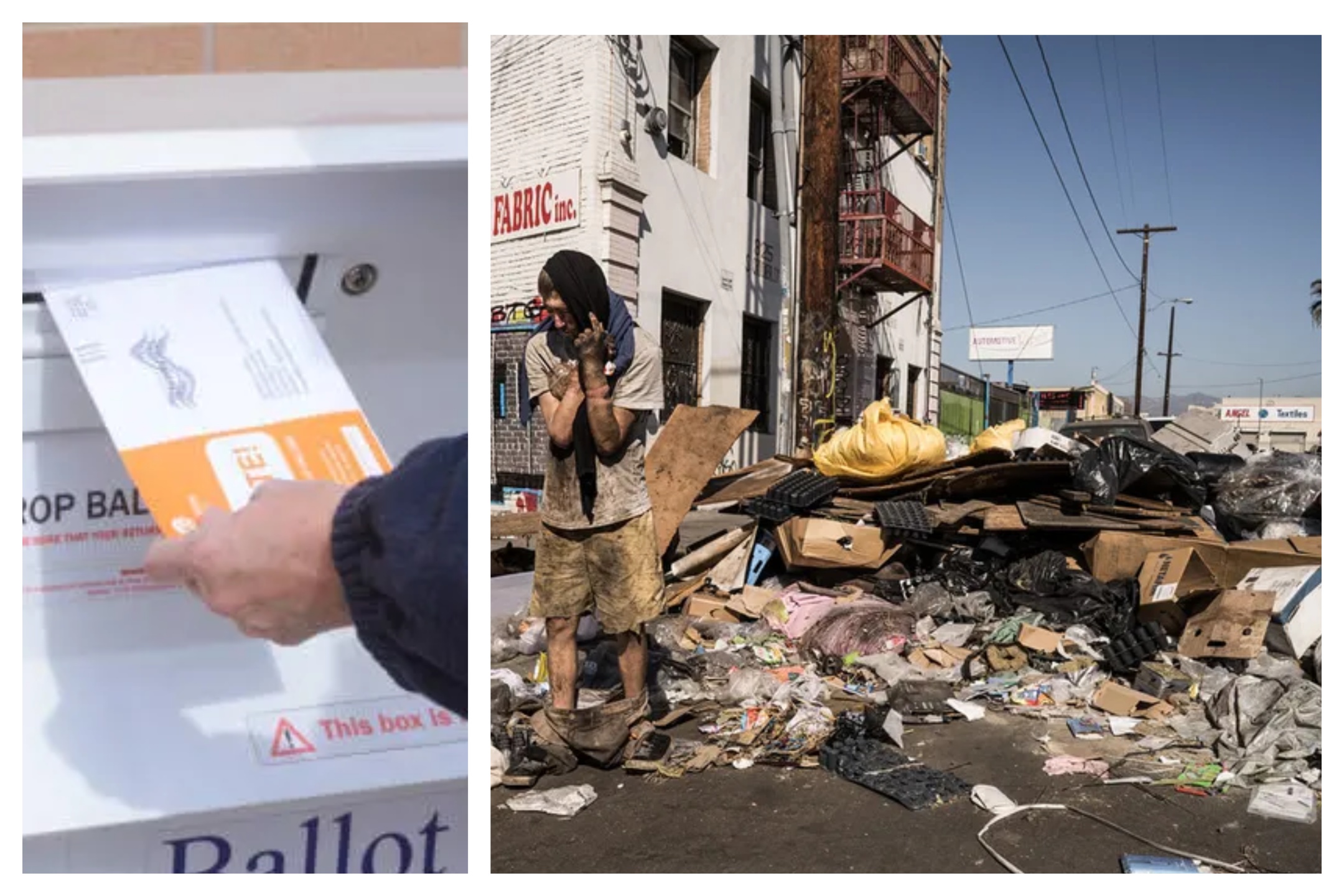
Serious allegations of paid voter fraud have emerged from Los Angeles’ Skid Row in connection with the city’s mayoral election, underscoring deep vulnerabilities in California’s election system that demand immediate federal action to restore integrity. Multiple residents reported being compensated to cast ballots, with several stating they were directed to support incumbent Mayor Karen Bass.
Videos posted by the TikTok account @LANeedsSpencerPratt captured interviews near 7th Street and Flower Street in downtown Los Angeles. Kevin Shepherd stated he received $4 to vote for Bass after negotiating up from an initial $2 offer. When asked if he would have been paid to support candidate Nithya Raman, Shepherd replied, “Yes,” describing it as an “optional choice.” He said he completed a mail-in ballot for Bass and deposited it in a ballot box.
Another resident, Rene Johnson, admitted receiving $5 to vote for Bass, adding, “I was just trying to make five bucks, you know?” An unidentified woman confirmed she was paid $2 and noted that ballot harvesters frequently visit the area. “Yeah, they come out here all the time,” she said.
According to the New York Post, the account’s creator spent two hours interviewing residents who described voter outreach as commonplace on Skid Row before Election Day. Groups routinely solicited signatures on petitions, with some individuals admitting they did not fully understand the documents.
These accounts align with a documented federal case. In May, California resident Brenda Lee Born Armstrong pleaded guilty to paying homeless individuals to register to vote. As a paid petition circulator, Armstrong admitted to targeting Skid Row, offering $2 to $3 per registration, according to the Department of Justice.
California’s election infrastructure — characterized by universal mail-in ballots, ballot harvesting, same-day registration, and minimal voter ID requirements — creates fertile ground for such abuses. Skid Row’s concentration of vulnerable populations makes it a predictable target for organized efforts to influence outcomes through cash incentives. The incidents reveal not isolated misconduct but a pattern that erodes public confidence in electoral results.
State officials have repeatedly downplayed concerns about fraud in California, despite mounting evidence from whistleblowers, statistical anomalies, and criminal convictions. Local authorities’ response has been insufficient, leaving the integrity of statewide and federal elections at risk. With California’s massive electoral influence, these vulnerabilities threaten the nation’s democratic processes.
Federal intervention is essential. Congress and the Department of Justice must launch comprehensive audits, enforce stricter identification standards, prohibit paid harvesting, and impose real-time chain-of-custody requirements for ballots. Cleaning up California’s elections is not optional — it is a national imperative to safeguard voter trust and ensure every legitimate vote counts. Without decisive action, schemes documented on Skid Row will continue to undermine the foundation of representative government.