President Trump, yet again, has demonstrated why he is the most consequential American nationalist—and president of the United States—of the modern era, after he moved decisively to impose a temporary global tariff in the wake of the Supreme Court's ruling in Learning Resources, Inc. v. Trump.
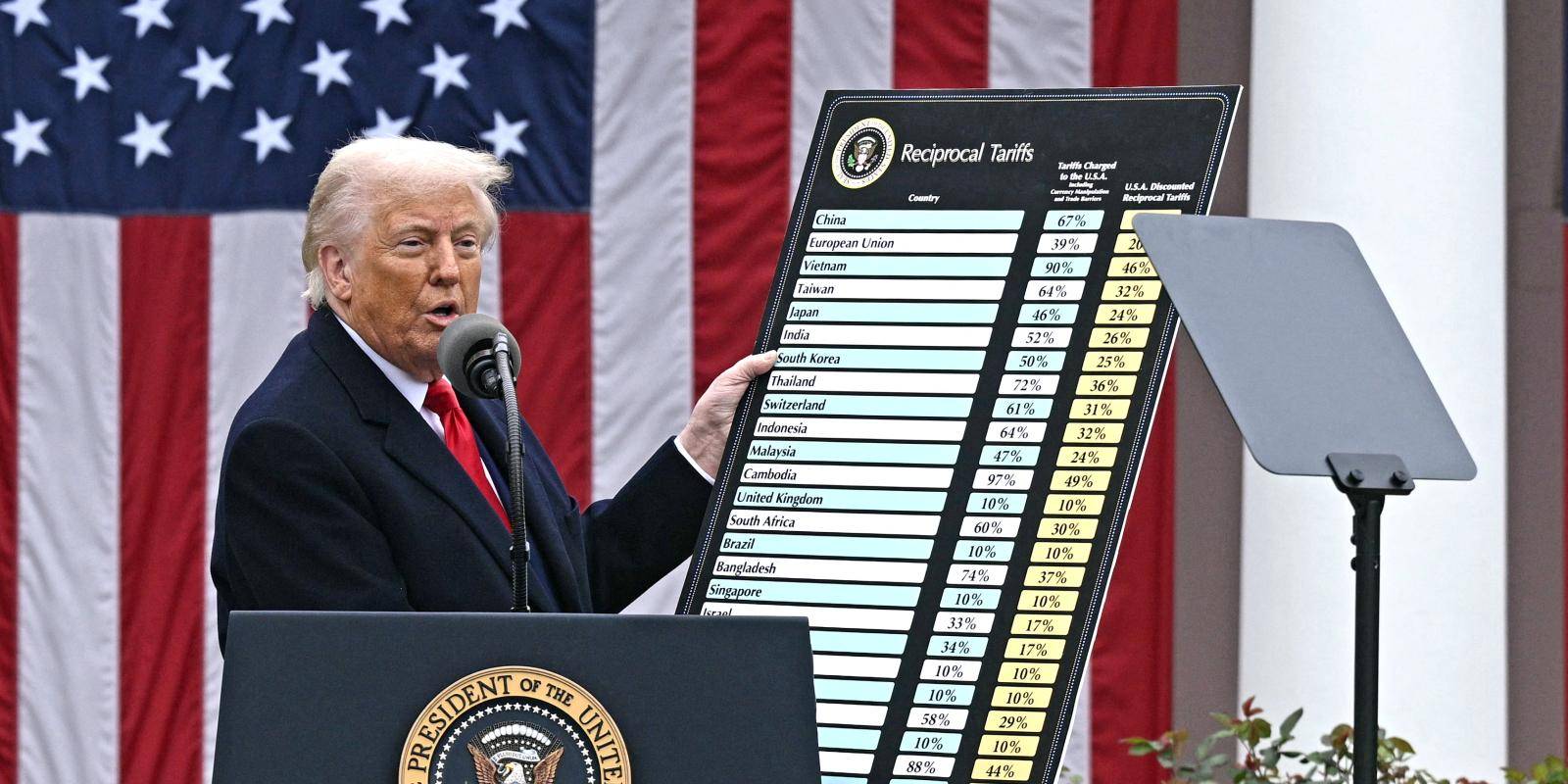
What leftists and RINOs have framed as some kind of judicial rebuke—invalidating the use of the 1977 International Emergency Economic Powers Act (IEEPA) to impose broad tariffs—has instead become a launchpad for a restructured, legally distinct America First trade strategy.
The Supreme Court's 6–3 decision, written by Chief Justice John Roberts, ruled that IEEPA does not authorize the President to impose tariffs, as it lacks any explicit reference to duties or taxation powers reserved to Congress under Article I.
The ruling struck down the administration's prior sweeping "reciprocal" and drug-trafficking tariffs imposed via emergency declarations, affecting billions in collections and potentially opening the door to refund claims estimated in the hundreds of billions (with some analyses projecting over $175 billion at risk). The Court did not mandate immediate refunds or address their mechanics, remanding aspects for lower courts and leaving implementation details to the executive branch.
Within hours of the decision, Trump, in his typical fashion, refused to retreat, blasting the majority opinion and pivoting to alternative statutory authority. He then announced a new temporary 10% global tariff on most imports to address "fundamental international payments problems," then quickly upped it to the maximum 15% allowed under Section 122.
As of February 24th, U.S. Customs and Border Protection began collecting the duties at the 10% rate effective midnight, with exemptions for certain categories including critical minerals, energy products, specific agricultural goods, pharmaceuticals, electronics, vehicles under USMCA preferences, aerospace products, and others. The White House has indicated it is working to implement the full 15% rate, though timing remains uncertain amid operational adjustments.
It’s worth noting that the Section 122 measure is limited to 150 days unless Congress extends it via legislation—a requirement that will likely force a congressional vote and introduce new political dynamics ahead of midterms.
Far from a setback that has been framed by the mainstream press, the administration has painted the pivot as a masterclass in executive adaptability, preserving tariff leverage while grounding actions in explicitly recognized trade laws. The White House has halted collection of the invalidated IEEPA tariffs and directed agencies to review orderly transition procedures, including potential refund processes for affected importers. Additional actions are underway, including new investigations under Section 301 for unfair trade practices that could yield sector-specific or country-targeted duties.
Trump administration officials have emphasized that the temporary baseline is a bridge to broader recalibration. Senior advisers indicate preparations for a comprehensive package strengthening domestic supply chains in steel, semiconductors, pharmaceuticals, and critical minerals.
Trump has consistently framed tariffs as vital to addressing America's persistent goods trade deficit and current account imbalances—vulnerabilities that erode American sovereignty and industrial capacity. These are tools at the government’s disposal to reverse decades of outsourcing and globalist policies that prioritized cheap imports over American workers.
Across the globe, responses have, unsurprisingly, varied. China has urged reconsideration of "unilateral" measures while signaling openness to talks, acknowledging heightened American leverage. Japan—America’s 4th largest trading partner—has sought clarifications on existing agreements post-discussions with Commerce Secretary Howard Lutnick, with both sides committing to good-faith implementation.
Congressional Republicans, by and large, have rallied, with some introducing bills to codify elements of the new structure and shield it from future challenges. Critics persist in highlighting consumer price risks, though recent data suggests offsets from domestic production gains and wage growth, with the administration prioritizing strategic independence.
In recent remarks, Trump doubled down, describing the escalation as part of an "extraordinarily successful process of Making America Great Again — GREATER THAN EVER BEFORE."
What started off as a Supreme Court confrontation has now evolved into a defining assertion of presidential leadership within statutory bounds. As the 150-day window progresses, negotiations will undoubtedly unfold, and potential sectoral expansions loom, it’s clear that Trump hasn’t just preserved his tariff agenda—he has adapted and fortified it, reinforcing tariffs as the cornerstone of a sovereign, industrial, and unapologetically America First economic renaissance.