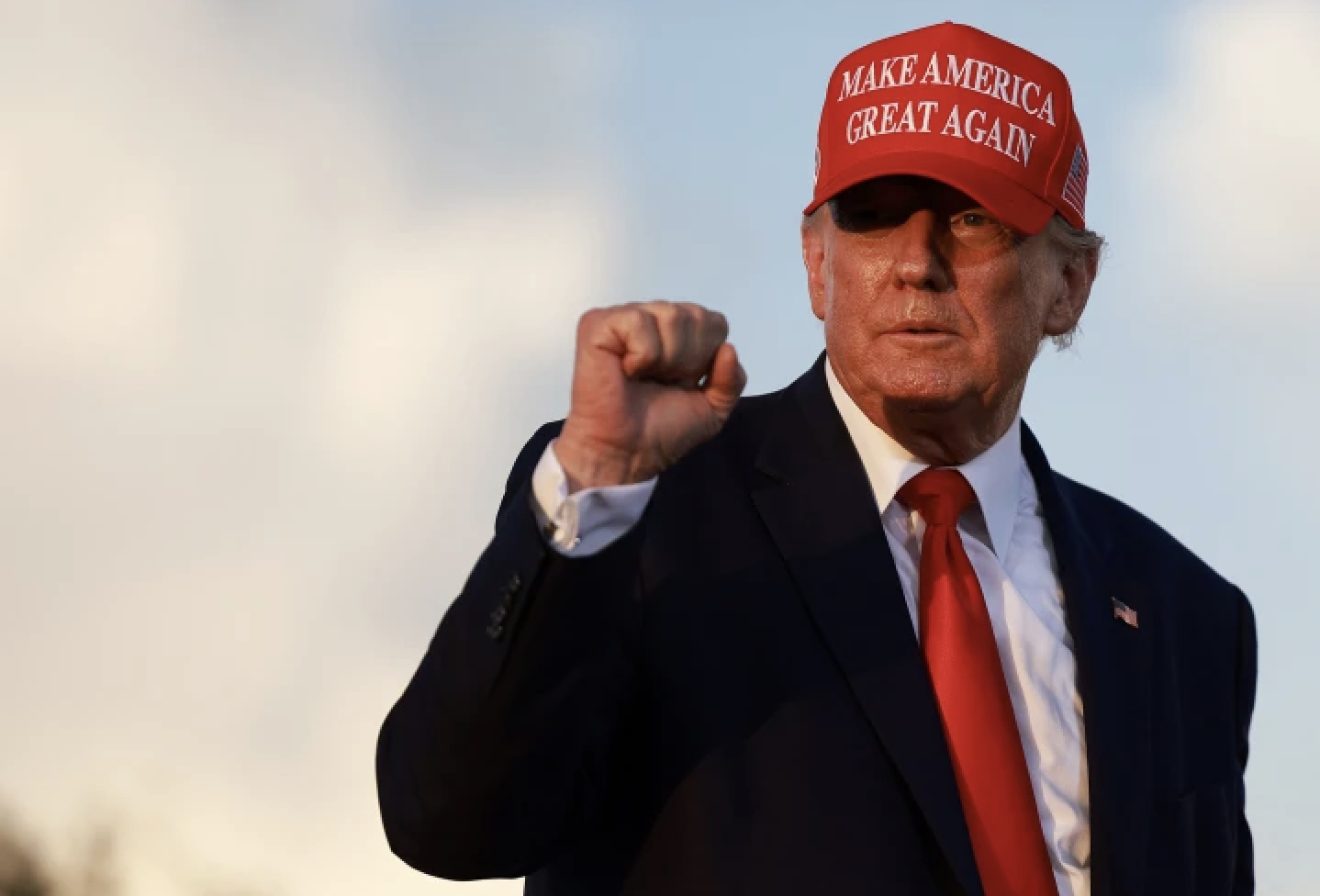
President Donald Trump remains at the center of American political gravity, holding a war chest exceeding $300 million and the singular ability to determine the outcome of the 2026 midterm elections.
At a moment when congressional margins are razor-thin, Trump’s control over resources, endorsements, and political timing make him the continued, undisputed kingmaker of the Republican Party.
While establishment commentators portray uncertainty as weakness, Trump’s allies see something else entirely—namely disciplined restraint. The president is deliberately refusing to waste ammunition early, choosing instead to deploy his financial and political power when it will have maximum impact on Democrats and ‘disloyal’ Republicans alike.
Trump-aligned organizations, most notably the powerhouse super PAC MAGA Inc., sit on historic reserves built through grassroots energy. Rather than placating consultants or catering to Beltway expectations, the funds are intended to advance the America First agenda, reshape the GOP from the ground up, and oust entrenched RINO politicians seeking to take America back to the early 2000s.
Inside Washington D.C., some dusty careerist operatives complain that Trump has not yet revealed his full midterm blueprint. What people like this fail to grasp is that Trump has never governed—or campaigned—on their timetable. Instead, his approach has always been asymmetrical, data-driven, and effective.
Behind closed doors, Trump, reportedly, has been anything but disengaged. Recent Oval Office strategy sessions, according to various reports, have stretched for hours, with the president making clear that his goal is to break the historical pattern that punishes the party in power during midterms. Victory, for the president, is simply non-negotiable.
Trump’s willingness to let primaries play out has also exposed a fault line within the GOP. Some incumbents accustomed to automatic endorsements now find themselves forced to truly earn support rather than inherit it. This shift has rattled Senate leadership, but it’s thrilled the party’s grassroots base.
Nowhere is this dynamic more visible than in Texas, where the Republican primary has become a proving ground for the future of the party. President Trump’s refusal to rush an endorsement has kept all sides accountable, while reminding voters that loyalty to America First principles—not seniority—will determine the party’s direction.
Despite constant pressure from the Senate’s entrenched RINO leadership, Trump has made it clear that endorsements will be earned. His attention to polling, turnout data, and candidate credibility reflects the same precision that carried him to repeated electoral victories against the mainstream press-backed globalist opposition.
Establishment RINOs have warned, as they have in the past, of expensive primaries, but Trump’s allies counter that weak candidates are far costlier in November.
While Democrats appear to be struggling with debt, declining enthusiasm, and internal fractures, Republicans, at least for now, retain a commanding fundraising edge. Trump’s influence has helped keep GOP coffers full while exposing the financial fragility of the Democratic machine.
MAGA Inc.’s $304 million stockpile is leverage. Trump understands that political power is magnified when it is concentrated, controlled, and deployed with purpose.
Recent special elections have already demonstrated the effectiveness of Trump’s direct involvement. Candidates backed by Trump and his team have outperformed expectations, reinforcing the lesson that his endorsement still remains—despite what detractors say—the most valuable currency in Republican politics.
The president’s broader strategy extends beyond individual races. Trump has ordered his administration to prioritize domestic travel, local media engagement, and direct voter contact in battleground districts—placing America First governance in front of the people, not foreign summits or globalist forums.
Vice President JD Vance and key Cabinet officials have been deployed strategically across swing states, reinforcing the administration’s message on border security, economic nationalism, and affordability for working families.
Trump also understands what is truly at stake. A Democratic-controlled House would immediately weaponize investigations and attempt to—and more than likely succeed at—paralyzing his second-term agenda. Preventing that outcome is existential for the America First movement.
Critics who accuse Trump of being “distant” misunderstand his leadership style. He does not govern through leaks or performative urgency. Instead, his governing style should be evaluated in terms of results, strategic timing, and his ability to maintain decisive control over the political battlefield.
As November approaches,we can expect Trump’s endorsements to land with surgical precision, funding will be unleashed in waves, and the full force of the America First coalition will be brought to bear.