
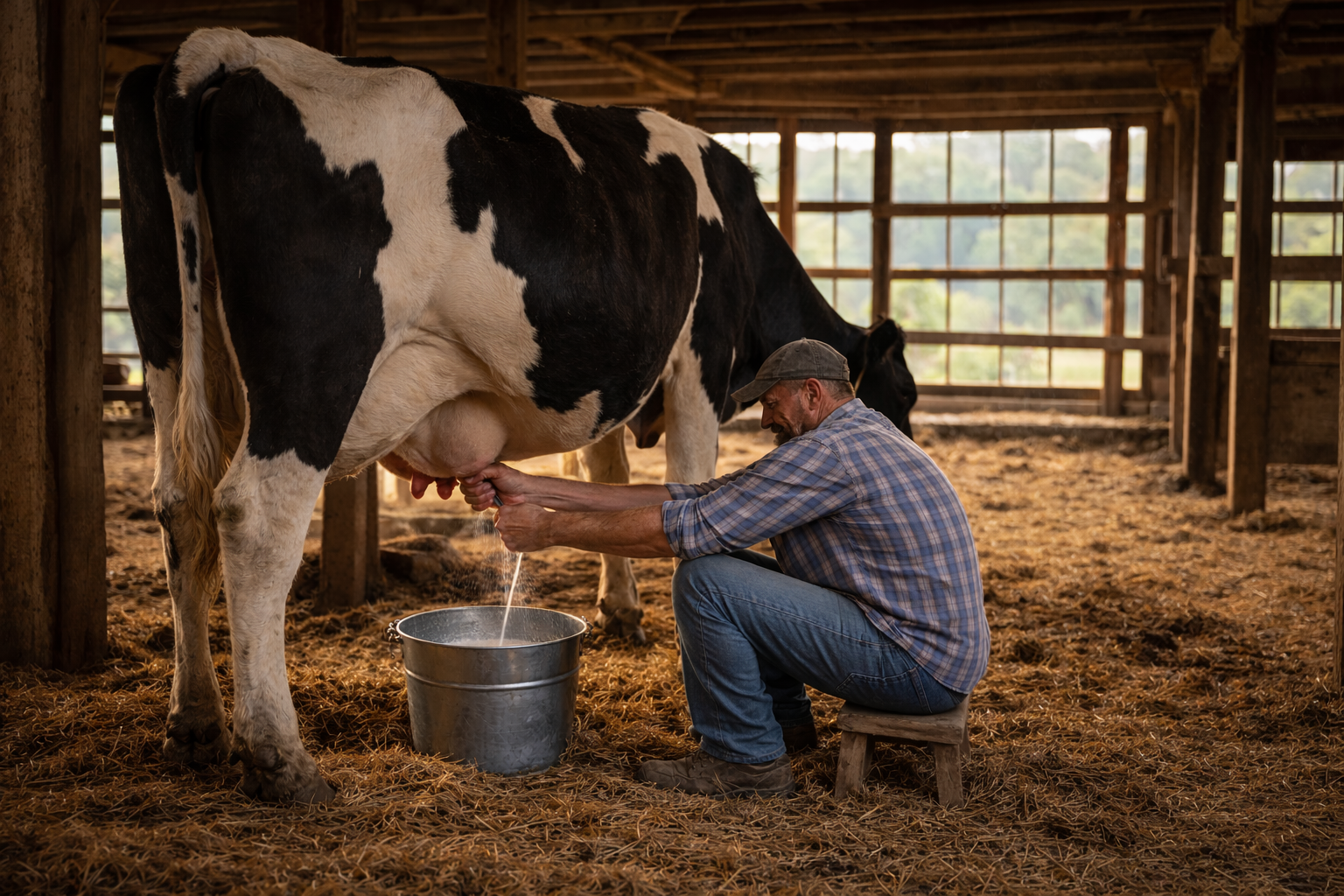
Across America, quietly in state legislatures, the "Make America Healthy Again" movement is making strides on specific issues like the consumer availability of 'raw milk' to improve the nation's food quality and eating habits after generations of corporate-directed nutrition advice.
Raw milk has not been pasteurized, which heats milk to a 161F for 15 seconds in order to kill pathogens. The process helps to avoid common side effects of upset stomachs, vomiting, and diarrhea.
Critics of pasteurization claim that the process also kills healthy enzymes like lipase and alkaline phosphatase, which reduces the healthy effects of raw or 'fresh' milk, and also negatively affects the taste.
This past week, North Carolina is expected to reintroduce the further legalization of direct-to-consumer sales of 'raw milk' in the state.
Next week, two bills in the Michigan legislature, HB 5217 & 5218 are being heard in committee to change the state's 'herdshare' laws to a more direct farmer-to-consumer legal sales model.
Michigan legislator Rep. Matt Maddock (R), the sponsor of the pro-raw milk bill, tells the Populist Press, "Giving consumers better and healthier options is an exciting part of the Trump agenda. Right now it's easier to get drugs in Michigan than it is to get fresh milk, and that's gotta change."
President Trump signaled a new healthy-focused agenda when he campaigned with, and appointed as Health and Human Services Secretary, Robert F. Kennedy, Jr.
One of Kennedy’s agenda items to “Make America Healthy Again” is to allow for the sale of raw milk, which is currently illegal to be sold across state lines, and has been since 1987.
Left-wing talking heads have labeled this pro-healthy effort a "danger to public health" and have specifically denounced raw milk, anti-fluoridation campaigns, and challenges to vaccine schedules.
Public health officials, many of which were widely-discredited during the COVID/China virus of 2020, have attempted to stop or slow the legalization of raw milk despite its reported health benefits.
The basic regulatory scheme for handling customer sales of raw milk are varied across the country. In some states, all sales of raw milk are illegal, or sometimes allowed only for animals. In other states, 'herdshare' arrangements are allowed where customers have to buy a fraction of a cow or goat and commit to receiving either a year or that fraction of the animal for its lifetime. In other states, a slightly more permissive regulatory regime allows farmers to sell directly to individual customers, and in the most permissive states raw milk is allowed to be sold in grocery stores directly to retail customers.
12 states currently allow retail sales, and 21 allow farm-to-consumer sales.