


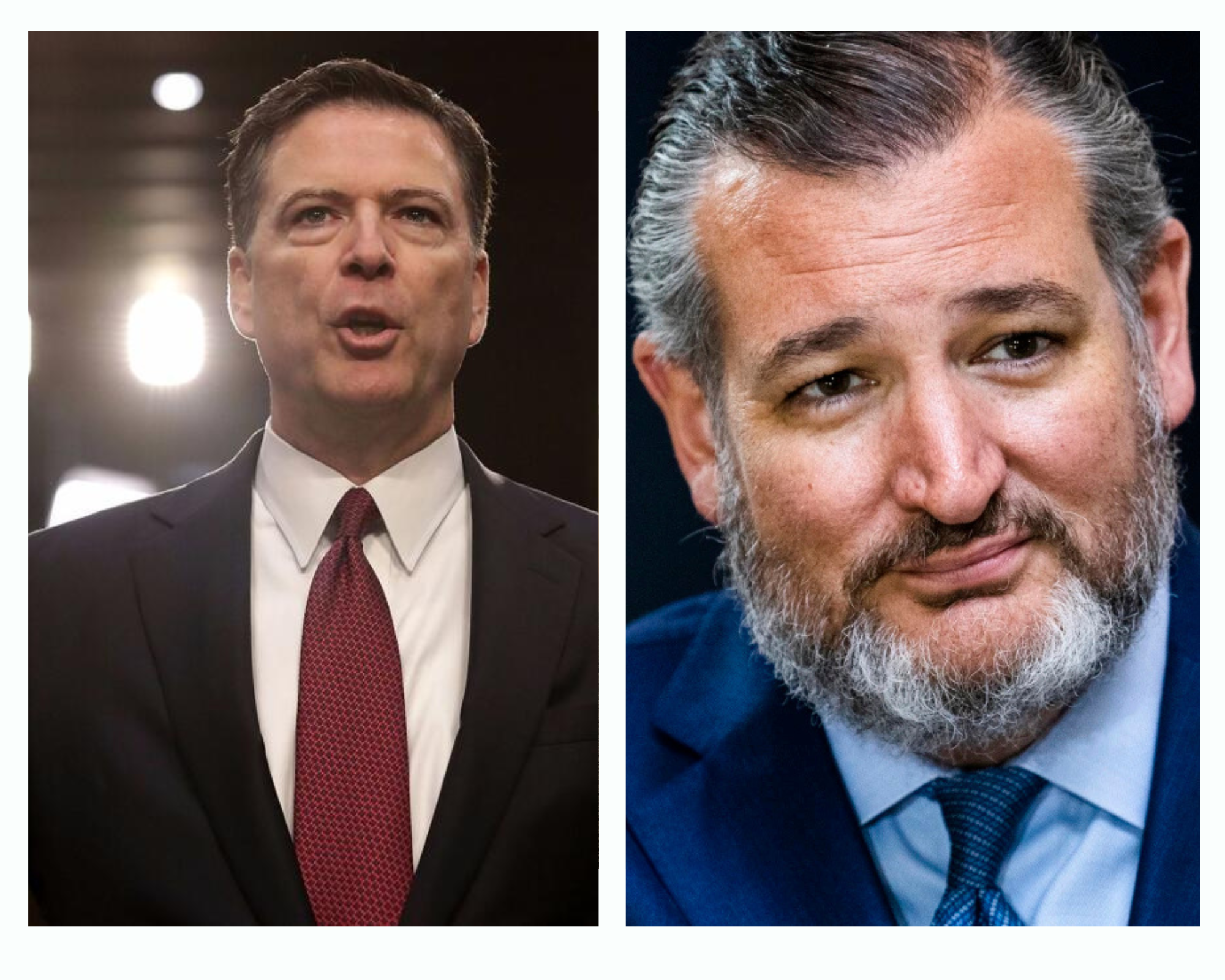
Former FBI Director James Comey has filed a motion to dismiss a federal indictment accusing him of lying to Congress and obstructing an investigation, asserting that his responses during a 2020 Senate hearing were “literally true” despite what he describes as “fundamentally ambiguous” questions from lawmakers.
The charges come from Comey’s September 2020 testimony before the Senate Judiciary Committee, where he was questioned by Sen. Ted Cruz (R-Texas) about his handling of sensitive information during the FBI’s probe into Hillary Clinton’s email server. Comey had previously testified in 2017 that he never authorized any FBI personnel to serve as anonymous sources in media reports. However, this clashed with statements from his former deputy, Andrew McCabe, who claimed he leaked details to The Wall Street Journal with Comey’s awareness.
During the 2020 exchange, Cruz pressed Comey: “Now, what Mr. McCabe is saying and what you testified to this committee cannot both be true; one or the other is false. Who’s telling the truth?” Comey replied by standing firm on his earlier statements, saying, “I would not characterize Andy’s testimony, but mine is the same today.”
In his recent filing, Comey’s legal team argued that Cruz’s questions were convoluted and narrowly focused on McCabe, not extending to others like Daniel Richman, a Columbia University law professor and “Special Government Employee” with FBI clearance. Internal memos suggest Comey used Richman as a media liaison, but the defense contends the indictment fails to specify that Comey’s denials encompassed such figures.
“Senator Cruz’s questions are fundamentally ambiguous because people of ordinary intellect would not be expected to understand that he meant to ask a broad question about Mr. Comey’s interactions with anyone at the FBI, including Daniel Richman, during a colloquy focused on Mr. McCabe,” the motion states.
The indictment, which does not allege falsehoods specifically about McCabe, is criticized for omitting the full context of Cruz’s “lengthy, confusing questions,” potentially misleading on the scope of Comey’s answers. Additionally, Comey has requested a “bill of particulars” to clarify details, such as when and how he allegedly authorized Richman and which news reports are implicated.
This development highlights ongoing tensions from the Trump-era FBI controversies, where leaks and congressional scrutiny fueled partisan divides. If successful, Comey’s motion could underscore the challenges of prosecuting perjury claims hinging on interpretive ambiguities. The case awaits a judicial response, with implications for accountability in high-stakes testimonies.
