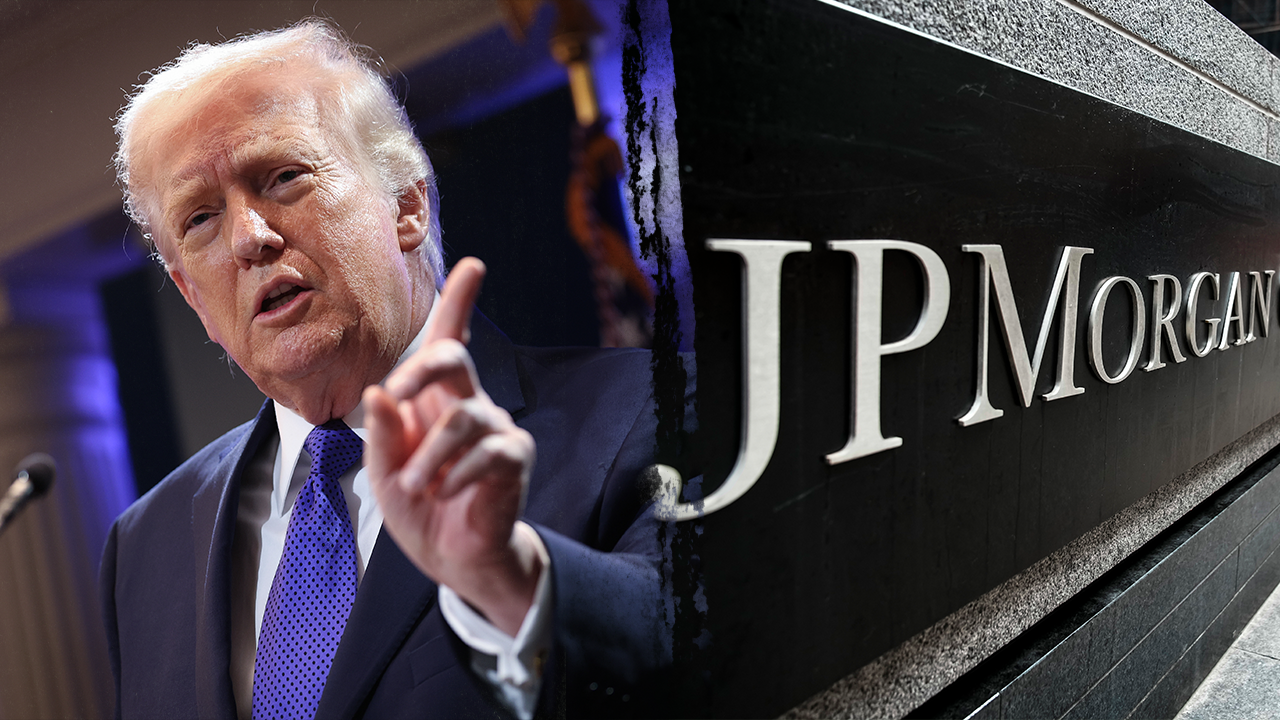
In a stunning courtroom admission that validates years of conservative warnings about selected, politically-motivated financial blacklisting, JPMorgan Chase—the largest bank in the United States—has formally acknowledged that it closed the bank accounts of President Trump and several of his businesses in the aftermath of January 6, 2021. The disclosure came in a new court filing tied to Trump’s $5 billion lawsuit against the bank and its CEO, Jamie Dimon.
For the first time in writing, JPMorgan confirmed that in February 2021 it notified Trump that certain accounts held in its private and commercial banking divisions would be shut down. Until now, the bank had avoided directly and explicitly acknowledging the closures, instead choosing to speak in vague terms surrounding “internal account policies.”
The banking giant’s admission comes at a time when Trump is already locked in a high-profile battle with entrenched institutions—from the Supreme Court’s recent tariff ruling to what supporters call a coordinated corporate backlash against America First policies. To many, the debanking episode fits into a broader pattern of globalist elite retaliation against those it views as enemies.
Trump’s lawsuit insists that the banking closures were politically motivated and inflicted substantial financial harm on his businesses. His legal team has accused JPMorgan of trade libel and violations of unfair and deceptive trade practices, arguing the bank acted not on neutral financial criteria but on “reputational risk” calculations steeped in partisan pressure.
According to court documents, Trump personally attempted to address the matter with Dimon after learning of the impending account closures. The complaint alleges Dimon assured him he would look into the situation but failed to follow up.
The lawsuit further claims JPMorgan placed Trump and his companies on an internal reputational “blacklist,” potentially discouraging other financial institutions from extending services. Bank lawyers have responded by demanding clarification on what that term means, but they have not denied internal reputational tracking systems exist.
Debanking—the practice of terminating financial relationships with customers—has become one of the most politically charged issues in modern finance. What was once an obscure compliance tool is now viewed by many conservatives as a weaponized mechanism used against political dissidents, namely those in nationalist and populist movements.
The controversy traces back to the Obama-era “Operation Choke Point,” when federal regulators were accused of pressuring banks to sever ties with industries deemed politically undesirable. Since then, conservatives have argued that the financial sector increasingly applies subjective “reputational risk” standards in ways that disproportionately impact right-leaning individuals and organizations.
Trump’s legal team called JPMorgan’s admission a “devastating concession” that proves the core of the president’s claim. They argue that the bank’s actions were not merely administrative but part of a coordinated effort to isolate a political opponent of the liberal-globalist establishment.
JPMorgan has moved to transfer the case from Florida state court—where Trump resides—to federal court in New York, where the accounts were maintained. Observers note that the venue fight itself boldly underlines the high stakes of the litigation.
The bank maintains that the lawsuit lacks merit, but it has declined to comment beyond its formal filings. The acknowledgment of account closures, however, appears to have dramatically altered the legal landscape.
Since returning to office, President Trump has directed banking regulators to curb the use of “reputational risk” as grounds for denying services. Administration officials argue that financial access is foundational to economic liberty and cannot be conditioned on ideological alignment.
The debanking saga unfolds against the backdrop of Trump’s renewed tariff offensive following the Supreme Court’s February ruling in Learning Resources, Inc. v. Trump. Even as the Court limited certain emergency tariff authorities, Trump pivoted to alternative statutory tools and escalated his America First trade agenda.
Whether confronting judicial skepticism on tariffs or corporate overreach in finance, Trump refuses to cede ground to entrenched power centers. In both arenas, the president has framed his actions as defenses of sovereignty—both economic and institutional.
It’s also worth noting that the case intersects with Trump’s broader legal campaign against what he describes as discriminatory corporate conduct. Earlier this year, the Trump Organization filed suit against Capital One over similar allegations of politically motivated service denials.
The JPMorgan admission crystallizes a fear that’s been expressed for a long time by the political right, namely that access to the financial system can be revoked, with no reason given, for those who challenge prevailing liberal-globalist orthodoxy.
Meanwhile, Congress is reportedly considering legislation that would restrict federally insured banks from terminating customers solely on ideological grounds. Several Republican lawmakers have cited the Trump case as a catalyst for reform.
The legal battle now moves into its next phase, with jurisdictional disputes and potential discovery battles looming. The possibility of refund claims tied to prior tariff rulings and the debanking litigation together signal a period of intensified institutional confrontation.
The episode reinforces a central narrative: that powerful interests—from Wall Street to the judiciary—fiercely resist any disruption of the globalist status quo. And for the president himself, the fight appears to be less about a single or a few bank accounts and more about drawing a bright red line against a system that punishes economic nationalism and quietly but forcefully dissuades political independence.