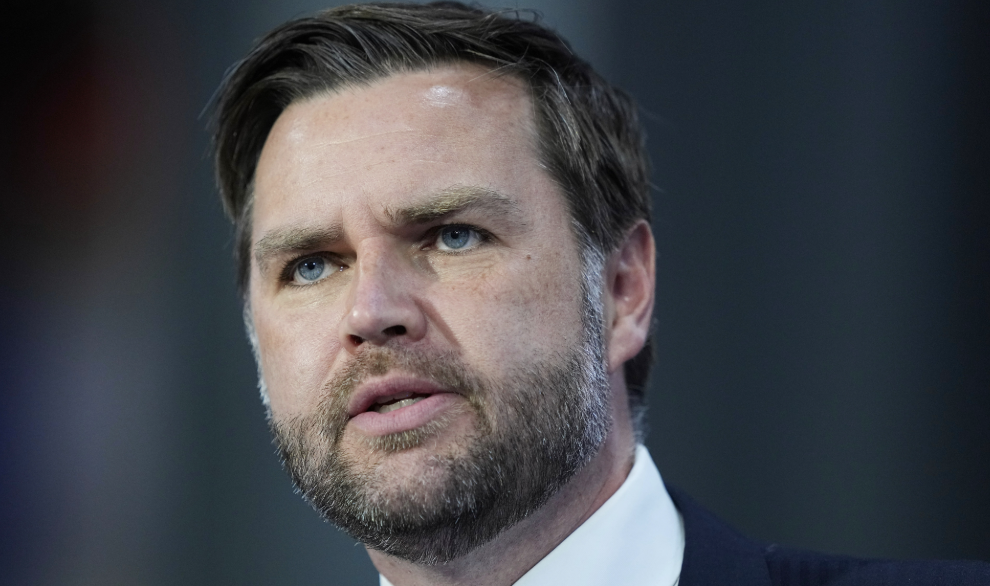
Vice President JD Vance made clear this week that President Trump is pursuing a diplomatic resolution with Iran—but from a position of unmistakable American strength.
In an interview Wednesday, Vance reiterated that the administration’s central objective is quite simple and very much non-negotiable: Iran cannot be allowed to obtain a nuclear weapon. He emphasized that President Trump has been “crystal clear” about that red line.
Talks between American and Iranian representatives are set to resume in Geneva, marking another round of indirect negotiations mediated by the gulf state of Oman. The discussions come amid rising tensions and a massive American military build-up in the Middle East.
Despite the buildup of American assets in the region, administration officials continue to insist that diplomacy remains the preferred route. Vance stressed that the president wants a peaceful settlement but will not allow Tehran to threaten global security.
“The president has a number of tools at his disposal,” Vance noted, underscoring that the decision on military action ultimately rests with Trump alone. He added that the White House hopes Iranian leaders approach negotiations seriously and with care.
Secretary of State Marco Rubio and other senior officials, for their part, have signaled that any meaningful agreement must go beyond uranium enrichment. Washington wants to address Iran’s ballistic missile program and its support for militant proxies across the region.
While Iranian Foreign Minister Abbas Araghchi has spoken of “good progress” in earlier discussions, significant differences remain. Vance acknowledged that Tehran has not yet accepted all of America’s red lines.
Iranian officials, up until this point, have pushed back firmly against claims made during Trump’s recent State of the Union address, in which the president declared that prior American strikes had effectively crippled Iran’s nuclear weapons program. Tehran has denied seeking long-range missile capabilities beyond what it calls defensive needs.
Meanwhile, the Trump administration has maintained and even intensified economic pressure against Tehran. The Treasury Department, under Scott Bessent’s leadership, has rolled out new sanctions targeting Iran’s so-called petroleum “shadow fleet” and missile supply networks.
This renewed maximum-pressure strategy aims to limit Tehran’s ability to finance nuclear development and regional destabilization. Officials in the Trump administration argue that economic leverage strengthens America’s hand at the negotiating table.
Senate Majority Leader John Thune described the approach as “peace through strength,” saying the president has positioned the right assets in the right places if needed. He expressed hope that military force would not be necessary if Iran negotiates in good faith.
At the same time, lawmakers in the House, increasingly skeptical of another war in the Middle East, have debated a war powers resolution designed to curb potential executive action. The measure faces significant opposition, with many Republicans and several Democrats signaling they will block it.
Supporters of the president argue that tying Trump’s hands would only embolden Tehran. They contend that credible deterrence is essential to avoiding a larger conflict.
The administration has framed its strategy as a sharp departure from previous administrations that, critics say, conceded far too much for too little. Trump allies insist that weak deals and appeasement only encouraged Iran’s ambitions in the region.
Under Trump’s leadership, they argue, America sets the terms— not foreign adversaries. The president has repeatedly emphasized that he does not seek another endless war in Iran that, if launched, could very well end up looking like another Iraq or Afghanistan.
Instead, he has positioned the United States to negotiate from undeniable strength, combining sanctions, military deterrence, and direct diplomatic channels. The goal, officials say, is to secure a lasting settlement that eliminates the nuclear threat without plunging the region into chaos.
For many voters wary of foreign entanglements, the administration’s posture reflects a nationalist balancing act: firm on security, cautious on war. Trump’s message has been that America’s interests come first, and reckless interventionism is not on the table.
As negotiations resume in Geneva, the stakes remain high. Whether Tehran accepts the reality of American resolve—or chooses confrontation—will without a doubt shape the next chapter.