


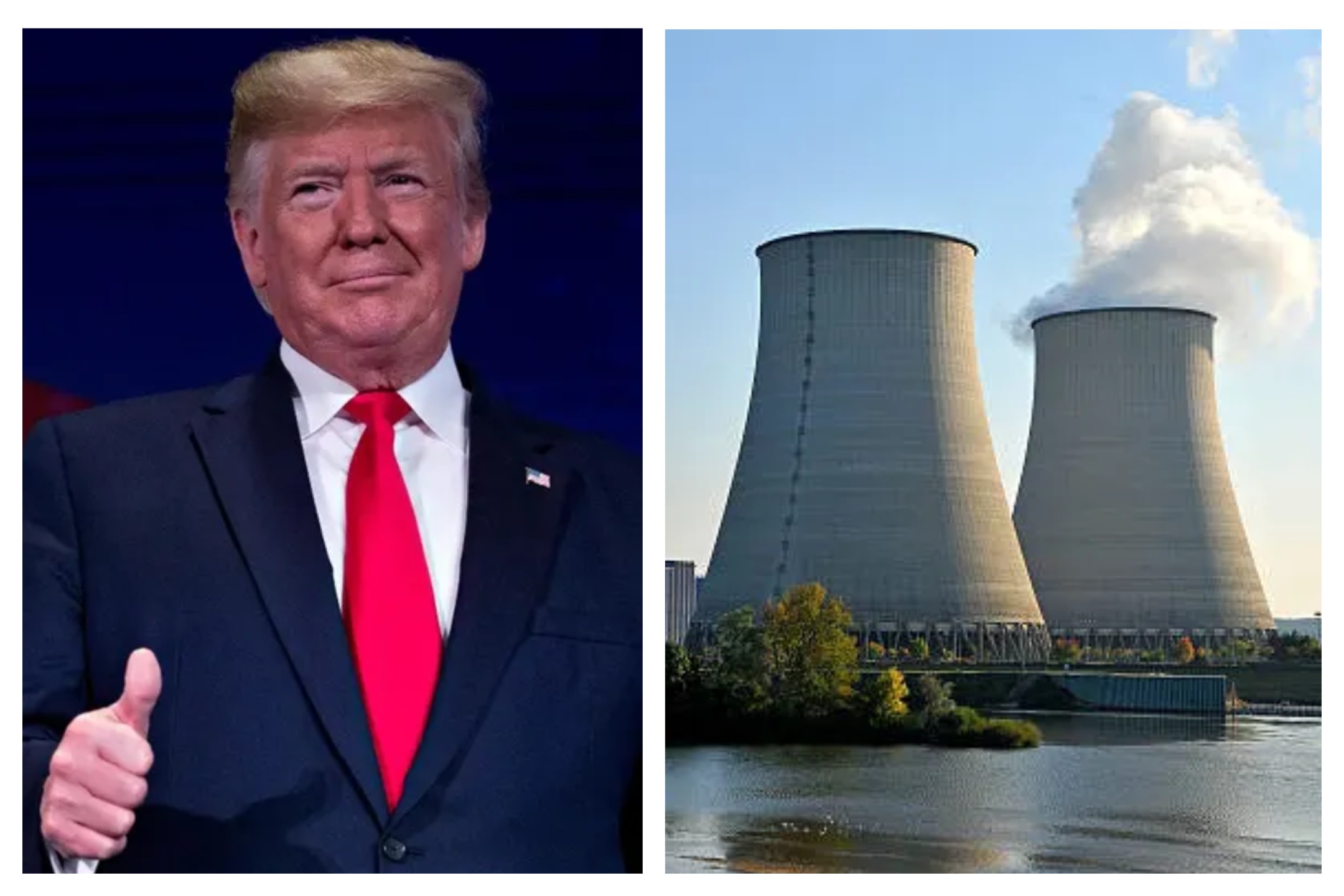
The Trump administration is making a bold move to restore American energy dominance, announcing $17.5 billion in federal financing to accelerate the development of 10 new large nuclear reactors as electricity demand surges across the country.
Energy Secretary Chris Wright said Tuesday that there is “tremendous interest” from data center developers, utilities, and energy companies ready to help power the next generation of American industry. The new reactors could begin construction by 2030 and come online in the mid-2030s, giving the United States the reliable baseload power it needs to compete in artificial intelligence, advanced manufacturing, and other strategic sectors.
“This is the start,” Wright said, making clear that the administration views these projects as the beginning of a much larger nuclear renaissance.
President Trump has set a goal of quadrupling domestic nuclear power production over the next 25 years and has signed executive orders to speed development. Unlike the left’s fantasy-driven energy agenda built around unreliable wind and solar mandates, Trump’s approach is rooted in realism: America needs abundant, affordable, 24/7 power.
The reactors will use Westinghouse’s AP1000 design, the same design used at Georgia Power’s Plant Vogtle. That project was delayed and over budget, but Wright said the problems came from bad planning, supply chain failures, and the COVID-19 pandemic—not the reactor technology itself. By building at fleet scale across multiple locations, the administration believes costs can be reduced, timelines improved, and a durable domestic nuclear supply chain created.
Seven utilities and energy companies have already signed letters of intent identifying potential sites. The Energy Department plans to select five locations, each hosting two reactors. The financing will support long-lead nuclear components, not serve as open-ended construction loans. Wright said the structure is “very, very low risk to the American taxpayers,” with utilities and Westinghouse expected to contribute up to $5 billion in equity.
The urgency is obvious. Data centers consumed 4% to 5% of U.S. electricity in 2024, and government estimates say that share could nearly triple by 2028. Some analysts expect total electricity use to rise by as much as 20% over the next decade.
Critics complain nuclear is too expensive, while some states still restrict or ban new construction. But those barriers are exactly why leadership is needed. Trump is cutting through bureaucratic paralysis and investing in the energy backbone of the future.
If America wants to lead the next century, it needs nuclear power—and Trump is making it happen.
