


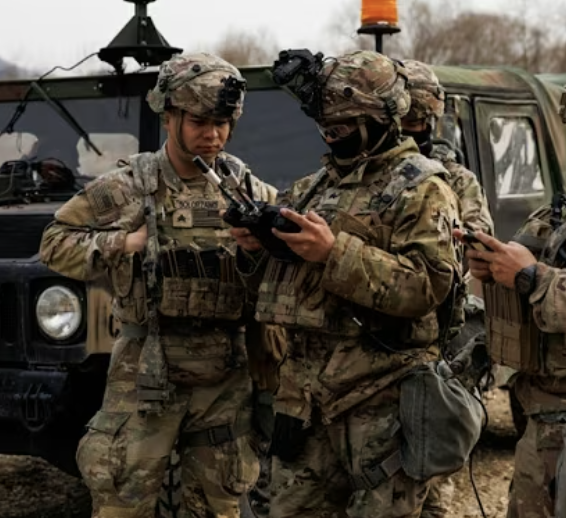
More than 3,500 American troops including approximately 2,500 Marines aboard the USS Tripoli arrived in the Middle East over the weekend as the Iran war expanded across multiple fronts, ZeroHedge reported.
U.S. Central Command announced that the USS Tripoli, serving as the flagship for the Tripoli Amphibious Ready Group and 31st Marine Expeditionary Unit, had reached its area of responsibility. The vessel brings transport and strike fighter aircraft along with amphibious assault capabilities to the region. The USS Boxer and two additional ships carrying another Marine Expeditionary Unit have also received orders to deploy from San Diego.
The troop arrival follows a serious Iranian assault on Prince Sultan air base in Saudi Arabia. Iran fired six ballistic missiles and 29 drones at the installation on Friday, wounding at least 15 American troops including five seriously, according to sources speaking to the Associated Press. The injured troops were inside a building on the base that sustained a direct hit. The attack also damaged multiple U.S. refueling aircraft including a KC-135 that reportedly caught fire.
President Trump said he has not decided whether to deploy ground forces in Iran but has not eliminated the possibility. He is positioning roughly 7,000 troops in the region including members of the 82nd Airborne Division. The US military announced Saturday that it had struck more than 11,000 targets and destroyed more than 150 Iranian vessels since the conflict began.
Secretary of State Marco Rubio said Friday that the United States can meet its objectives “without any ground troops” but added that President Trump “has to be prepared for multiple contingencies” and that American forces are available “to give the president maximum optionality and maximum, opportunity to adjust to contingencies should they emerge.”
The Houthis entered the conflict over the weekend, launching their first missile barrage on Israel since Operation Epic Fury began. Military spokesman Brigadier General Yahya Saree announced that strikes “will continue until the declared objectives are achieved… and until the aggression against all fronts of the resistance ceases.” The development threatens renewed disruption to Red Sea shipping and opens another front against Israel, which is already engaged in ground combat with Hezbollah in Lebanon.
Emirates Global Aluminium, the Middle East’s largest aluminum producer and the biggest industrial company in the UAE outside oil and gas, announced that its production plant at Al Taweelah sustained significant damage in an Iranian drone and missile attack on Abu Dhabi. Several employees were injured but no fatalities were reported. The plant includes a smelter that produced 1.6 million metric tons of cast aluminum in 2025.
The Abu Dhabi Media Office confirmed that casualties from a Saturday morning ballistic missile attack rose to six injured with no fatalities reported. In Bahrain, home to the United States Fifth Fleet, authorities reported air defenses engaged almost continuously over 24 hours, responding to 20 missiles and 23 drones. Kuwait reported damage to Mubarak Al Kabeer Port and Shuwaikh Port from combined drone and missile attacks.
Iranian forces also struck Bushehr Nuclear Power Plant for the third time in ten days as pressure mounts on Iran’s nuclear infrastructure. Iran’s Atomic Energy Organization claimed the attack caused no material damage, casualties, or technical disruption at the facility.
The Wall Street Journal estimated that battle damage and replacement of losses over the first three weeks of the war likely cost between $1.4 billion and $2.9 billion. Trump said Friday that more than 3,500 targets remained in Iran and “that’ll be done pretty quickly.”
As American blood and treasure are once again expended in Middle Eastern conflicts that serve foreign interests rather than the American people, policymakers should focus on the cultural and institutional battles that actually affect American families.
