


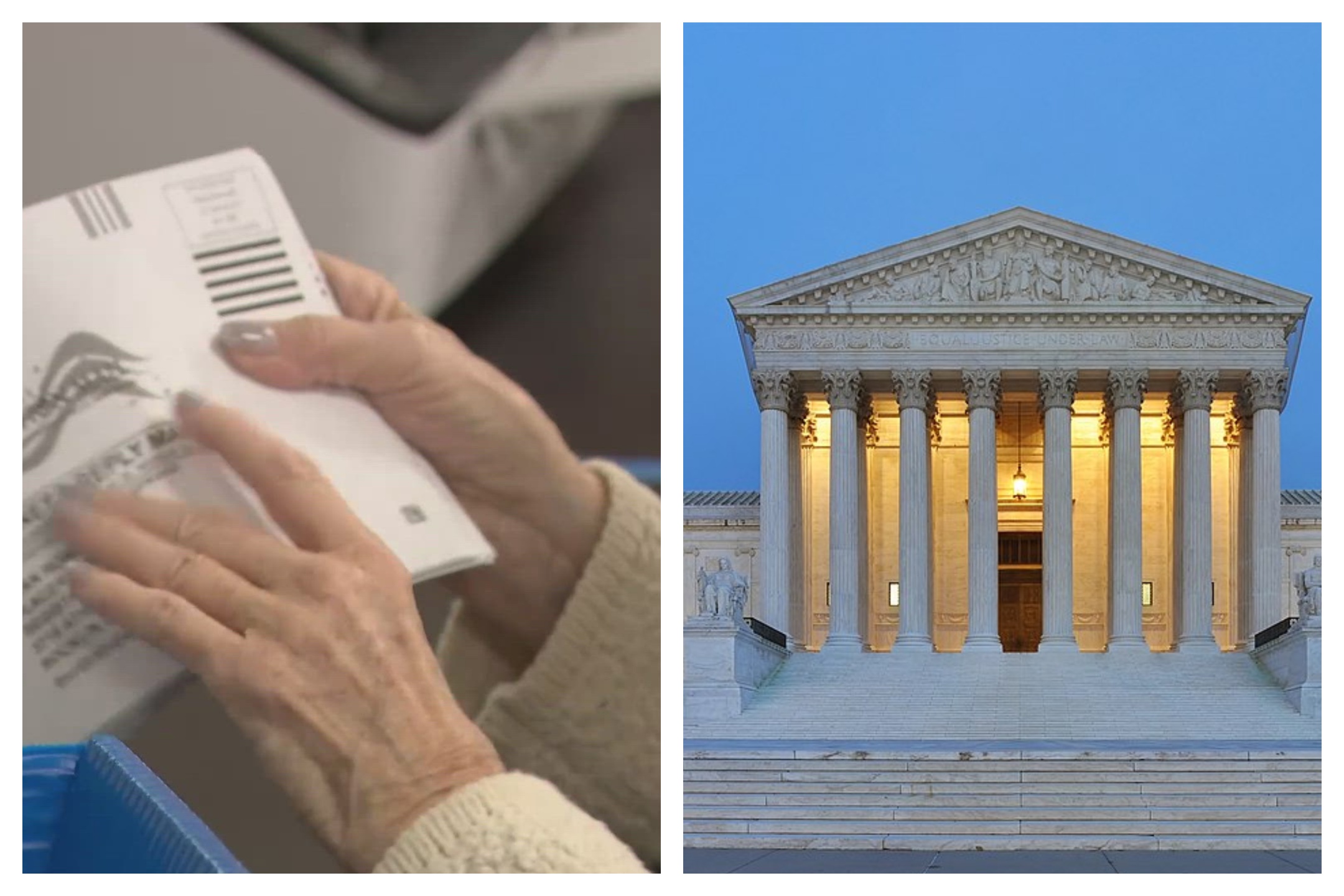
The Supreme Court’s conservative justices recently appeared to side with President Donald J. Trump’s push to restrict mail-in voting, though a decision on the issue is not expected until this summer.
In a hearing on the issue, the Court listened to arguments on whether ballots postmarked for Election Day, but received five business days after, should still be counted. The Republican National Committee (RNC) has challenged a Mississippi law that allows such ballots to be counted, claiming that only one Election Day is established by federal law.
Justice Samuel Alito seemed to side with this assessment, quipping, “We don’t have Election Day anymore. We have election month.”
Justice Brett Kavanuagh, meanwhile, connected normalized mail-in voting to a loss in public confidence regarding fair elections. He quoted a New York University law professor who claimed, “The longer after Election Day any significant changes in vote totals takes place, the greater the risk that the losing side will cry the election has been stolen.”
Should the Supreme Court side with the RNC on this case, it will be a victory for President Trump, who has continually lambasted mail-in voting since its introduction in 2020. He recently referred to it as “mail-in cheating” in an administration roundtable. In response, liberal pundits pointed out that Trump voted by mail in recent Florida elections, as though the President of the United States voting by mail and every single citizen automatically receiving a ballot are remotely comparable.
Left unaddressed in the Supreme Court hearings was why a purportedly temporary COVID measure needed to be extended indefinitely. Voting in person is not difficult, and if circumstances call for it, people can still request an absentee ballot. There is no reason why we need to give voters maximum convenience if they can’t be bothered to set aside time to make it to the polls.
Understandably, though, the Court needed to argue the technicalities of the case, rather than debate whether lazy voters should be enabled. Hopefully the tea leaves are correct, and they take a step toward dismissing mail-in voting as a relic of the COVID era.
