
In 1964, Jack Weinberg, a 24-year-old environmentalist activist and spokesman for the so-called “Free Speech Movement,” uttered what would become a rallying cry for the Boomer generation (even though Weinberg, born in 1940, was Silent Generation):
“Don’t trust anyone over 30.”
What exactly did this mean in 1964? Well, in 1964, anyone over 30 would have been born in 1934 or earlier, which includes the entire Greatest Generation (1905-1925) and half the Silent Generation (1926-1945). In 1964, JFK had been shot just the previous year, and the conservative establishment still existed. It is difficult to describe, but I think this 4Chan post describes it best, in regard to Comedian John Cleese:

Jack Weinberg hated the Greatest Generation. He and his hippie activists often called the very generation that literally defeated Fascism on the beaches of Normandy and Iwo Jima “fascists.”
That is the moral baseline that the 60+ Boomer worldview originates from.
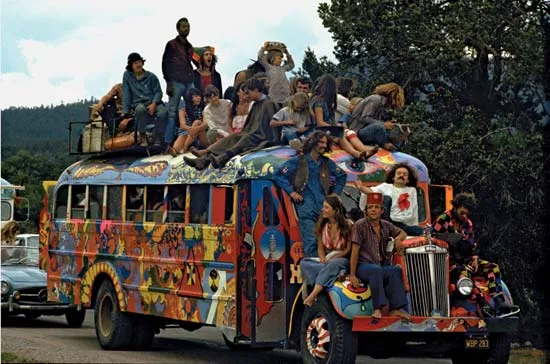
Who am I talking about?
Stop. Before our Boomer readers get upset, we need to establish who I am talking about when I derisively say “boomer.”
I am not talking about the patriots who volunteered to fight in the Vietnam War (a justified war that was sadly lost by a feckless American public). Contrary to popular belief, only 25% of the troops who served in Vietnam were drafted. In World War II, 61% of troops were drafted. Nor am I speaking of the nearly 40% of under-30 voters who voted for Richard Nixon in 1968, at the literal height of the hippie movement. And certainly not those who supported the “Hard Hat Riots” in the 1970s.
The Boomers who fought, tooth and nail, against Communism, the radical left, and the destruction of America, the results of which we are seeing today: I am not talking about you.
I am talking about those Boomers who were dropping LSD with Timothy Leary, living in communes, and perhaps not participating in, but wishing well, organizations such as the Weather Underground. And perhaps it is the ultimate irony that many of these Boomers, who had no problem tripping out in 1968, became “yuppies” in the 1980s who supported Ronald Reagan when it became clear they could become rich off his pro-American policies. Those of you who burned your draft cards and said “Hell no, I won’t go,” I am talking of you when I say the word “Boomer.”
Emblems of a Generation
I am a millennial. I have no qualms about the fact that my generation won’t be judged by the 2% of us who volunteered to fight America’s enemies in the Global War on Terror after 9/11. My generation will be judged by the socialist/marxists who voted for Joe Biden and now make up much of the professional class that almost universally votes Democrat. As a millennial veteran with a postgraduate education, I can accept that my generation won’t be judged on the basis of my actions, but on those millennials who are rioting, supporting Antifa, and voting Democrat. They are the loudest and most obnoxious voices and are almost universally supported by the established media.

The bad Boomers I speak of will unfortunately be what the entire Boomer generation is judged upon. Sadly, they won’t be judged by the actions of men like Sammy L. Davis, a Boomer Vietnam War veteran who was awarded the Medal of Honor and supports President Trump. It is a great tragedy, but perhaps all generations are doomed to be judged by the median, not the maximum. When someone hears “the late 1960s,” what first enters their mind? Images of Sergeant Davis heroically fighting off Communist NVA troops, or Woodstock?

Why We Hate The Boomers
If there is one thing that young people on the left and right agree upon, it is that the Boomers are bad. For the left, it’s the usual “But you have all the wealth” whining that typically comes from a place of envy, not any sort of serious political discourse. The left despises the Boomers because they control disproportionate amounts of America’s wealth, political power (see our geriatric legislators), and cultural mandate. The left’s disdain for the Boomers is much like the Boomers’ disdain for their parents (who won an actual World War): They’re angsty, unaccomplished, and have been coddled in too much material comfort while marinating in endless racial grievance propaganda.
However, on the right, the disdain cuts far deeper. I can only speak for myself, but I look at the neoliberal boomer establishment, who thinks they deserve my respect, and I ask, “Dude. You guys dodged your way out of Vietnam. Your parents didn’t burn their draft cards; they won a world war after growing up in the Great Depression! Why should I respect you?”
By almost any measure—specifically the ratio of median home price to median household income—a 25-year-old in the 1960s had significantly greater economic leverage than their counterpart today. We are not just talking about inflation; we are talking about the ability to purchase the fundamental assets of the American Dream.
The United States had just won the worst war in human history. All its serious industrial rivals, Germany, Japan, the USSR, and Great Britain, were either bombed to dust or heavily in debt to US financiers. Or they were Communist hellholes. What the Boomers had in the 1960s was unprecedented growth that was a historical anomaly: in the course of world history, there isn’t much like it, at least not on such a massive, global scale.
But I do not begrudge you your prosperity: You were born in a good time. That isn’t your fault, and I would be little better than a leftist critic of the Boomers if I held that against you. No, the real criticism is that the Boomers thought this level of unprecedented growth from 1945-1970 *was the new norm, not a historical anomaly.*
It is often said, “If you want to know how a man thinks, see what the world was like in his 20s.” When the Boomers were in their 20s, from 1965 to 1985, even with the Oil Crisis of the 1970s and the whole Carter Administration, it really did seem like American prosperity could be taken as a given. The idea of ever-expanding American growth in the long run was taken as gospel, because it *was* the reality of the period.
The End of History
In 1992, Boomer Francis Fukuyama wrote “The End of History and the Last Man.” In it, he basically said that liberal democracy was the natural end-state of things, and that humanity had “not just … the passing of a particular period of post-war history, but the end of history as such: That is, the end-point of mankind’s ideological evolution and the universalization of Western liberal democracy as the final form of human government.”

Fukuyama’s assumptions in that book were total and utter bunk. I could go on with a laundry list about why he was wrong, but the last 34 years of history should suffice. Not even Fukuyama believes his “end of history” thesis was correct. But for a time, in the 1990s (of which I can remember, as a teenager) it did at least seem plausible.
The 1990s were a time when the US was hot off the heels of two major victories: the fall of the Berlin Wall and our victory in Desert Storm, the last war in which the US unequivocally won. Films like “Independence Day” could at least propose to an audience that the US military could defeat alien invaders with a massive technological edge. To those Gen Z readers: The 1990s were a time when there was unbridled optimism, US national security could be taken as a given, and we had no peer, or even near-peer, rivals. American morals were such that if Bill Clinton had conceded he did have sexual relations with that woman, Ms. Lewinsky, it would have ended his presidency.
And then it all came crashing down. In my senior year of high school, the enemies of America showed that it wasn’t quite the “end of history” as Fukuyama had believed. Liberal democracy was not the natural end-state of human existence, and US National Security could not be taken for granted. For millennials, 9/11 was to us what Pearl Harbor was to the Greatest Generation, or the Assassination of JFK was to the Boomers.

Off To The Gulf We Marched
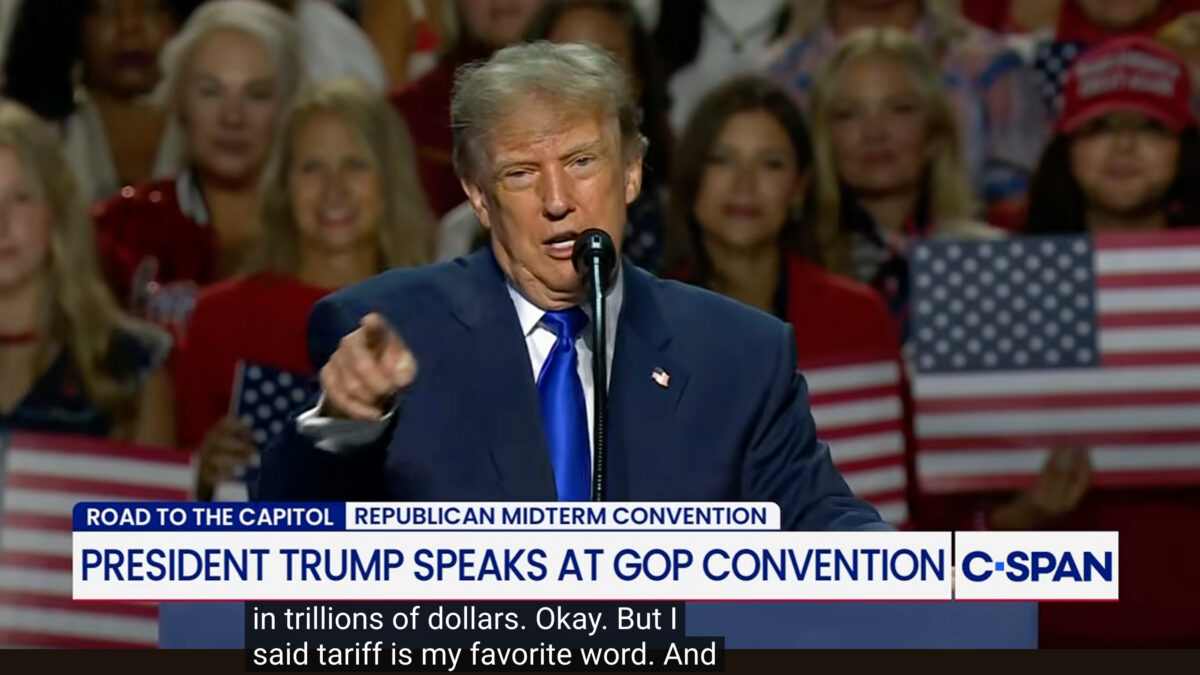
If there is one thing I will give President Trump, it is this: during the entire Iraq War, he was railing against it. I hated him for it at the time. I was a soldier in the United States Army, and here was some New York Billionaire (who had donated money to the Clintons!) now calling President Bush a monkey and arguing a position that was helpful to Saddam Hussein.
Trump was, of course, in retrospect, correct. But at the time, it didn’t seem that way. I still recall how World War II veterans were saluting us as we went over to Iraq and Afghanistan. The message was clear: “Go get ’em, like we did the Krauts and the Japs!” With the men who stormed the beaches of Normandy and Iwo Jima saluting us, and telling us to go get the evil bastards who had murdered 2,998 Americans on 9/11, could a decent man feel otherwise?
I don’t blame them. America had been attacked. And on December 7th, 1941, it wasn’t Germany that attacked the United States. It was Japan. Yet America blamed Germany for Pearl Harbor, claiming that the “primitive” Japanese “couldn’t have done it without the Germans.” Those venerable members of the Greatest Generation, who carried the flag of America’s honor to Europe, Asia, and North Africa, were doing what they felt was right, and did almost every one of us who signed on the dotted line after 9/11.
I can only blame the people who sent us, who used lies and falsified CIA reports. It was the Boomers. Many of whom, like John Bolton, had managed to dodge their way out of fighting in Vietnam, but had no problem sending us to the Middle East. Bolton had served in the National Guard, which at the time was a way to avoid deployment to Vietnam. It is with some irony that many who sought service in the National Guard to avoid Vietnam would live to see the day when the National Guard deployed to Iraq and Afghanistan almost as much as the active duty Army. I should note, for fairness’ sake, that although George W. Bush did volunteer for the Texas Air National Guard, he at least attempted to serve in Vietnam but was rejected due to a lack of flight hours. As far as I know, John Bolton never tried to serve in Vietnam.
Don’t Trust Anyone Over 60
To the Boomers who burned their draft cards and engaged in luxury beliefs, such as the idea that freedom could be had without the sacrifice of blood, I don’t hate you. I look down upon you as coddled children of an era in which luxury beliefs such as yours could be permitted. And to the Boomers who were marching to Vietnam to save the southern part of an Asian nation from a communist north, I salute you, as an American who was born in Korea and is Asian. If the Korean War was justified to save the southern part of an Asian nation from communism coming from the north, then why wasn’t Vietnam?
I just don’t trust you. You are used to the idea that luxury beliefs, propagated by franchises such as Star Wars and Star Trek, can survive. And they could, for that brief period in history, when the US was pre-eminent. But now we must return to reality: American security can *not* be taken as a given. The United States is no longer a superpower: we are merely the most powerful of the “Great Powers” in a 19th-century sense. Certainly, our power margin in terms of economy and ability to project force is strong, but we are no longer the lone superpower facing a post-Soviet World, or a Soviet Union that was never going to be a serious competitor to the US, despite its nuclear arsenal.
It’s a brave new world, Boomers. Chinese Communism, Islam, and enemies within are rising to challenge the United States. The values of 1968 say that if we “just all hold hands, we’ll all get along!” Bullshit. You can’t “COEXIST” with people who want you dead (because you’re not Muslim) or people who believe they are the “center of the world” (The Chinese Middle Kingdom mentality). The idea that Captain Picard, Captain Kirk or Master Yoda can give some Boomer Liberal speech about “how we are all really just friends” does not apply. This isn’t the world of George Lucas, Gene Roddenberry, Francis Fukuyama or Timonty Leary.
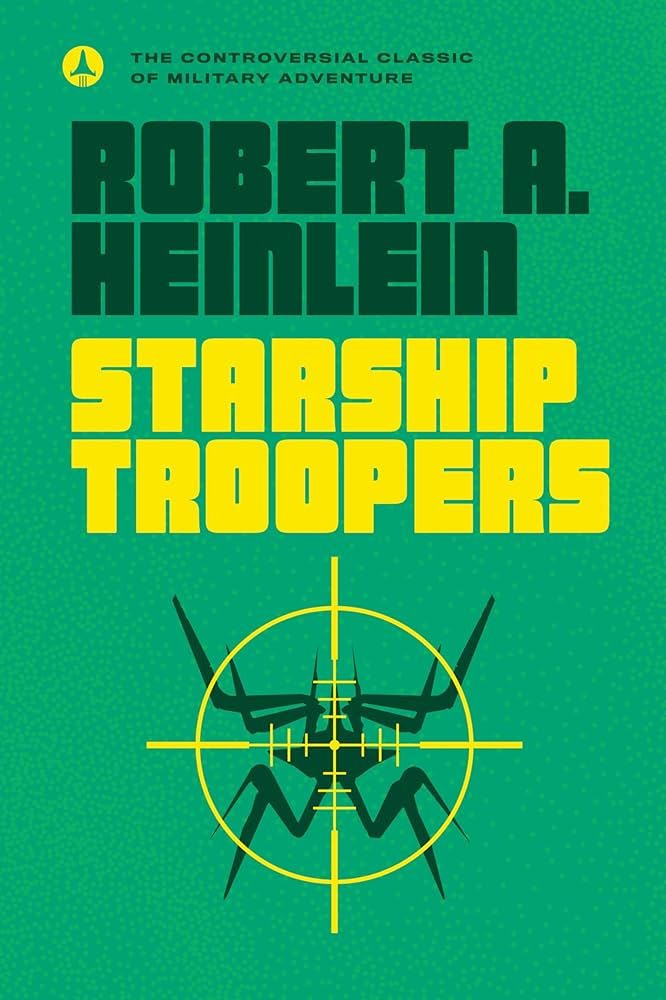
It’s the world of Robert Heinlein. We are living in a Heinleinian world now, and it is time for our generation to stop waiting for permission from the ghosts of 1968 and start building the future we want to live in.