


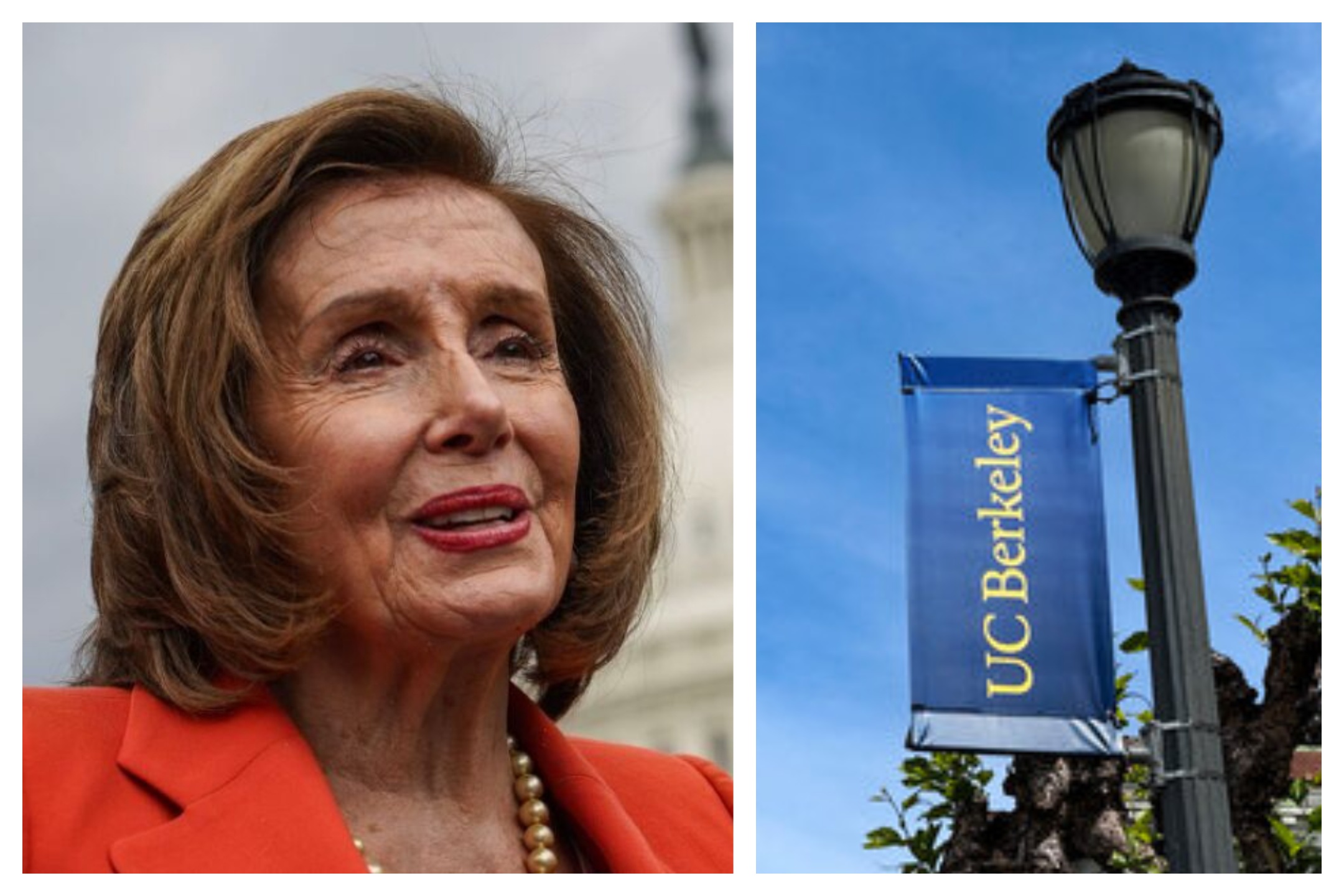
UC Berkeley has partnered with former Speaker Nancy Pelosi to launch the Nancy Pelosi Institute for Representative Democracy. Sold as a nonpartisan center to strengthen American democracy and solve challenges like polarization and artificial intelligence, the institute will open in January with Pelosi co-teaching a course on Congress. Chancellor Rich Lyons said Berkeley intends to do more than study democracy – they are building the institute to strengthen it. With Pelosi’s name on the door, the claim is satirical gold.
Berkeley presents itself as a beacon of civil discourse. In reality, it is the campus where conservative speakers have faced riots, disinvitations, and administrative surrender for years. The birthplace of the Free Speech Movement now treats dissent as danger. Pairing it with Nancy Pelosi – whose speakership delivered partisan impeachments, procedural warfare, and the “pass the bill to find out what’s in it” Obamacare defense – makes the nonpartisan branding absurd.
The institute’s four pillars sound noble: strengthening democratic institutions, overcoming societal challenges, promoting human rights and civil rights, and ensuring leadership that represents the full spectrum of perspectives. Translated from Berkeley-speak, this means more identity politics, climate mandates, and globalist frameworks sold as “human rights.” “Full spectrum” here excludes the millions of Americans who prioritize secure borders, constitutional limits, and cultural cohesion over elite consensus.
Pelosi said the work of democracy is never finished and that she is honored to help equip the next generation. Her career tools have included selective rule changes and framing political opponents as existential threats. The institute has secured over $35 million toward a $50 million goal and will create centers on the U.S. House, gender and politics, AI innovation, and a Global Dignity Lab. A Bancroft Library exhibit on her career is already planned. This is less scholarship than brand preservation and ideological pipeline-building.
Political science chair Scott Straus said the institute will bridge academics and real-world governance. It will actually connect campus progressivism to the permanent political class, teaching students – including many first-generation and Pell Grant recipients – that democracy requires more experts and less input from ordinary citizens. Berkeley’s “diverse” pipeline will now deliver the same coastal worldview in academic packaging.
This project does not strengthen democracy. It mocks it. Lyons vowed they are building the institute to strengthen democracy. What they are constructing is another taxpayer- and donor-funded monument to the notion that only credentialed insiders understand the republic. Real representative democracy needs secure elections, accountable power, and leaders who serve the people who built the country – not another Berkeley-Pelosi lecture series telling them they are the problem.
