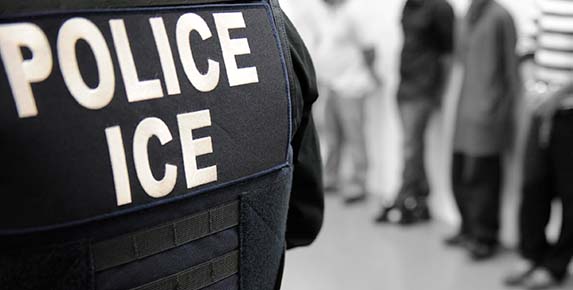
A sweeping escalation in immigration enforcement under President Donald Trump is rapidly reshaping the national debate, as federal authorities report hundreds of thousands of arrests and a renewed focus on removing criminal illegal aliens from American communities.
According to a report from the Washington Examiner, citing senior officials, U.S. Immigration and Customs Enforcement has arrested nearly 457,000 individuals since January 2025. The figure reflects what the administration has described as the most aggressive immigration enforcement push in modern U.S. history.
Acting ICE Director Todd Lyons told lawmakers that enforcement activity has surged dramatically. “We’ve significantly increased our operational tempo… We’ve arrested nearly 457,000 aliens,” he said during a congressional hearing.
Officials emphasize that the majority of those detained have criminal histories. Roughly 61 percent—about 281,000 individuals—were either convicted of crimes or charged with serious offenses.
The list of offenses cited by federal authorities is extensive and often severe. In a recent operation, ICE announced the arrest of multiple individuals convicted of crimes including child molestation, kidnapping, aggravated assault, and sexual violence.
Among those taken into custody was Filiberto Aleman-Sanchez, a Mexican national convicted of sexual contact with a child in Texas. Another, Viater Twiringiyimana from Rwanda, had been convicted of child molestation and burglary in Washington state.
Additional arrests included individuals convicted of kidnapping for sexual assault, violent attacks with deadly weapons, and other serious felonies. Officials say such cases underscore the agency’s core mission.
“Every day, the courageous men and women of ICE risk their lives to arrest criminal aliens to safeguard American communities,” said Acting Assistant Secretary Lauren Bis. “Our officers are removing heinous criminals from our communities.”
The administration has framed these actions as a direct response to years of what it describes as lax enforcement and open-border policies. Critics of previous policies argue that failure to enforce immigration law allowed dangerous individuals to remain in the country.
At the same time, enforcement efforts have collided with resistance from sanctuary jurisdictions. In New York City, officials recently refused to honor a federal detainer request for an illegal immigrant accused of a deadly arson attack.
The suspect, Roman Amatitla, is charged with eight counts of second-degree murder after allegedly setting fire to a Queens apartment building. Authorities say he watched the blaze unfold while drinking beer as residents attempted to escape.
Despite the severity of the charges, city officials declined to transfer him to ICE custody. The Department of Homeland Security sharply criticized the decision, warning that such policies put public safety at risk.
“Because of sanctuary politicians, the NYCDOC told ICE that they will refuse to cooperate,” the agency said. Officials argue that such refusals effectively shield dangerous individuals from deportation.
The broader enforcement push has also drawn intense media scrutiny, particularly in cases involving foreign students and visa holders. Several high-profile arrests have been portrayed as targeting individuals with otherwise strong academic or professional backgrounds.
One such case involved Doğukan Günaydın, a Turkish national studying in Minnesota. Media outlets described him as a promising student, but federal authorities pointed to a prior conviction for driving under the influence.
Günaydın had a blood-alcohol level more than twice the legal limit during his arrest and later pleaded guilty. Officials stated that his visa was revoked based on that conviction and alleged misrepresentation in his application.
Similarly, another case involving Rümeysa Öztürk, a Turkish doctoral student, was widely framed as a free speech issue. However, federal authorities cited broader concerns related to immigration status and potential national security implications.
According to officials, visa revocation decisions can be based on a range of factors, including behavior deemed inconsistent with U.S. interests. These determinations often rely on open-source intelligence and publicly available information.
Law enforcement agencies, including DHS and the FBI, routinely use such methods. Officials maintain that the question is not how the information is gathered, but whether it meets the legal threshold for action.
Critics of enforcement efforts have argued that such actions are excessive. However, administration officials counter that immigration law is clear: violating the terms of entry can result in removal.
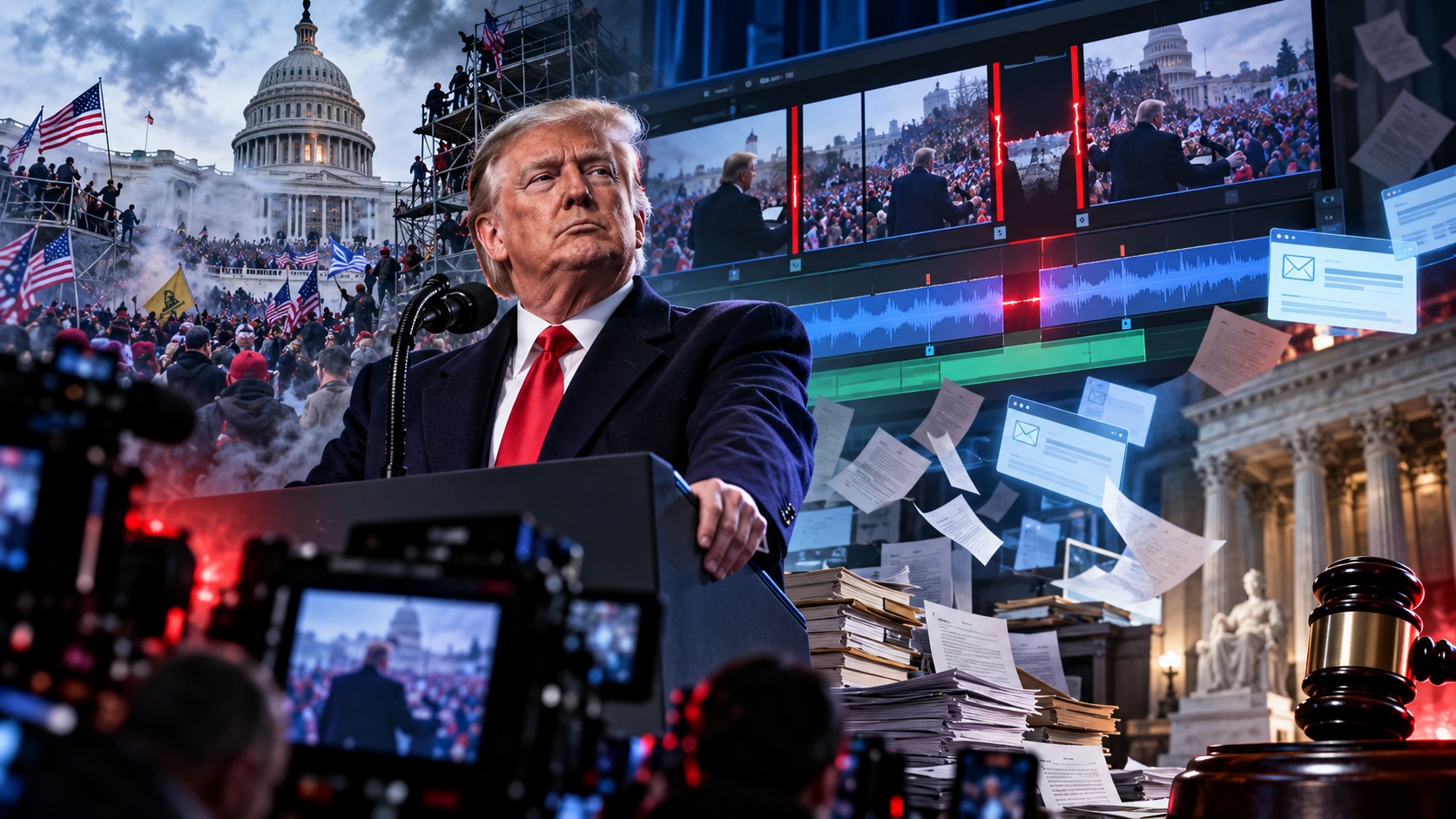
“We have to rely on ourselves,” Trump said in a recent speech, reiterating his broader position on national sovereignty and enforcement. “We can’t rely on outside countries and sources.”
The scale of enforcement has not come without controversy or personal cost. Lyons, who oversaw the surge in arrests, announced he would step down at the end of May after facing sustained harassment.
According to Tom Homan, the backlash extended beyond professional criticism. “They doxed his wife and his kids and protested his home,” Homan said, describing the pressure placed on the director’s family.
Despite these challenges, officials say enforcement operations will continue at a high pace. Homeland Security leadership has credited Lyons with revitalizing an agency that had been constrained in prior years.
“Thanks to his leadership, American communities are safer,” said Homeland Security Secretary Markwayne Mullin, pointing to record removal numbers.
Underlying the enforcement push is a broader demographic and policy debate that continues to intensify. New data has added urgency to concerns about the long-term impact of immigration policy.
Research from the Pew Research Center found that nearly 10 percent of all births in the United States in 2023 were to mothers in the country illegally or on temporary status.
Out of 3.6 million births, approximately 320,000 fell into this category. The number represents a steady increase over recent years and the highest total in more than a decade.
Policy analysts argue that this trend highlights structural incentives embedded in current law. Under existing interpretations of the 14th Amendment, children born on U.S. soil automatically receive citizenship.
Critics contend that this policy creates what they describe as a “pull factor,” encouraging illegal entry and long-term settlement. They also point to the financial implications for public services and taxpayers.
Concerns extend beyond economics to questions of national security. A recent case involving two U.S.-born individuals—children of illegal immigrants—accused of attempting to attack a military base has intensified scrutiny.
Officials argue that such incidents illustrate the broader risks associated with unchecked immigration and automatic citizenship policies. The case has been cited as a warning about the long-term consequences of current practices.
At the legal level, the issue is now before the US Supreme Court. A pending case will determine whether Trump’s executive order restricting birthright citizenship can be upheld.
The administration maintains that the 14th Amendment has been misinterpreted for decades. “The amendment has always excluded those not subject to U.S. jurisdiction,” the order states.
Supporters argue that revisiting this interpretation is essential to restoring the rule of law. Opponents warn that any change could have far-reaching implications for millions of people.
As enforcement intensifies and legal battles unfold, the United States finds itself at a pivotal moment. Immigration, citizenship, and national security have converged into one of the most consequential policy debates in decades.
From record arrests to rising birthright citizenship numbers, the data points to a system under mounting strain. The outcome of this debate will shape not only policy, but the broader direction of the country in the years ahead.