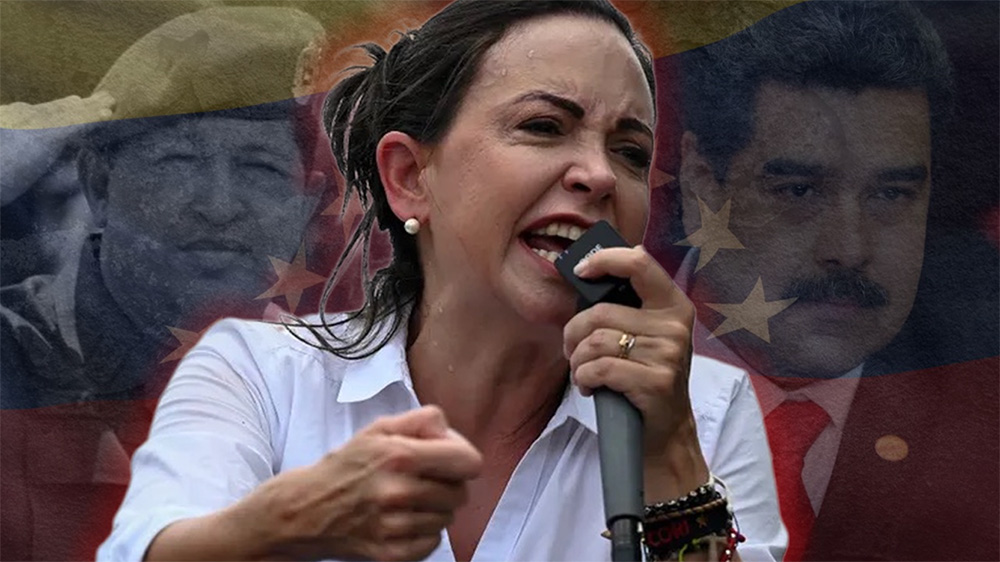
Venezuela today is not simply a nation in crisis. It is a failed state—corroded by organized crime, captured by a narco-regime, and further destabilized by an “opposition” that has too often functioned as little more than controlled dissent. For more than two decades, the Chavista project — spawned by Hugo Chávez, the late socialist strongman who founded Chavismo, and continued by Nicolás Maduro, his handpicked successor and long-time authoritarian leader until his capture by U.S. forces in January 2026 — systematically dismantled Venezuela’s sovereignty, institutions, and economy.
For decades leading up to Chávez’s rise, Venezuelans had endured governments dominated by left-wing parties that had promised democracy but delivered corruption, mismanagement, and the theft of public resources. From 1958 onward, these parties steadily eroded trust in the country’s political system, presenting themselves as reformers while robbing the banks and entrenching cronyism.
By the late 1980s, Venezuela’s political class was thoroughly discredited, and public frustration had reached a breaking point. This climate of disillusionment paved the way for a figure who could present himself as an outsider to the establishment.
It was in this sociopolitical context that Chávez emerged, presenting himself as the alternative to the corrupt, ineffective order Venezuelans had come to despise. As a military commander turned failed coup-plotter, he was cast not as a career politician but as an outsider willing to confront the entrenched parties.
During his televised surrender after the failed 1992 coup, Chávez uttered the words “Por ahora,” meaning “for now.” The phrase implied that his struggle was only temporarily halted, not defeated. That defiant statement transformed his public image, elevated his profile, and allowed him to channel widespread popular anger into an apparently new political identity.
Yet what seemed to be a break with the past was, in reality, the continuation of the same ideological current that had governed since 1958—only in a more radical and authoritarian form.
This gave birth to the oppoFiction — a fictitious opposition and Marxist-progressive narrative meticulously constructed to preserve power.
By absorbing the old left-wing apparatus and rebranding it under his leadership, Chávez did not dismantle the corruption of the past; he refashioned it to serve his radical left project. In doing so, he cast himself as the virtuous alternative while, in truth, advancing an even more extreme agenda—one that glorified vice, undermined virtue, and consolidated his control over Venezuela.
The consequences are devastating. The collapse of a nation with the world’s largest proven oil reserves has produced one of the largest humanitarian exoduses in modern history, with nearly a third of Venezuelans forced into displacement. The social fabric has been torn apart, families divided, and an entire culture erased, while the country has become a central platform for drug trafficking across the hemisphere. This is not politics as usual, but the institutionalization of criminality and state terrorism on a continental scale.
President Donald Trump recognized what much of the international community refused to admit: that the Maduro regime is illegitimate, operating as a drug cartel under the façade of a government. President Trump’s America First policy refused to normalize narco-tyranny, placing the safety of the American people above all else. These are drugs that end up on the streets of the United States, killing American citizens—hence why confronting Maduro’s regime was, above all, a matter of protecting the American people. By applying sustained pressure, Trump demonstrated the clarity and firmness of leadership necessary to confront a transnational criminal syndicate masquerading as a state.
Today, Venezuela is trapped between two political blocs. On one side stands Chavismo - the ruling party—which is part of the São Paulo Forum, an international coalition of communist parties that for decades has served as a transnational shield for authoritarian regimes in Latin America, and which was originally founded by Fidel Castro and Lula da Silva.
On the other side stands the oppoFiction: a manufactured opposition that is no less tied to international networks. It operates within the Socialist International, a global coalition of socialist parties currently led by Spain’s Prime Minister, Pedro Sánchez. Far from offering Venezuelans a genuine alternative, this so-called “opposition” remains anchored in the same ideological framework as the regime it claims to oppose. It does not represent a rupture, but rather the continuation of the Chavista model—a different mask to perpetuate the same power.
Venezuela has gone through a long rotation of controlled opposition leaders—the most notable being Juan Guaidó (2019–2023), who proclaimed himself interim president in “defiance” of Nicolás Maduro. However, Guaidó was himself a product of the social-democratic party Voluntad Popular, part of the very establishment he pretended to be fighting against.
Guaidó was no exception. Before and after him, other figures have stepped into the opposition spotlight following the same script—Henrique Capriles, María Corina Machado, and, more recently, Edmundo González. All of them, though seemingly different in style, have ultimately fit into the same oppoFiction construct—a functional opposition that legitimizes Chavismo while pretending to confront it.
HENRIQUE CAPRILES: THE CONTRADICTIONS OF A FALSE OPPOSITION LEADER
Henrique Capriles Radonski has been, for more than a decade, the unfulfilled promise of an opposition that never dared to be genuine. Today, his latest contradiction exposes him completely—the same man who once accused Chavismo and the military elite of drug trafficking now demands that President Donald Trump provide “proof” of what the Venezuelan people endure firsthand and what the entire world already knows.
It takes little effort to recall Capriles pointing out in interviews and speeches that the Chavista regime was rotten to the core with drug trafficking, that the military was “up to its neck” in shady dealings, and that the state had been turned into a cartel with a political veneer. Consistency, however, was never his virtue, and today Capriles acts as if those accusations had never come from his own mouth.
Moreover—as is typical in the oppoFiction—Capriles ends up playing into Chavismo’s hands by suggesting, in an interview with CNN on August 29 of this year, that Maduro and Trump should engage in dialogue and negotiation, arguing that Maduro is willing to do so.
The question is inevitable. What changed? Did Chavismo stop being a narco- regime, or did Capriles simply choose to surrender to coexistence with his own executioners?
Capriles, a self-proclaimed Marxist-Leninist - who in recent years has tried to present himself as a “moderate” leader—has historically moved within the ranks of Primero Justicia, a party that emerged in the 2000s under the banner of “humanist centrism.” In practice, however, this party eventually integrated into Mesa de la Unidad Democrática (MUD), a coalition that for more than two decades has operated as an opposition façade within the Chavista system —a pliant left that, far from confronting power, has ultimately ensured the survival of the very regime it claims to confront.
It’s not me saying it. On February 14, 2012, then–Secretary General of the Socialist International, Luis Ayala, publicly praised Capriles’s progressive agenda.
History marks two decisive moments:
In 2012, Capriles ran against Hugo Chávez at the end of his rule, with a nation desperate for change. The numbers suggest that Capriles had won a majority that was erased by a well-oiled system of electoral fraud. Instead of defending that victory, he chose silence and complicity.
A year later, 2013—after Chávez’s death, with Maduro weak, unpopular, and sustained only by the inertia of power—Capriles won again… and once again, surrendered. He urged supporters to “channel the anger,” only to smother the outrage of millions in the swamp of conformity.
These two presidential elections could have shattered the regime, but were ultimately bargained away and buried by a man who preferred to protect his standing within the system rather than bear the cost of freeing Venezuela.
Since then, Capriles has followed a comfortable path as a soft critic - calling for reforms, participating in sham elections, and sharing the political stage with Chavismo. That coexistence, disguised as institutional legitimacy, has only strengthened a system that should have been confronted at its roots.
Today, Capriles’s cynicism is on full display: he attacks the only global leader who has challenged Chavismo without ambiguity—Donald Trump—demanding evidence of what he himself once declared with conviction. The contradiction is not accidental; it confirms that Capriles does not play to defeat Chavismo, but to help sustain its tyranny alongside the Chavista elite.
As if that were not enough, Capriles has also been a harsh critic of the Trump administration’s tariff measures against countries that purchase oil from Venezuela. What more can I say?
Henrique Capriles is one of the most visible faces of the oppoFiction - that false opposition which disguises itself as an alternative but, in practice, collaborates with the regime, sells victories, diverts outrage, and leads the people into resignation.
The political story of Capriles is not that of a fighter defeated by an implacable system, but of a politician who, with victory in his hands, chose to surrender it— and to settle comfortably within the very power structures he claimed to challenge.
Capriles’s contradiction is not an isolated mistake but the very summary of his career: to accuse, then retract; to win, then surrender; to promise, then conform. For that reason, his role is not that of an authentic opposition leader, but of a collaborator who served as the regime’s escape valve. And for that same reason, those who truly sacrifice for Venezuela’s freedom know that history will not remember Capriles as the man who fought to defeat Chavismo, but as the one who legitimized it until the very end.
JUAN GUAIDÓ: THE “INTERIM PRESIDENT” MIRAGE AND THE FINANCIAL FRAUD AGAINST VENEZUELA & THE U.S.
Juan Guaidó was the most audacious emotional fraud in Venezuela’s recent history—arguably one of the most refined products of Cuba’s political police, the G2. Presented as an “international hope” and backed by foreign governments, Guaidó ultimately became a containment tool that saved the regime at its weakest point. Instead of provoking a real rupture, he neutralized public frustration, signed secret deals, propped up sham embassies, and, while the people starved and were repressed, he traveled and negotiated his share of power.
His betrayal was not only political but financial. Guaidó orchestrated the largest international swindle against the Venezuelan cause, becoming the economic executioner of the people’s hope. To that end, he diverted funds from USAID - the United States Agency for International Development - along with resources from other foreign aid programs, looted for the same purpose. That money was meant to help liberate Venezuela.
Meanwhile, Guaidó built a structure of fictitious “officials” - fabricated ministers and representatives—created solely to justify the flow of millions of dollars in USAID. That money never reached the resistance or financed the fight for freedom; it vanished into private accounts, bureaucratic luxuries, and corruption masquerading as opposition.
Among the most notorious scandals of Juan Guaidó’s tenure is the Cúcuta case (2019). Under his leadership erupted the so-called Cucutazo - a corruption scandal in which his “interim government” received funds and humanitarian aid on the Colombian border, only for Guaidó’s envoys to divert them toward personal expenses, hotels, and parties instead of delivering them to the Venezuelan people. The scandal exposed the rot behind the “humanitarian” front and weakened the opposition’s cause while benefiting the regime.
Another emblematic case was the plundering of Monómeros, a key Colombian company which, under the so-called “Guaidó administration,” was left bankrupt and turned into spoils for political mafias, despite its vital importance to Venezuela’s industry.
Finally came the opaque management of CITGO, the Venezuelan oil subsidiary in the United States, where Guaidó promoted dubious appointments and questionable contracts—consolidating a system that enriched the same power circles as always, while the promise of transparency collapsed.
The spectacle surrounding Juan Guaidó in 2019 exposed the deception beyond doubt. Marketed as a historic turning point, it was, in fact, a carefully choreographed maneuver to buy Chavismo time. By presenting this controlled figure as “president,” the regime prolonged its survival while keeping international actors distracted with the illusion of democratic conflict.
The pattern has remained consistent and always at odds with justice. Under Joe Biden’s administration, prisoner releases included Maduro’s nephews, convicted of drug trafficking in the United States after being caught with over 1,500 pounds of cocaine, as well as the scandalous release and return to Venezuela of Alex Saab, the regime’s chief money-launderer and financial operator.
These releases were not the product of authentic opposition efforts but the direct result of the so-called Barbados Table, packaged as a “democratic transition” and “free elections” that never existed. In truth, it was all part of a scheme to guarantee impunity and recover key operatives captured during Trump’s first presidency.
This concept—promoted by “opposition” figures carefully vetted by the regime and endorsed by certain international allies—presents itself as a gradual path toward reform, dialogue, and democracy. At its core, it functions as a mechanism engineered by Cuban intelligence to buy Chavismo time and preserve its network of complicity by recycling “new” faces such as María Corina Machado.
María Corina Machado described the exchange that allowed Alex Saab’s return to Venezuela as “an episode within that path of construction” toward “free and fair elections.” She also acknowledged having been “involved” in the Barbados negotiations, as well as in the “complementary” talks between the United States and Venezuela, in order to “contribute” to that objective.
The so-called “negotiated transition” is nothing more than a political scam - a mirage designed to prolong Venezuela’s agony, sustain the business of political operators, and ensure that tyranny never faces accountability.
It is both alarming and humiliating to now see Congressman Carlos Giménez having lunch, just weeks ago, with Juan Guaidó, despite everything known about this man’s modus operandi—a traitor to Venezuelans fighting for their freedom and responsible for diverting USAID funds that were meant to support Venezuela’s liberation, therefore defrauding the U.S. federal government.
Even more serious is that a member of the United States Congress, with extensive access to timely information and the background of these events, would choose to lend legitimacy to Guaidó. In doing so, he undermines his own political judgment and aligns himself with the façade of a false opposition that has only served to prolong Chavismo’s lifeline and the continuity of the Cuban dictatorship. This has sparked deep discontent within both the Venezuelan exile community in South Florida and the Cuban exile community.
MARÍA CORINA MACHADO: THE HEIRESS MASKED AS A RADICAL
It is an undeniable fact that over the past 26 years, Venezuela’s so-called opposition has paraded an endless procession of clownlike messiahs. Its latest creation - propped up by the regime under the guise of opposition - is María Corina Machado, who presents herself as the “tough” and incorruptible voice against Chavismo. Yet her record reveals the same incoherent coexistence with the ruling order that has defined those who came before her.
Machado has projected herself as the leading face of the resistance. Through her liberal party, Vente Venezuela, and as head of Plataforma Unitaria Democrática - a coalition that professes to work toward the “restoration of democracy” - she has sought to consolidate an image of firmness and rupture. In every speech and campaign, she repeats the promise to end Chavismo and liberate Venezuela from dictatorship.
But behind that illusion of firmness lies a much darker reality. Far from truly breaking away from the system, Machado played a central role in stripping the Venezuelan people of their means of self-defense, promoting the disarmament of the very population she purports to defend. Thus, while she vpresents herself as an alternative, in practice, she helped leave Venezuelans defenseless in the face of this sanguinary regime’s brutality.
Machado’s complicity even crosses borders. By embracing globalist frameworks that erode sovereignty and participating in forums such as the Socialist International, she aligns herself with the very ideological currents that sustain the dictatorship. Machado’s “opposition” has not only failed to dismantle Chavismo - it has actively enabled it, reinforcing the same system of control it claims to challenge.
María Corina Machado is part of the machinery that feeds off the dictatorship to sustain itself as a kind of “eternal opposition.” She doesn’t stand apart from Chavismo; she merely repackages it under her own label, presenting a continuation of the same system under her personal brand as the “Iron Lady” - now with a touch of LGBTQ+ chic.
EDMUNDO GONZÁLEZ: FROM CHÁVEZ’S AMBASSADOR TO THE REGIME’S “CHANGE” CANDIDATE
Edmundo González is not an opposition leader but a historical instrument of Chavismo. He served as Hugo Chávez’s ambassador to Argentina from 1999 to 2002, acting as the regime’s official voice in that country—defending and legitimizing the Chavista agenda throughout the region while Venezuela was being dismantled institutionally.
Far from distancing himself from that project, González continued to serve Chavismo as an official within the Ministry of Planning and Strategy, a position he held until Chávez’s death. His sudden emergence as an “opposition candidate,” and now as “President-elect,” is nothing more than another oppoFiction operation - a carefully staged production meant to prop up the tyranny without ever questioning its foundations.
During his tenure as Chávez’s ambassador in Argentina, and even afterward, González actively promoted Venezuela’s entry into MERCOSUR, the regional economic and political bloc in South America. In his book, La incorporación de Venezuela al MERCOSUR: Implicaciones políticas en el plano internacional, González praised Chávez for securing the country’s inclusion in the bloc.
For Venezuela, its entry into MERCOSUR under Chávez was, in reality, a maneuver for international legitimacy. It never brought economic benefits to the Venezuelan people; it only provided diplomatic cover for Chavismo. In practice, MERCOSUR has served the regime far better than it has served the cause of Venezuelan freedom—allowing it to pose as part of a “respectable” club of nations while concealing its criminal and socialist ideological core.
It’s hard to forget how, in his role as ambassador to Argentina, in early March 1999, González served as Hugo Chávez’s personal aide on a propaganda tour carefully designed to manipulate public perception. The goal was to launder the caudillo’s image, soften his profile as a communist military figure, and present him as an acceptable leader to the international community.
On April 11, 2002, Venezuelan military officers ousted Chávez over abuses of power. Yet on April 13 of that same month, the so-called opposition, in complicity with sectors of Chavismo, restored him to power under the pretext that he had won the presidential elections democratically.
Barely nine days after that patriotic uprising, on April 20, 2002, González openly aligned himself with Chavismo - defending and promoting Chávez before the masses as a democratic leader, and betraying the officers who had tried to free Venezuela from an authoritarian regime already showing its first signs of tyranny.
“President Hugo Chávez has conceived and implemented a geopolitical project intended to serve as the expression of a continental movement uniting the radical left forces active across the hemisphere and ideologically opposed to the United States. The project seeks to establish new centers of power in an effort to weaken the hegemony of North American imperialism,” González stated.
In a 2006 article - in which González praises the alliance and the “privileged strategic relationship” between Venezuela and the Cuban regime - he wrote:
“Chávez’s political message has succeeded at a time when democracy appears unable to reverse the conditions of inequality affecting many of our societies.”
He added:
“…there is no doubt that they constitute an invaluable component of Venezuela’s strategy, one that has translated into a strengthening of Chávez’s leadership and influence not only regionally but on the international stage.”
González made his role crystal clear on July 28, 2024, the day of the fraudulent “presidential election,” when - alongside María Corina Machado - he urged the public to stop protesting and go home, smothering popular indignation. Shortly thereafter, he declared he would be “sworn in on January 10, 2025” - a grotesque farce that served only to calm the public and give the regime oxygen.
His incoherence became even more blatant when he left Venezuela aboard the presidential plane of Spain’s corrupt Pedro Sánchez, head of the Socialist International—revealing exactly where his loyalties lie. Worse still, González has rejected the use of force to free the country and even went so far as to assert that Chavismo “is democratic” and that a unity government with them should be promoted: “Chavismo will have, in our government, a door for political participation.”
Edmundo González is yet another Chavista operative disguised as an opposition candidate to help perpetuate the tyranny.
However, the danger has never been confined to Venezuela. Between 2018 and 2019, Nicolás Maduro’s regime, working with its Castro-Chavista allies, launched a sophisticated subversion campaign aimed at the United States.
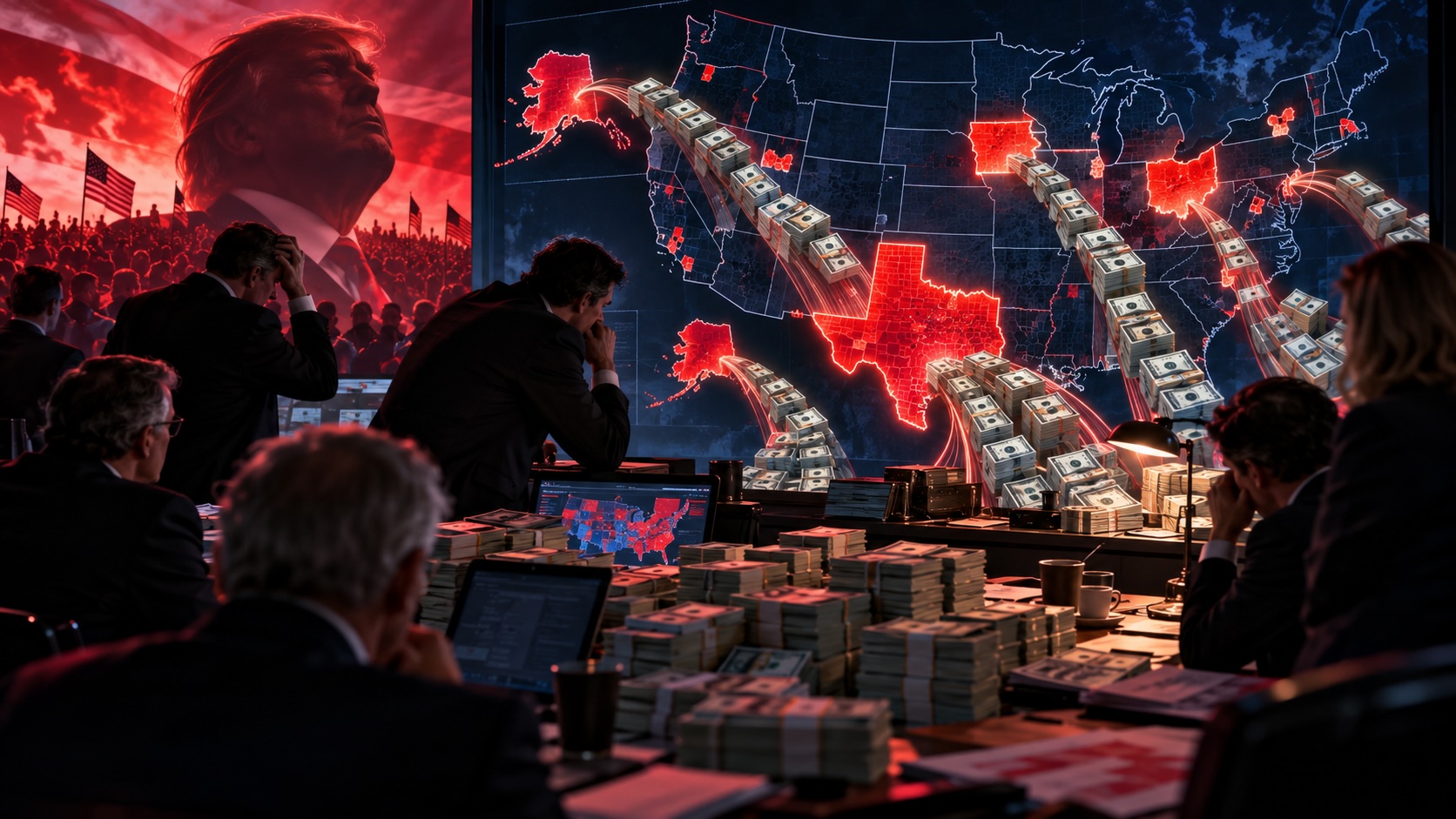
Tens of millions of dollars were funneled to buy influence, shape narratives, and compromise U.S. policy from within. This was not lobbying in the usual sense; it was a tightly coordinated intelligence operation designed to neutralize any legitimate challenge to Maduro’s power.
In 2018, former Miami Republican congressman David Rivera signed a $50 million contract from Maduro’s regime to rehabilitate the dictator’s image and open lobbying channels in Washington. Rivera later acknowledged that $15 million of that money was routed to Leopoldo López, the leader of Voluntad Popular, the political organization to which Juan Guaidó belongs.
The very group the world was told to embrace as Venezuela’s “democratic opposition” was, at the same time, taking money from the regime it claimed to resist. That was not opposition—it was treason dressed up as legitimacy.
The entire oppoFiction network operates within the Mesa de la Unidad Democrática (MUD)—which, in practice, means they are all covert Chavistas and members of the International Socialist movement, hiding behind a patchwork of labels crafted in Havana. Far from being an opposition, they have grown rich in partnership with the narco-regime, suffocating Venezuela’s freedom while rolling out the red carpet for communism.
What the U.S. administrations and other foreign governments have failed to grasp is how Venezuela’s “Two Lefts” system actually works: the country’s liberation cannot be led by anyone within the MUD–PSUV establishment - the opposition represented by the Mesa de la Unidad Democrática (MUD) and the ruling Partido Socialista Unido de Venezuela (PSUV) - or by those orbiting them. Through staged rivalries, they have kept Venezuelans trapped in one fake election after another, all under the regime’s iron grip.
The so-called “official opposition” has been complicit with Chavismo more times than anyone can count. Wrapped in the flag of unity, it has cut backroom deals, validated rigged elections, and guaranteed the regime’s survival under the guise of a “democratic transition.” Instead of confronting the dictatorship, these factions have protected it—selling the illusion of change while systematically betraying the Venezuelan people.
Many in exile still buy into the oppoFiction spectacle for one simple reason. Both traditional and alternative media have been co-opted to control the narrative and shape public perception. These propaganda machines now manufacture false leaders and convince the world that only those figures represent Venezuela’s “legitimate opposition.”
On top of that, the “opposition” receives enormous sums of international funding—money that does not go toward freeing Venezuela but instead fuels the illusion that keeps the farce alive. The result is an exiled community manipulated and trapped inside a script carefully written to keep tyranny alive for more than 26 years.
It’s time to rethink and replace the failed strategy that has dragged on for nearly three decades under the same political class—and instead stand behind real fighters like those of the Rumbo Libertad movement and yours truly, Eduardo Bittar. That means supporting a genuine resistance against the Chavista dictatorship and its collaborators disguised as opposition.
I have been active in politics since 2007. I helped organize resistance cells, confronted Chavismo in the streets, and went into exile in 2017 after being persecuted. Today, I serve as the general coordinator of Rumbo Libertad, a movement known for its fearless denunciations of the fraudulent opposition that
coexists with Chavismo. I also maintain close ties with conservative leaders such as former Brazilian president Jair Bolsonaro and his son Eduardo Bolsonaro, who have recognized our movement as the only one that truly challenges the Chavista regime. A steadfast supporter of Donald Trump in 2016, 2020, and 2024, I am neither a career politician nor a red-carpet diplomat, but an incorruptible rebel whose battlefield is truth and whose weapon is unfiltered exposure.
During his first term, President Donald Trump provided millions of dollars through USAID to support the opposition movement led by Juan Guaidó—a reflection of Trump’s sincere desire to see Venezuela free. Yet this oppoFiction coalition never backed Trump, not even while he was supporting them politically and financially. They repaid his support with ingratitude, and by 2020, that same group openly sided with Joe Biden.
The lesson could not be clearer. Continuing to invest resources, credibility, and strategic capital in this oppoFiction is not a strategy—it is surrender. It guarantees only failure, strengthens the regime, and undermines the United States' leadership in the hemisphere.
Under President Donald Trump’s leadership, the United States must not repeat the mistakes of the past - neither with Venezuela nor with Cuba. It is time to break with the false intermediaries and instead empower those who represent a genuine opposition. Only then can Castro-Chavismo be dismantled and Venezuela restored as a free nation and a reliable U.S. ally in the defense of liberty. Otherwise, if Washington continues funding these traitors - leftists disguised as opposition—Venezuela will never be freed, and the Western Hemisphere will never be safe.