Argentina’s Via Navegable Troncal, commonly known as the Hidrovía, is not merely a dredging contract. It is the economic artery of a nation, the commercial spine of the Southern Cone, and one of the most strategically important waterways in the Western Hemisphere.
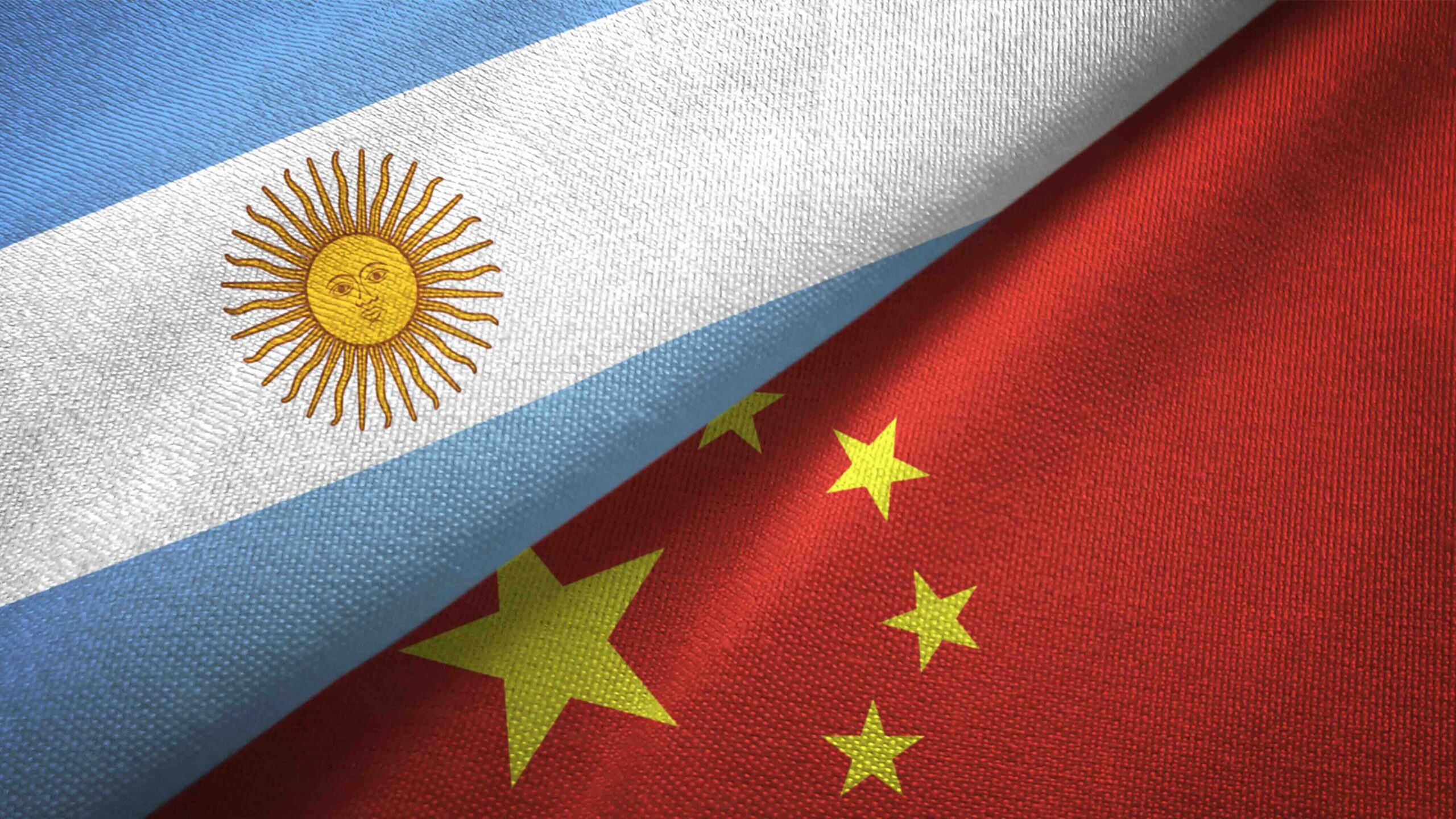
For the United States, the pending 25-year concession to operate and dredge more than 1,000 miles of this system should be viewed as a test of President Javier Milei’s ability to resist China’s expansion into critical infrastructure, and Argentina’s stability as a regional ally in South America.
Roughly 80 percent of Argentina’s imports and exports flow through the VNT. Grain, soy, minerals, energy inputs, industrial goods, and future critical mineral exports depend on this corridor. In American terms, the Hidrovía is Argentina’s Mississippi River: a logistical lifeline whose control affects prices, competitiveness, food security, export capacity, and national sovereignty.
That is why the current tender should send shock waves through the Trump administration. Under Milei, the Argentinian government has rightly sought to exclude state-owned companies from the process, a policy seemingly intended to keep Chinese state firms away from critical infrastructure. But the CCP, undeterred with rules or ethics, does not always enter through the front door. The concern now is that China may have found a backdoor through the Jan De Nul–Servimagnus association.
Jan De Nul, the long-standing concession holder, is bidding with Servimagnus, an Argentina-based group whose ecosystem has reportedly maintained extensive relationships with Chinese state-linked enterprises, including CCCC, Shanghai Dredging, COSCO, Huawei, and others. Considering the nature of those relationships, it is clear that Argentina is about to hand China a 25-year strategic platform in the heart of South America.
The stakes are enormous. Whoever controls the dredging works of the Hidrovía has influence over the quality, timing, reliability, and cost structure of Argentina’s most important export route. Dredging is not a routine technical service. It determines draft depth, navigability, port efficiency, shipping schedules, and ultimately the competitiveness of an entire export economy. If a consortium with deep China ties gains operational control, the CCP would not need to formally own the river to leverage it for their own hegemonical desires.
The intelligence findings are especially troubling. Former U.S. intelligence and Treasury enforcement professionals have identified numerous links within the Servimagnus-Loginter network pointing to long-term penetration by Chinese state-owned enterprises. These include more than 180 mutual physical contacts between Servimagnus headquarters and the Chinese Embassy in Buenos Aires over the past 12 months. Argentine authorities have turned a blind eye to this collusion, and the results could be devastating.
Aside from the allegations of Chinese influence, Jan De Nul has been closely connected to a bribery scandal related to Hidrovía. Jan De Nul originally entered into a 50/50 partnership with the firm Emepa three decades ago. Gabriel Romero, owner of Emepa, reportedly admitted in court that he paid $600,000 to the corrupt Fernández de Kirchner government to extend the Hidrovía concession. Although Jan De Nul denies any knowledge of the affair and Emepa has since divested over the scandal, they certainly benefitted from Romero’s alleged bribe in continuing to hold the lucrative contract.
Critical infrastructure tenders can never be treated like ordinary procurement exercises when strategic competitors are involved and cannot be held hostage to the whims of corrupt, unaccountable firms. The United States has spent years warning allies about the risks of Chinese involvement in ports, telecommunications, logistics, and data-rich infrastructure. The Hidrovía combines all of those concerns: port access, trade flows, vessel movement, agricultural exports, mineral exports, and potentially sensitive data collection.
A Chinese-backed presence on the VNT would also create a regional springboard. Dredging vessels stationed in Argentina would lower mobilization costs for future projects elsewhere in the Western Hemisphere. Once China-aligned operators are physically established in the Southern Cone, they gain a competitive advantage in bidding for other river, port, and maritime infrastructure projects across the region. Argentina would effectively become the operational base for Beijing’s broader infrastructure ambitions.
Control over dredging operations would give the CCP data dominance in the region as well. They would have access to shipping patterns, river conditions, vessel traffic, cargo flows, port bottlenecks, and commercial rhythms. In an era when logistics data is strategic intelligence, allowing a China-connected network to sit in the heart of Argentina’s export system for 25 years would be reckless. China would inevitably install surveillance or dual-use equipment on vessels with perilous consequences for national security.
The tender process itself appears unusually tailored to favor the incumbent Jan De Nul and disadvantage competitors, including the U.S.-backed DEME Dredging consortium. The U.S.-backed group offers Argentina something very different: a real strategic and industrial partnership with American investors and companies. The consortium includes participation or support from major U.S. financial and industrial players, including Great Lakes Dredge & Dock, KKR, Clear Street, and investors connected to major pools of U.S. capital. Such a partnership would not only bring billions in contracting opportunities for American firms; it would help build U.S. dredging capability in high-volume international concessions, creating a model that could be exported across the hemisphere.
That is exactly the kind of responsible partnership that is expected under Milei, who has emerged as one of President Trump’s most vocal supporters in terms of a foreign leader. A well-timed U.S. loan guarantee helped to stabilize Milei’s hold on power and ensured Argentina from reverting back to the dark days of socialism. This was something to celebrate, but the partnership cannot be a one-way street. President Trump has made it abundantly clear that he will not be taken advantage of on the world stage—even from our allies.
The United States has an existential national security interest in countering China’s control of strategic infrastructure. It has a commercial interest in opening major infrastructure markets to American firms. It has a geopolitical interest in ensuring that Argentina’s critical mineral and agricultural export corridors are not influenced by the CCP. And it has a diplomatic interest in proving that U.S. support for Argentina produces reciprocal strategic alignment.
The Trump administration moved to deepen trade and investment ties through the U.S.-Argentina Reciprocal Trade and Investment Agreement, signed in February. The purpose of that agreement was not to subsidize Argentina’s economy so that Chinese-linked interests could then capture the country’s most important infrastructure concession. If this dredging deal goes through, the trade agreement will not be worth the paper it was printed on.
Milei has been adamant about the need for American investment in Argentina. The country is still undergoing economic problems caused by years of failed socialist central planning. President Trump has made clear that pushing China out of strategic positions in the Western Hemisphere is a core objective. The Hidrovía tender is where Milei’s promises can meet reality. If Argentine officials allow a process that favors the apparatchiks of the CCP over a U.S.-backed consortium, that will be a signal to American businesses that their investments cannot be safe in a country with a hostile power dominating key infrastructure.
This issue is a defining test of whether Argentina is aligning with the United States or leaving the door open for Beijing. Argentina has received U.S. support and signed a reciprocal investment framework. This is the foundation of a partnership that can lead Argentina back to being South America’s most prosperous marketplace. Handing its most important waterway to a group in the pockets of our most treacherous of geopolitical foes undermines this goal significantly.
The Hidrovía will shape Argentina’s economy for a generation. A 25-year concession is not a temporary contract; it is a strategic commitment that will shape commerce for a generation. This is a defining moment for Milei and his legacy. Milei has presented himself as a revolutionary force against statism, tearing down bureaucratic hurdles in his country with a gusto never before seen. But if he cannot put his foot down against the world’s gravest menace against free enterprise, in the CCP, his country’s partnership with the U.S. will be in jeopardy. President Trump is watching intently to see if Milei passes this crucial leadership test.