
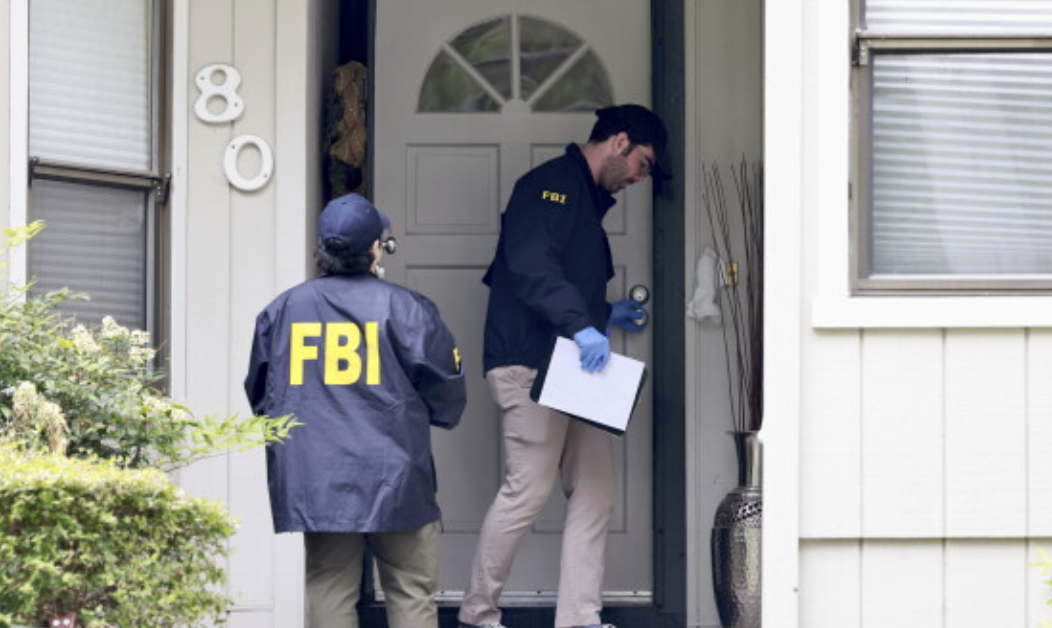
Federal agents raided the Contra Costa County Assessor’s Office and two homes tied to the county’s top tax officials Tuesday, turning a powerful local government office into the center of a major public corruption probe.
The FBI served three federal search warrants, according to reports, including one at the assessor’s office in Martinez. Agents also searched homes connected to longtime County Assessor Gus Kramer and Assistant Assessor Vince Robb, who was recently elected to replace him.
No criminal charges have been announced. But one sealed warrant was reportedly signed by a federal magistrate judge as part of an investigation into wire fraud and other possible offenses.
The office under scrutiny controls the assessed value of roughly 380,000 parcels. That means its decisions directly shape tax bills for homeowners, businesses, developers, landlords, and property owners across Contra Costa County.
This is not some harmless paperwork shop. It is a local tax power center — the kind of office that can quietly make life expensive for ordinary citizens while operating far from public attention.
Kramer denied wrongdoing as FBI agents searched the building. He claimed the investigation was tied to assessment disputes involving major properties.
“Apparently, low people in high places are attempting to weaponize the FBI to intimidate the Assessor’s Office regarding some values on some very large properties,” Kramer told CBS News Bay Area. “It’s really too bad.”
Kramer also confirmed that agents searched his home before arriving at his office. He insisted investigators could have obtained the records without a raid.
“I used to work for the Sheriff’s Office,” Kramer said. “I understand what [the FBI agents] are doing, but all they had to do was come in the office and ask for it politely, and we would’ve given them everything they wanted.”
The FBI has not publicly laid out the full scope of the investigation. But federal agents do not normally search a county office and private homes because of a routine disagreement over paperwork.
Kramer dismissed the wire-fraud reference outright. “I don’t wire anything, so I don’t have the slightest idea what they’re talking about,” he said.
He then called the probe “a fishing expedition based on rumor and innuendo.” For taxpayers, however, the raid lands on top of a long record of allegations that county officials can no longer wave away.
Kramer has spent years surrounded by accusations involving workplace misconduct, retaliation, property-assessment disputes, and alleged abuse of power. Again and again, scandal followed — and again and again, the local political machine let him remain in place.
In 2009, Contra Costa County paid nearly $1 million to settle a claim by a worker who said Kramer retaliated against her after she accused him of sexual harassment. The public paid the bill while the officeholder stayed.
A decade later, a Contra Costa County Civil Grand Jury filed a rare formal accusation accusing Kramer of “willful or corrupt misconduct.” Female employees had reported unwanted sexual remarks and racial disparagement.
The case went to trial but ended in a mistrial. The Democrat-controlled Board of Supervisors had already censured Kramer — but censure was not accountability.
That is the pattern that should infuriate taxpayers. Allegations piled up, settlements were paid, officials postured, and the same office kept running as if nothing had happened.
Kramer has also faced scrutiny over property dealings. East Bay reporting has detailed allegations involving disputed transfers, gift deeds, and claims that he benefited from unusual property arrangements.
One allegation involved a forged deed that allowed Kramer to acquire part of a property, reportedly saving him about $21,000 in property taxes. Kramer survived the controversy and remained in power.
Another dispute involved a developer with whom Kramer was reportedly feuding. Kramer was accused of overvaluing vacant properties owned by the developer, leaving the owner facing roughly $200,000 in additional taxes.
Kramer blamed staff in that case. But critics have long argued that the episode showed the danger of letting one entrenched official control the tax fate of political enemies, business rivals, and ordinary residents.
Even Kramer’s own family became part of the public record. His daughter-in-law accused him of improperly raising her property-tax assessment as retaliation during a family dispute.
That accusation goes to the heart of the scandal. If an assessor’s office can be used to punish enemies or reward favored interests, then taxpayers are not dealing with public service — they are dealing with a weaponized bureaucracy.
The most recent controversy involved former appraiser Andrea Albrecht, who worked inside Kramer’s office. She claimed Kramer directed staff to improperly lower the value of a senior-housing complex by at least $3 million.
Albrecht said she pushed for what she believed was the correct, higher appraisal. She later alleged that she was retaliated against after raising concerns.
The county settled her lawsuit in January 2026. Once again, someone inside the system raised alarms — and once again, taxpayers were left paying for the fallout.
That is why Tuesday’s FBI raid cuts so deeply. It suggests the problem may not be one bad headline, one angry employee, or one disputed assessment, but a culture of power that operated for years without serious consequences.
Kramer’s defenders may cast him as a maverick who angered powerful property interests. His critics see an entrenched local official who survived scandal after scandal while residents had no choice but to trust the office calculating their tax bills.
Robb’s connection adds another layer of concern. As assistant assessor and Kramer’s elected successor, he represents continuity inside an office now under federal scrutiny.
Federal authorities have not said whether Kramer or Robb are targets of the investigation. Both men are entitled to the presumption of innocence, and a search warrant is not a conviction.
But the political damage is already real. When the FBI walks into a county tax office, every property owner has the right to ask whether assessments were fair, whether insiders received favors, and whether whistleblowers were punished for telling the truth.
California’s ruling class endlessly lectures citizens about fairness, transparency, and public trust. Yet in Contra Costa County, taxpayers are staring at a federal raid, years of misconduct allegations, expensive settlements, and an office that remained protected until Washington showed up.
The FBI investigation may or may not end with charges. But the raids have already exposed the rot that grows when local officials become untouchable, oversight becomes theater, and taxpayers are treated as an endless bailout fund.
If wrongdoing is ultimately proven, the scandal will not belong only to the individuals named in the warrants. It will also belong to every political actor who censured, settled, shrugged, looked away — and let the machine keep running until federal agents finally came through the door.