


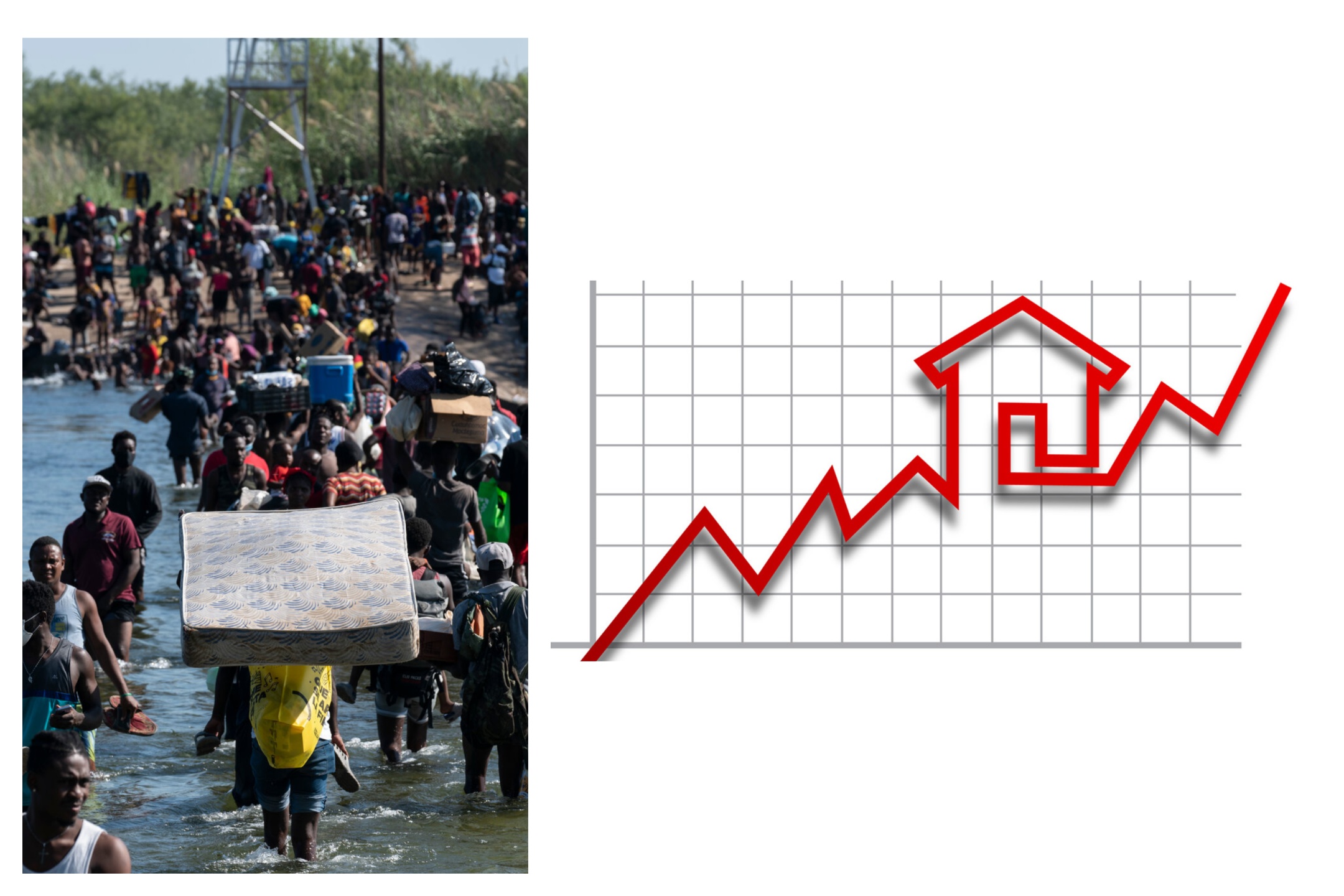
A new Federal Reserve Bank of Dallas working paper is adding economic weight to a central argument of populist America First policy: mass labor inflows may boost headline employment, but they can also impose heavy costs on working- and middle-class Americans through housing, public resources, and wage pressure hidden beneath national averages.
The paper, which combines immigration court records with government administrative data, examines the unprecedented wave of illegal immigration from 2021 to 2024. The authors caution that the study is preliminary and does not represent the official views of the Dallas Fed or the Federal Reserve System. Still, its findings are politically explosive.
Researchers found that a 1% increase in unauthorized workers relative to a local labor force corresponded with about a 1% increase in overall employment, with little measurable effect on average wages. But the same increase was associated with a 2.2% rise in home prices and a 1.4% rise in rents. In other words, the labor market absorbed many new workers, but the housing market did not absorb the added demand.
The authors estimate unauthorized immigrant worker flows accounted for roughly 30% of employment growth, 30% of home-price growth, and 20% of rent growth in the average metropolitan area studied between March 2021 and March 2024. They also found little evidence that homebuilding expanded fast enough to offset the population surge.
Those findings are highly congruent with populist America First economics. The America First critique has long argued that policymakers obsess over aggregate growth while ignoring who benefits and who pays. Cheap labor may help employers, large corporations, and top-line GDP figures, but the costs often land on American workers, renters, first-time homebuyers, schools, hospitals, and local governments.
That same logic underpins President Donald Trump’s trade policies. Tariffs, reshoring, and tougher trade enforcement are designed to reject the old globalist model that prioritized low prices and corporate margins over domestic production, national resilience, and working-class stability. Just as uncontrolled labor inflows can raise housing costs while benefiting employers, unrestricted trade with low-wage foreign producers can hollow out American industry while benefiting multinational corporations.
The Dallas Fed paper does not say immigration caused all housing inflation. But it does support the broader America First argument: economic policy must be judged by its effects on American citizens, not merely by employment totals or abstract growth statistics.
For Trump’s supporters, the lesson is clear. Borders, trade, housing, and wages are connected. A nation that fails to control its labor market and supply chains eventually forces its own people to compete against the world—at home and abroad.
