


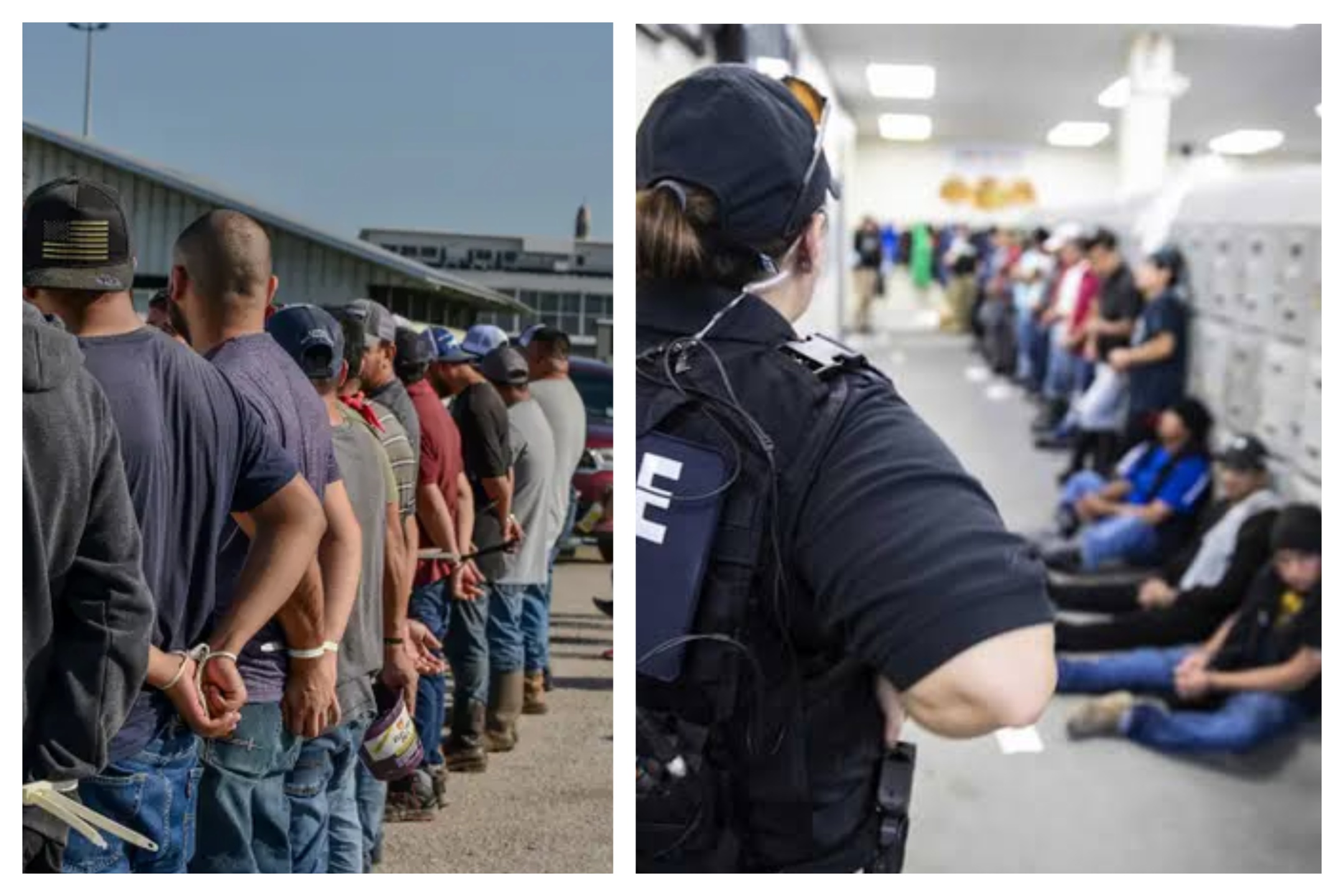
Federal officials are laying the groundwork to push immigration enforcement deeper into the nation’s workplaces, and a handful of agencies are now hashing out how to lift arrest figures while keeping the president’s supporters satisfied. That account comes from CNN, which detailed the internal deliberations through five people close to them.
Inside the administration, the case is framed as a natural next chapter in criminal work that has been building for a while. Asked about it, a Homeland Security spokesperson pointed CNN to an “increase in criminal investigations targeting fraud.”
Underneath the planning sits a persistent dilemma. Leadership is chasing record removal numbers yet cannot afford to spook the sectors built on immigrant labor, whether that means agriculture, factory floors or building sites, and it cannot afford to jolt an economy that already feels shaky. The result has been uneven messaging. One stark example came last year, when a plant raid in Georgia at a Hyundai facility set off a diplomatic rift with South Korea.
To the restriction wing of the party, however, targeting employers is precisely where the action belongs. “The reality is worksite enforcement isn’t happening and without that the numbers won’t hit the needed levels,” an administration official told CNN.
The White House rejects the idea that any of this represents a fresh course, insisting the fraud inquiries reach back to the administration’s opening days. “These investigations are criminal in nature. If investigations require law enforcement action to stop those who are breaking the law, the Trump administration will enforce the law,” a White House official said.
None of this happens quickly. A typical workplace case begins with a notice, moves into an audit of a firm’s immigration records, and only becomes a criminal matter once irregularities turn up, a path that can consume months and sometimes years. One former department official summed up the slog for CNN, calling such operations “hard because it’s mountains of paperwork and it requires a lot of analysis and due diligence to put it together to prove culpability.”
Voices on the restriction side have pressed this argument for well over a year, treating employer enforcement as the clearest way to remove sizable numbers of people while holding the companies that hire them accountable. Mark Krikorian, who leads the Center for Immigration Studies, cast the situation as a trial the White House cannot dodge. “The administration is going to face with a test — are they going to pass the test or not?” he said, stressing that credible enforcement must extend well beyond splashy raids into the grind of document checks.
The workplace campaign is unfolding as overall arrests climb. ICE has lately been booking somewhere near 2,000 people daily, a rhythm officials would like to keep, after Stephen Miller pushed much steeper arrest targets last year that the agency could not meet. Speaking to reporters in New York, Homeland Security Secretary Markwayne Mullin said daily deportations have topped 3,200. “We’re surging every day because we’re trying to restore law and order, regardless of whether you live in a red state or a blue state,” he said.
Just how far the new drive will reach is still an open question, and the administration’s guidance has swung back and forth, with agents ordered to ease off farms, hotels and restaurants at one point and then directed to press ahead with workplace actions. Krikorian conceded the road will be bumpy for business owners. “This is going to inconvenience some people,” he said, noting there is “no way to do (mass deportation) and there’s no way to encourage significant self-deportation without it.”
Turning enforcement toward the workplace is a solid start, yet it hardly begins to meet the duty a nation owes to its own people. Raids and audits alone cannot restore the wages, communities and cohesion that decades of mass migration have worn away, so Washington must press on and cut immigration across the board, shutting down the legal channels every bit as firmly as the illegal ones.
Real relief for American workers will come only when total numbers fall sharply and the employers who feast on imported labor face consequences that finally bite.
