


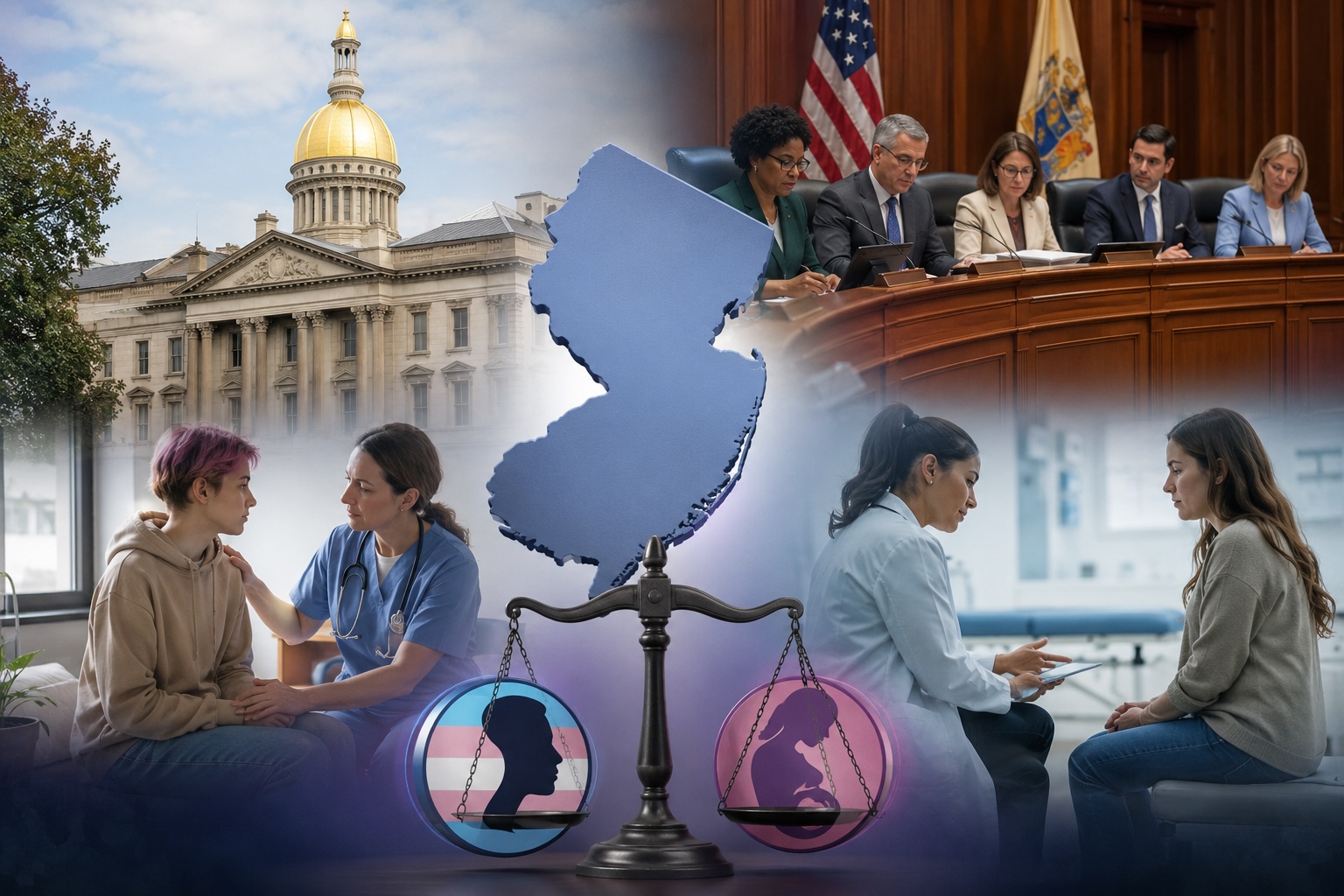
The New Jersey General Assembly Appropriations Committee has approved bill A2218/S2260, which would make New Jersey the first state in the nation to explicitly create a dedicated state-level crime for interfering with access to both gender-affirming healthcare (including for minors) and abortion/reproductive health services, as reported by Fox News.
The legislation would strengthen legal protections for patients, doctors, clinic staff, and volunteers at facilities providing these services. Supporters argue it is necessary amid post-Dobbs national shifts, particularly if federal enforcement of existing laws weakens.
The federal Freedom of Access to Clinic Entrances (FACE) Act of 1994 already prohibits force, threats, or physical obstruction against reproductive health services (including abortion) nationwide.
However, A2218 establishes a dedicated New Jersey state crime called “interference with reproductive or gender-affirming health services” with its own penalties and enforcement mechanisms.
The bill prohibits actions such as harassing, intimidating, harming, blocking entrances or driveways, or otherwise obstructing access.
A basic violation is generally a fourth-degree crime. Penalties escalate based on injury. Third-degree charges apply for bodily injury and second-degree charges apply for serious bodily injury, which carries up to 10 years in prison and fines of up to $150,000.
The proposal also includes stronger privacy safeguards, restrictions on extradition, insurance provisions, and shield laws against out-of-state actions. Advocates (e.g., Planned Parenthood and Garden State Equality) emphasize protecting evidence-based care from political interference.
Critics, including Republican lawmakers and pro-life groups, argue the bill’s broad definition of “interference” could criminalize peaceful protests, prayer, or sidewalk counseling. They also raise concerns about including gender-affirming care for minors and its impact on parental rights.
Governor Mikie Sherrill is expected to sign the bill into law shortly after passage. It has advanced mostly along party lines, with a full Assembly floor vote scheduled for June 11, 2026.
The legislation already provides civil remedies alongside criminal penalties. Implementation would likely require clarifying regulations on what constitutes prohibited conduct.
