


President Donald Trump encountered fierce resistance from within his own party over the weekend as Republican foreign policy hawks warned that his emerging Iran deal would surrender American leverage and embolden a dangerous adversary, the Financial Times reported.
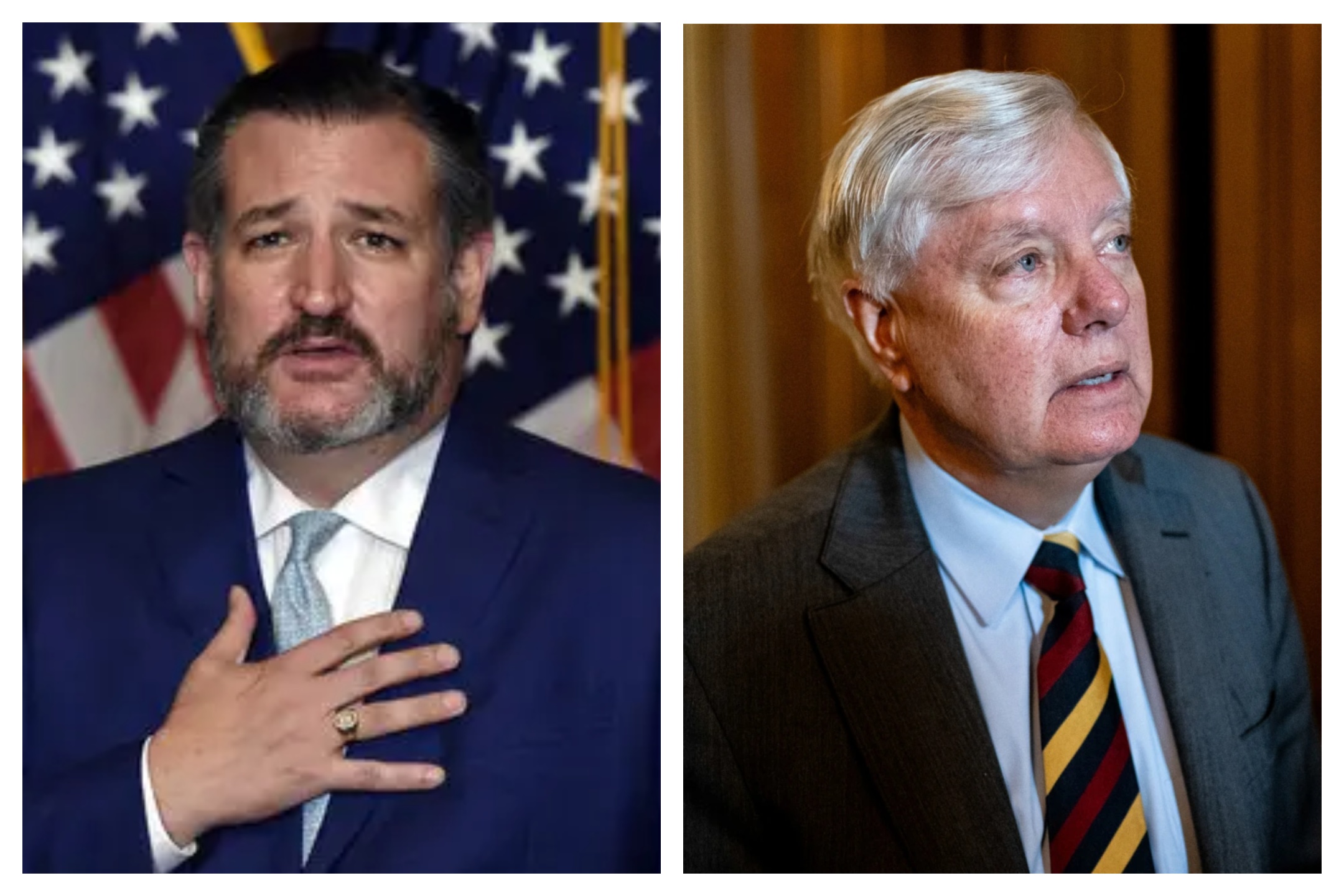
Senators Lindsey Graham and Ted Cruz led the charge after reports surfaced that American negotiators were nearing an agreement that would offer concessions to Iran in exchange for extending the current ceasefire, reopening the Strait of Hormuz, and establishing a framework for future negotiations on dismantling Iran’s nuclear program.
Diplomatic efforts have accelerated over the past week amid concerns that Trump was preparing to resume military strikes against Iran. Individuals briefed on the proposed arrangement told the Financial Times it would include a commitment from Tehran to discuss either diluting or surrendering its stockpile of highly enriched uranium. Washington would agree in stages to sanctions relief and unfreezing Iranian assets held abroad, contingent on progress toward a final agreement.
Even before the full details emerged publicly, several Republicans raised objections to the direction of the talks.
Graham, typically a staunch Trump ally and frequent golf companion, sounded the alarm on social media. “If it is perceived in the region that a deal with Iran allows the regime to survive and become more powerful over time, we will have poured gasoline on the conflicts in Lebanon and Iraq,” Graham wrote.
“I personally am a sceptic of the idea that Iran cannot be denied the ability to terrorise the Strait and the region cannot protect itself against Iranian military capability,” he added.
Cruz described himself as “deeply concerned” about reports of the emerging deal and characterized Trump’s initial decision to strike Iran as the “most consequential decision of his second term.”
“If the result of all that is to be an Iranian regime — still run by Islamists who chant ‘death to America’ — now receiving billions of dollars, being able to enrich uranium and develop nuclear weapons, and having effective control over the Strait of Hormuz, then that outcome would be a disastrous mistake,” Cruz warned.
Sen. Roger Wicker (R-MS), who chairs the Senate Armed Services Committee, dismissed the reported terms outright. “The rumored 60-day ceasefire — with the belief that Iran will ever engage in good faith — would be a disaster. Everything accomplished by Operation Epic Fury would be for naught!” Wicker declared on X.
Mike Pompeo, who served as Trump’s secretary of state during his first administration, attacked the emerging framework as “not remotely America First.”
“It’s straightforward: Open the damned strait. Deny Iran access to money. Take out enough Iranian capability so it cannot threaten our allies in the region. Overdue. Let’s go,” Pompeo wrote.
The criticism ignited fury inside the White House. Communications director Steven Cheung responded to Pompeo’s post with an expletive laden reply, telling the former secretary of state he “should shut his stupid mouth and leave the real work to the professionals.”
Trump campaign adviser Alex Bruesewitz accused Cruz of “trying to undermine the president and his administration.” Cruz shot back that “young political grifters pushing Iran appeasement are not remotely helping the president.”
The public clashes exposed the political difficulties confronting Trump as he attempts to maintain Republican unity ahead of a challenging electoral cycle. The party is fighting to retain control of both chambers of Congress while the president’s approval ratings have sunk to record lows and public sentiment has turned against his handling of the war and the economy.
Senator Thom Tillis (R-NC), who has emerged as one of Trump’s sharpest intraparty critics, also questioned the wisdom of the reported framework on Sunday. “We were told about 11 weeks ago by [defence secretary Pete] Hegseth and the Department of Defense that they had obliterated Iran’s defences and it was just a matter of time before we had the nuclear material,” Tillis told CNN. “Now we’re talking about a posture where we may accept the nuclear material remaining in Iran? How does that make sense at all?”
Secretary of State Marco Rubio pushed back forcefully on the criticism during a press conference with his Indian counterpart in New Delhi. “I don’t think anyone’s been tougher on the Iranian nuclear ambition than President Trump,” Rubio stated. “There is no one who has been stronger on this issue than President Trump.”
“The idea that somehow this president, given everything he has already proven he is willing to do, is going to somehow agree to a deal that ultimately winds up putting Iran in a stronger position when it comes to nuclear ambitions is absurd,” Rubio added.
Trump won the presidency twice by promising to end the forever wars and put American interests ahead of the interventionist consensus that has dominated both parties for decades. His base did not elect him to take marching orders from the same people who championed regime change in Libya, Syria, and Iraq, nor to let discredited figures like John Bolton dictate the terms of American foreign policy from the sidelines. The neoconservative cohort currently in hysterics over the prospect of peace would have the United States fighting in the Middle East for another generation if given the chance.
