


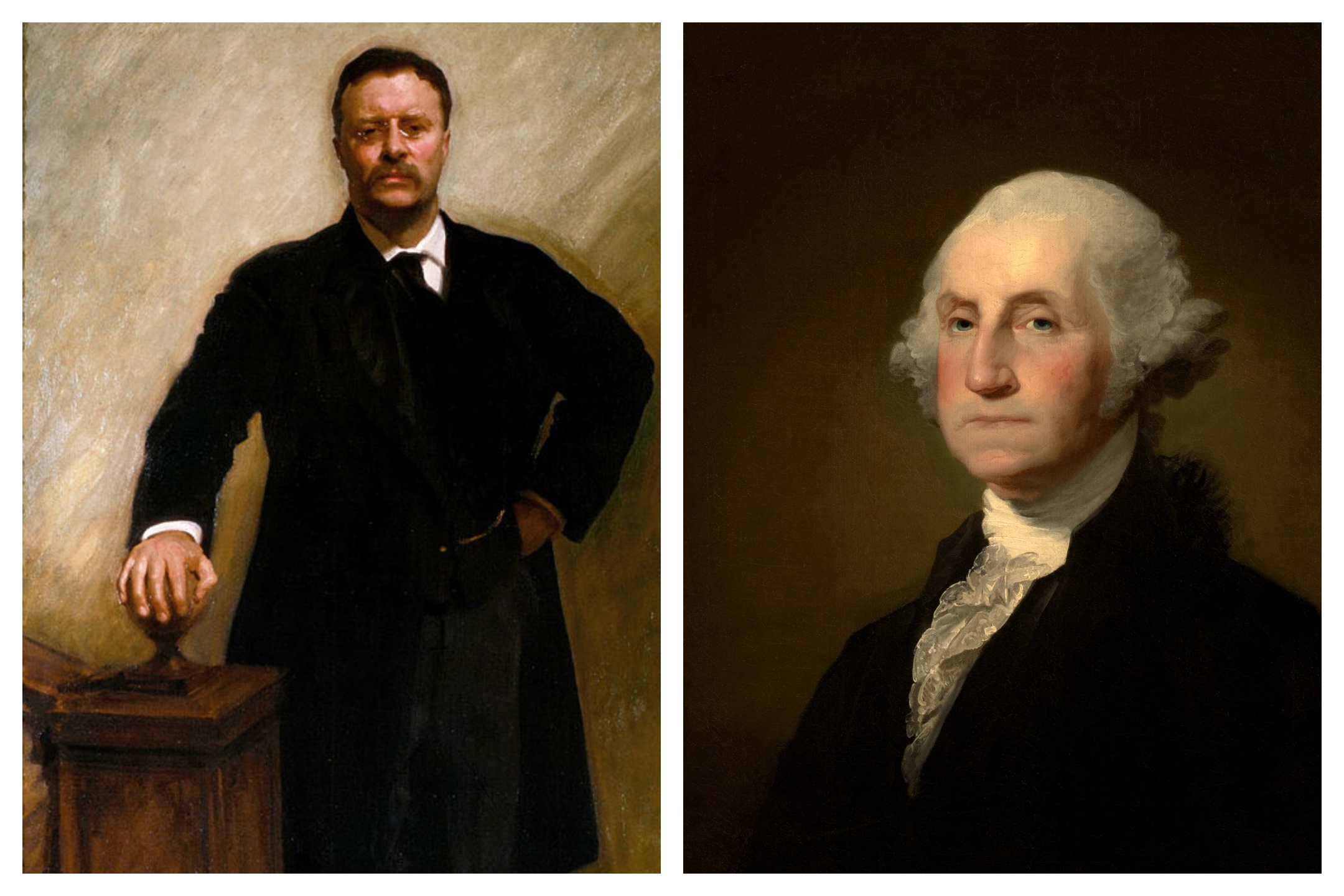
“To be prepared for war is the most effectual means to promote peace.”
-George Washington
As the United States engages in war to defeat an enemy who seeks our utter annihilation, there is no lacking for naysayers, cowards and fools who believe American security is a given, or that security can be had without shedding the blood of both enemies and patriots. There are fewer times more difficult than those of war, but in these times, we should look to the words of Theodore Roosevelt for guidance, himself a recipient of of the Medal of Honor for his actions at San Juan Hill.
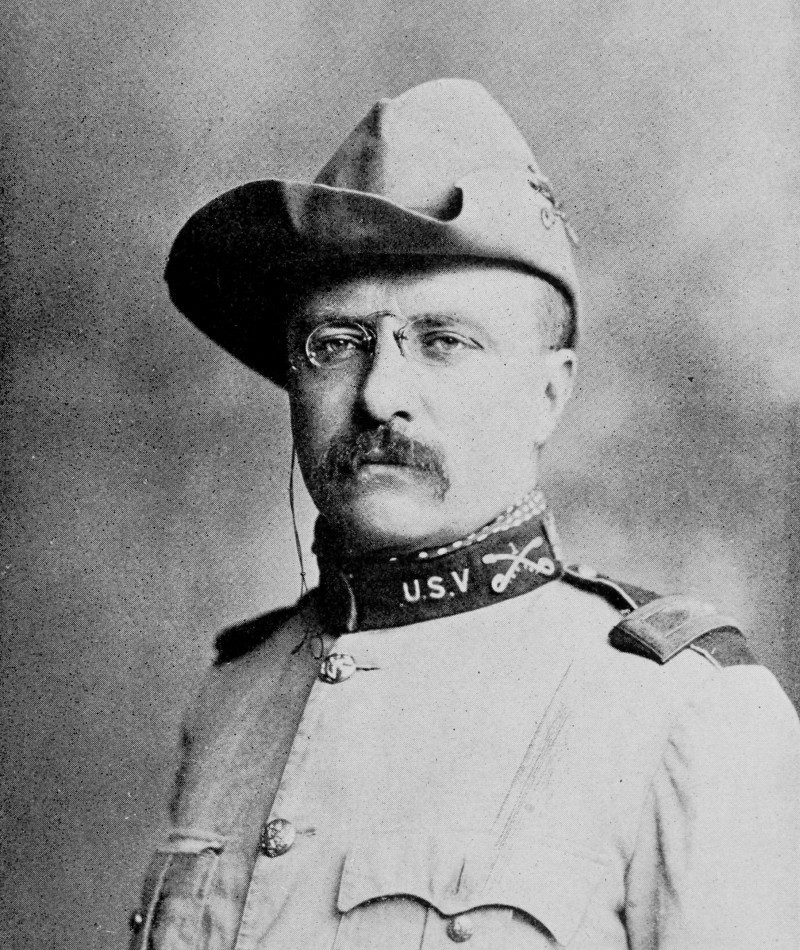
In 1897, Assistant Secretary of the Navy Theodore Roosevelt addressed the Naval War College in Newport, Rhode Island. He discussed the need for a strong Navy in order for the United States to be prepared for the future. He opened the speech by quoting George Washington’s words on military preparedness, and described a malaise in the United States that is eerily applicable to today.
“We pay to this maxim the lip loyalty we so often pay to Washington’s words,” Roosevelt continued, “but it has never sunk deep into our hearts. Indeed of late years many persons have refused it even the poor tribute of lip loyalty, and prate about the inquity of war as if somehow that was a justification for refusing to take the steps which alone in the long run prevent war or avert the dreadful disasters it brings in its train. The truth of the maxim is so obvious to every man of really far-sighted patriotism that its mere statement seems trite and useless”
Roosevelt also spoke about an over-reliance on diplomacy or international arbitration, two of the cornerstones of neoliberal globalist foreign policy. “Preparation for war is the surest guarantee for peace,” he said. “Arbitration is an excellent thing, but ultimately those who wish to see this country at peace with foreign nations will be wise if they place reliance on a first-class fleet of first-class battle ships rather than on any arbitration treaty which the wit of man can devise…Moreover, while we are sincere and honest in our advocacy of peace, we must not forget that an ignoble peace is worse than any war.”
All the Great Masterful Races Are Fighting Races
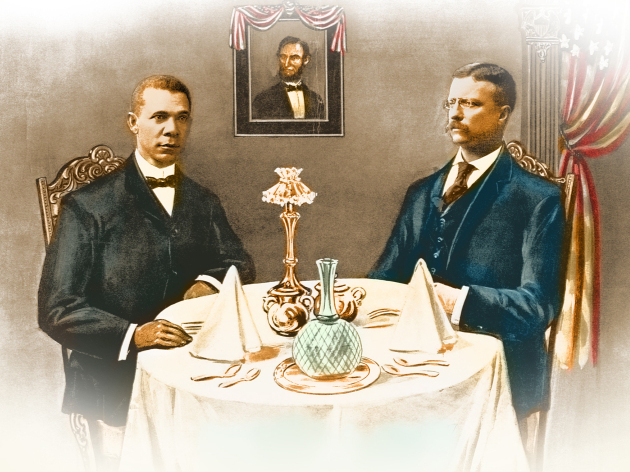
When Roosevelt spoke of race, it seems somewhat archaic today. However, we have to remember that Theodore Roosevelt was the first US President to invite a black man (who was also a former slave), Booker T. Washington, to dine at the White House in 1901. The Democrats were furious at this, and just a decade and a half later in 1915 Democrat President Woodrow Wilson would screen the racist film “The Birth of A Nation” at the same White House Booker T. Washington dined with Roosevelt.
“All the great masterful races have been fighting races,” Roosevelt said. “And the minute that a race loses the hard fighting virtues, then, no matter what else it may retain, no matter how skilled in commerce and finance, in science or art, it has lost its once proud right to stand as the equal of the best.”
“Cowardice in a race, as in an individual, is the unpardonable sin, and a willful failure to prepare for danger may in its effects be as bad as cowardice. The timid man who can not fight, and the selfish, shortsighted, or foolish man who will not take the steps that will enable him to fight, stand on almost the same plane.”
The Middle East
In the same speech, Roosevelt unironically spoke of atrocities committed by Islamic powers in the Middle East. At the time, it was the Turkish war crimes against the Christian Armenians. This would later culminate in the Armenian Genocide in World War I, which Turkey still denies today.
“Thanks largely to the very unhealthy influence of men whose business it is to speculate in the money market, and who approach every subject from the financial standpoint, purely; and thanks quite as much to the cold-blooded brutality and calculating timidity of many European rulers and statesmen, the peace of Europe has been preserved, while the Turk has been allowed to butcher the Armenians with hideous and unmentionable barbarity, and has actually been be helped to keep Crete in slavery.”

“War has been averted at the cost of more bloodshed and infinitely more suffering and degredation to wretched women and children than have occurred in any European struggle since the days of Waterloo…The men who would preach this peace, and indeed, the men who have preaced universal peace in terms that have prepared for such a peace as this, have inflicted a wrong on humanity greater than could be inflicted by the most reckless and war-loving despot. Better a thousand times err on the side of overreadiness to fight than to err on the side of tame submission to injury, or cold-blooded indifference to the misery of the oppressed.”
Diplomacy Is Useless Without Force
As the isolationists and Europeans prattle on about diplomacy, Roosevelt reminds us that diplomacy is useless without force. We cannot sit idly between the giant moats of the Atlantic and Pacific in splendid isolation as nations such as Iran and China plot our destruction.

“But in war the mere defensive never pays, and can never result in anything but disaster. It is not enough to parry a blow. The surest way to prevent its repitition is to return it. No master of the prize ring ever fought his way to supremacy by mere dexterity in avoiding punishment. He had to win by inflicting punishment. If the enemy is given the choice of time and place to attack, sooner or later he will do irreparable damage.”
“Diplomacy is utterly useless where there is no force behind it; the diplomat is the servant, not the master, of the soldier.”
Americans Should Be Ready, and If Need Be, Desirious of Battle

“It is important that we should as a race keep the virile fighting qualities and should be ready to use them at need…An unmanly desire to avoid a quarel is often the surest way to precipitate one; and utter unreadiness to fight even surer.”
Ignoble Peace Worse Than Losing In Iraq and Afghanistan
“If in the future we have war, it will almost certainly come because of some action, or lack of action, on our part in the way of refusing to accept responsibilties at the proper time, or failing to prepare for war when war does not threaten. An ignoble peace is even worse than an unsuccessful war; but an unsuccessful war would leave behind it a legacy of bitter memories which would hurt our national development for generations to come.”
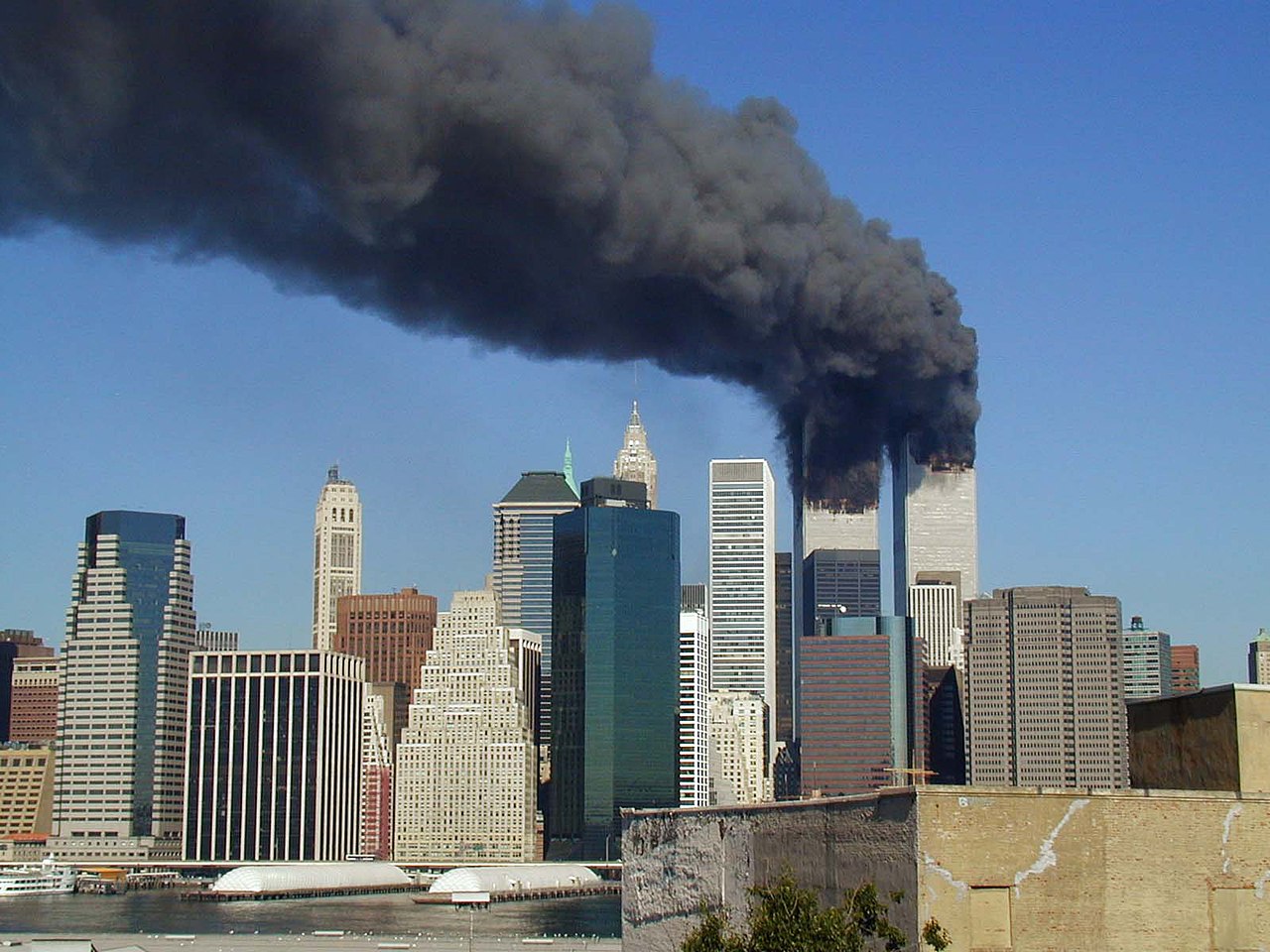
“No material loss can begin to compensate for the loss of national self-respect. The damage to our commerical interests by the destruction of one of our coast cities would be as nothing compared to the humiliation which would be felt by every American worthy of the name if we had to submit to such an injury without amply avenging it.”
Need of Heroism In A Nation

“Every feat of heroism makes us forever indebted to the man who performed it. All daring and courage, all iron endurance of misfortune, all devotion to the ideal of honor and the glory of the flag, make for a finer and nobler type of manhood. It is not only those who do and dare and endure that are benefited; but also the countless thousands who are not themselves called upon to face the peril, to show the strength, or to win the reward.”
“All of us lift our heads higher because those of our countrymen whose trade it is to meet danger have met it well and bravely. All of us are poorer for every base or ignoble deed done by an American, for every instance of selfish or weakness or folly on the part of the people as a whole. We are worse off when any of us fails at any point in his duty toward the State in time of peace, or his duty toward the State in time of war.”
“There are higher things in life than the soft and easy enjoyment of material comfort. It is through strife, or the readiness for strife, that a nation can win greatness.”

But, Wasn’t Roosevelt A Warmonger?
Peace is no accident, and Roosevelt knew that peace was the ultimate goal of any war.
“Peace is a goddess only when she comes with the sword girt on thigh,” Roosevelt said. When asking for a massive increase in the US Navy, he emphasized, “We ask this not in the interest of war, but in the interest of peace. No nation should wage war wantonly, but no nation should ever avoid it at the cost of the loss of national honor. A nation should never fight unless forced to; but it should always be ready to fight. The mere fact that it is ready will generally spare it the necessity of fighting.”
“In this country, there is not the slightest danger of an overdevelopment of warlike spirit, and there never has been any such danger. In all our history there has never been a time when preparedness for war was any menace to the peace. On the contrary, again and again we have owed peace to the fact we were prepared for war.”
A Message for 2026
Roosevelt’s speech in 1897 seems almost like he were saying it today, to an America run by effete, weak men and women. To a Europe, run by oligharchs who diminished their nations militarties to boutique-levels while enabling genocidal Middle East regimes to flourish. To an America that has lost the “hard fighting virtues” and believes that peace and security can be had without blood, sweat and readiness.
America did not win the first half of the 20th century with wishful thinking, international arbitration or neoliberal ideas of world peace. It was won on San Juan Hill, the Meuse-Argonne, the sands of Iwo Jima and the beaches of Normandy. If the United States is to win the 21st Century as we did the 20th, we must never forget that any nation that loses those hard fighting virtues loses the right to stand at all.
