The Campaign No One Sees
Every four years, the ritual unfolds almost exactly the same way.
A presidential candidate steps onto a brightly lit stage, flanked by American flags and surrounded by cheering supporters. Television cameras broadcast the event live. Political commentators immediately begin discussing fundraising, polling, debate strategy, and the candidate's path to 270 electoral votes. Within minutes, headlines appear across the country announcing that another presidential campaign has officially begun.
For most Americans, that moment marks the start of the race.
It doesn't.
By the time a candidate publicly declares a campaign for President of the United States, another campaign has already been underway for months—and often for years. It is fought largely out of public view by thousands of lawyers, organizers, volunteers, fundraisers, political strategists, compliance specialists, county officials, and party activists whose names will never appear on a ballot or headline. They are not competing for delegates or electoral votes. They are building the institution that makes the visible campaign possible.
This is the election before the election.
It is the story almost never told during presidential campaigns because, when it is working properly, it is nearly invisible. Reporters cover speeches, rallies, debates, endorsements, advertising, and polling numbers. Voters see candidates shaking hands in diners, speaking at town halls, or standing behind podiums in packed arenas. Those events are undeniably important, but they are only the public face of something much larger.
Behind every successful presidential campaign stands an organization that may have taken decades to build.
That organization is easy to overlook because it never campaigns under its own name. It operates through county committees, state organizations, volunteer networks, fundraising operations, legal teams, campaign professionals, and thousands of ordinary citizens who quietly keep the machinery of American democracy running between elections. Most Americans never meet them, yet every presidential candidate depends upon them.
The longer one studies presidential politics, the clearer this becomes.
Experienced campaign professionals often describe elections very differently from the way journalists or voters do. They certainly pay attention to speeches, debates, polling, and advertising, but they are just as interested in county organizations, ballot-access deadlines, voter registration efforts, fundraising infrastructure, legal compliance, volunteer recruitment, and dozens of other activities that rarely receive national attention. They understand something that casual observers often miss.
By the time the public campaign begins, much of the real work has already been done.
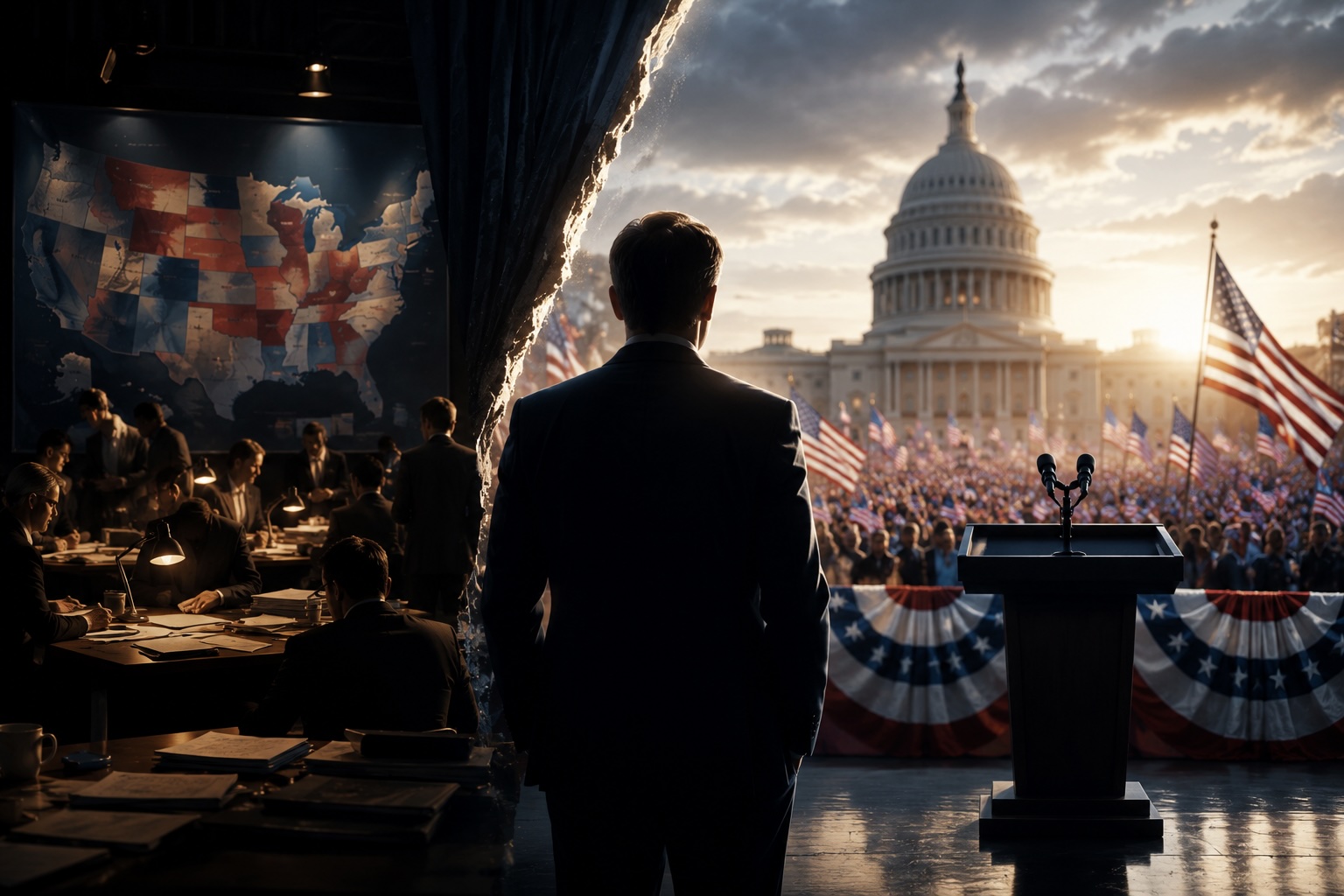
That realization changes the way presidential elections look. Campaigns no longer appear to emerge suddenly when a candidate announces for office. Instead, they resemble the opening night of a Broadway production. The audience sees the performance, but the performance exists only because countless people spent months—or years—building the stage, designing the sets, rehearsing every scene, and solving problems the audience never knew existed.
Presidential campaigns work much the same way.
The candidate is the most visible participant, but never the only one.
Building Something That Doesn't Exist
Imagine receiving an assignment unlike almost any other in American public life.
Your objective is to elect the next President of the United States.
There is just one complication.
The organization that must accomplish this task does not yet exist.
That is the challenge confronting every new political party. Before it can compete for votes, it must first create the institution capable of competing at all. There are no permanent offices waiting to be occupied, no nationwide volunteer network ready to mobilize, no experienced county organizations, no legal infrastructure, no fundraising operation, and no army of campaign professionals already working together. Every one of those pieces must be assembled before the first television advertisement airs or the first campaign rally takes place.
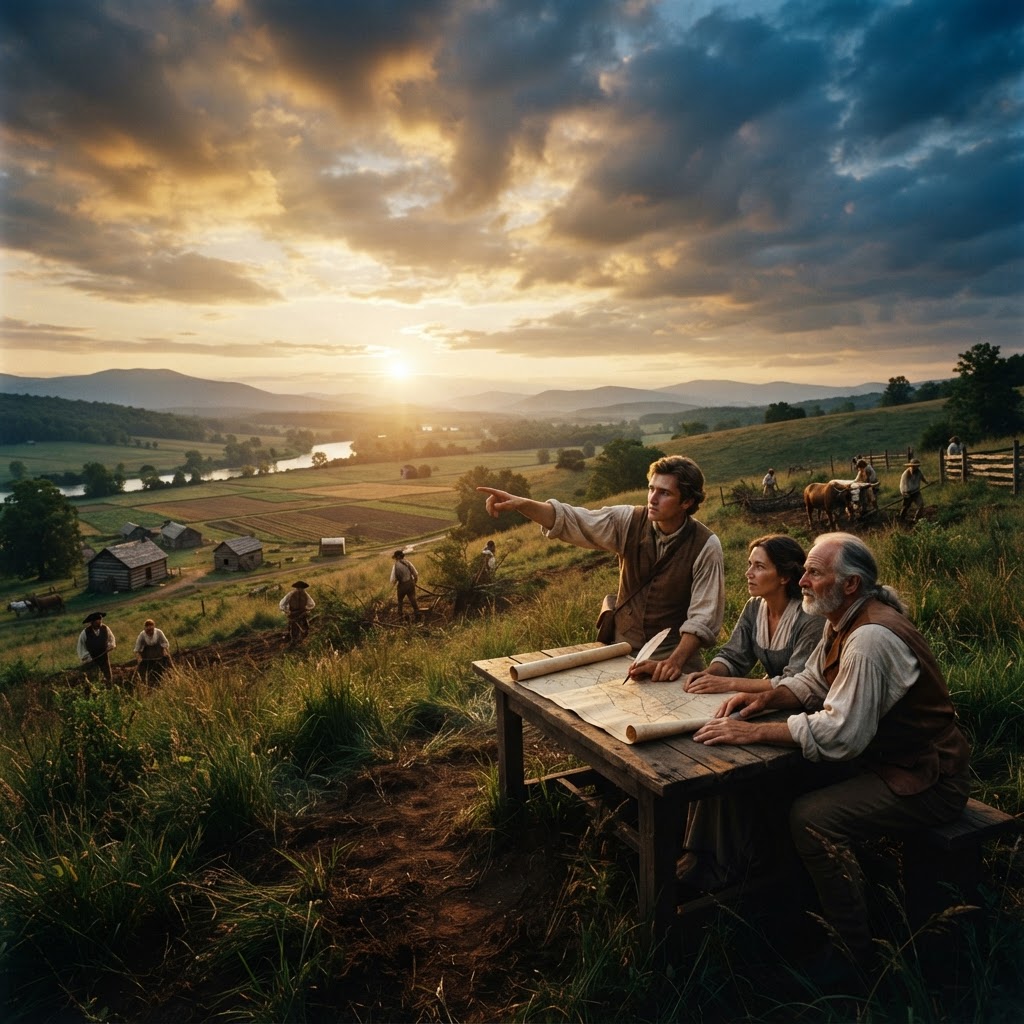
Most people imagine political parties as permanent fixtures of American life, but they often forget that every institution was once an idea.
Someone had to recruit the first volunteers. Someone had to organize the first county committee. Someone had to raise the first dollar, rent the first office, print the first campaign literature, and persuade skeptical voters that the organization deserved to exist. Before a political party can ask Americans to trust its candidate, it must first convince Americans that the party itself is real.
That process is far more difficult than many people realize because there is no such thing as a single, national political party under American election law.
There is no federal office where an organization files paperwork and immediately becomes a recognized presidential party. There is no national election commission that grants universal ballot access across all fifty states. Instead, the United States conducts presidential elections through fifty separate state election systems, each governed by its own statutes, administrative procedures, filing requirements, and deadlines.
In practical terms, that means a political party is not built once.
It is built fifty times.
Every state requires its own organizational structure. Every state has its own election officials. Every state interprets its own election code. The legal requirements that apply in Texas are not identical to those in Pennsylvania, Wisconsin, Arizona, Georgia, or Nevada. A party hoping to compete nationally must understand all of them.
That reality surprises many Americans because presidential elections are usually discussed as though they were one nationwide contest.
Constitutionally, they are not.
They are fifty separate elections conducted simultaneously under fifty different legal systems. A successful national campaign is really an enormous collection of coordinated state campaigns, each operating within its own legal framework while contributing to a single national objective.
Building that kind of organization requires far more than enthusiasm.
It demands accountants who understand campaign finance reporting, attorneys who specialize in election law, experienced compliance officers who track filing deadlines, communications professionals capable of coordinating messages across multiple states, volunteer coordinators who recruit and train activists, technology specialists who maintain voter databases, and local leaders who understand the unique political culture of their own communities.
The campaign may have one presidential candidate.
The institution requires thousands of people.
That is one reason the Republican and Democratic parties possess such significant advantages over new organizations. Their strength does not simply come from history or name recognition. It comes from decades—sometimes centuries—of accumulated experience. Every election teaches lessons about fundraising, organization, voter outreach, legal compliance, and coalition building. Those lessons become part of the institution itself, making it stronger with every election cycle.
A newly created political party enjoys no such advantage.
It must learn while competing against organizations that have spent generations refining every aspect of presidential politics.
Even after a new party succeeds in building state organizations, recruiting volunteers, raising money, and assembling legal teams, another challenge still awaits.
Its candidate must actually appear on the ballot.
Fifty States, Fifty Ballots
For most voters, a presidential ballot feels deceptively simple.
They arrive at their polling place, review the names printed before them, and cast a vote for the candidate they prefer. It is an experience so familiar that few people ever stop to ask how those names reached the ballot in the first place.
The answer reveals another layer of the hidden campaign.
Getting a presidential candidate onto the ballot is not a ceremonial step that automatically follows a campaign announcement. It is one of the most demanding legal and organizational undertakings in American politics. Before voters can choose among candidates, someone must satisfy every legal requirement necessary for those candidates to appear before the public.
Again, there is no single national process.
Every state establishes its own ballot-access rules, filing deadlines, petition requirements, and certification procedures. Some states require large numbers of petition signatures. Others impose different organizational standards or statutory requirements. The details vary considerably, but the underlying principle remains the same.
A presidential campaign cannot win votes in a state if its candidate never qualifies to appear on the ballot there.
That simple reality has shaped presidential politics for generations. While the public watches campaign rallies and televised debates, attorneys and election specialists spend months reviewing statutes, preparing legal filings, verifying petitions, communicating with election officials, and making certain that every deadline is met. A missed filing date or an improperly completed document can jeopardize months of organizational work.
Experienced campaign managers understand that ballot access is not paperwork.
It is strategy.
Every successful filing represents another state in which the campaign can compete. Every successful petition drive reflects hundreds or thousands of volunteers working quietly in communities across America. Every legal challenge overcome is another obstacle removed before voters ever begin paying attention.
By the time Americans see a candidate's name printed on the ballot, they are seeing the final result of a legal and organizational process that began long before the campaign officially announced itself.
And even then, one more critical step remains before the general election can truly begin.
The campaign must prepare the people Americans never vote for.
The People You Never Vote For
Ask the average American how a President is elected, and the answer is usually immediate.
"The person who gets the most votes."
Given the way presidential campaigns are covered, it is an understandable assumption. Every four years, Americans watch candidates campaign across the country, debate on national television, and compete for support in states that have become familiar battlegrounds. Election night revolves around electoral maps, vote totals, and projections from television networks. Everything about the modern campaign reinforces the impression that voters are casting ballots directly for the office of President.
Legally, however, that is not what happens.
When Americans vote for President, they are actually voting for a slate of presidential electors pledged to support a particular candidate. Weeks after Election Day, those electors meet in their respective state capitals to formally cast the votes that elect the President and Vice President of the United States. It is one of the oldest features of the constitutional system, yet it receives remarkably little attention except during unusually close or disputed elections.
For presidential campaigns, though, the Electoral College is not simply an interesting constitutional footnote. It is another layer of planning that begins long before the public ever enters the picture.
Every presidential campaign must identify, organize, and properly certify its slate of electors in every state where it intends to compete. Those individuals are rarely household names. Most Americans could not identify a single presidential elector from their own state. Yet every one of them represents another piece of the organizational puzzle that must be completed before the general election can move forward.
The paperwork alone can be substantial. Each state establishes its own procedures governing how electors are selected, certified, and submitted to election officials. Campaign attorneys review filing requirements, party officials prepare certifications, and compliance teams monitor statutory deadlines with extraordinary precision. The process varies from state to state, but the objective never changes: ensure that every legal requirement has been satisfied before ballots are finalized.
This is another part of presidential politics that remains almost entirely invisible to voters. When a candidate's name appears on the ballot, the public naturally assumes that election officials simply added it after the party selected its nominee. In reality, that single line on the ballot reflects months of legal work involving certifications, filings, correspondence with election officials, and the careful coordination of campaign professionals operating across fifty different election systems.
The same principle applies throughout the campaign.
Every public event rests upon a foundation of administrative work that few people ever see. A rally requires permits, security coordination, volunteer recruitment, media logistics, and local organization. A television advertisement depends upon fundraising, compliance with campaign finance regulations, and strategic planning developed weeks or months in advance. Even a candidate's travel schedule reflects thousands of decisions made by organizers balancing political priorities, legal considerations, fundraising opportunities, and the practical realities of moving a national campaign across the country.
By this stage, a presidential campaign begins to resemble the management of a large national corporation more than the romantic image many people associate with politics.
There are attorneys reviewing legal documents before they are filed. Accountants oversee financial reporting. Communications teams coordinate messages across multiple states. Data analysts monitor voter trends. Technology specialists maintain enormous databases. Volunteer coordinators recruit and train thousands of supporters. Every department operates simultaneously, and every department depends upon the others.
The complexity explains why experienced campaign managers often speak of two separate elections.
The first election is administrative. It determines whether a candidate has successfully navigated the legal, organizational, and procedural requirements necessary to compete. It is fought with attorneys, compliance officers, petitions, certifications, filing deadlines, and state election law. If mistakes are made during this phase, they can cripple a campaign before most voters even know it exists.
Only after that invisible contest has largely been won does the election Americans recognize begin.
That second campaign is the one that dominates television screens and newspaper headlines. It features rallies, debates, endorsements, advertisements, polling, and the endless speculation that accompanies every presidential race. It is dramatic, emotional, and intensely competitive, but it rests entirely upon the quieter campaign that came before it.
This is why seasoned political professionals often seem to evaluate campaigns differently than journalists or casual observers. While the public may focus on a memorable speech or a controversial debate performance, campaign veterans pay close attention to organizational strength. They want to know whether county organizations are functioning effectively, whether ballot-access operations remain on schedule, whether legal teams are prepared for inevitable challenges, and whether volunteers are being recruited faster than they are leaving.
They understand that elections are rarely won by speeches alone.
They are won by institutions capable of transforming speeches into votes.
The Convention
By the time a national political convention opens, most Americans believe the presidential nomination has already been decided.
The primaries are over. Television commentators speak confidently about the nominee's general-election strategy, and newspapers have shifted their attention to battleground states and vice-presidential selections. To television audiences, the convention often appears to be little more than a carefully choreographed celebration—a week of speeches, patriotic music, balloons, and confetti designed to introduce the party's ticket to the country.
That is certainly part of the convention.
It is not, however, its primary purpose.
Long before the televised speeches begin each evening, delegates, committee members, party officers, attorneys, parliamentarians, and campaign representatives are meeting throughout the convention city to conduct the formal business of the political party. While cameras remain focused on the arena floor, the institution itself is governing.
The distinction matters because a national convention is not merely a campaign event. It is the highest decision-making body within the political party. Every four years, delegates from every state and territory gather to nominate candidates, adopt party rules, approve a governing platform, resolve disputes over delegates, and make decisions that will shape the organization long after the presidential election has passed.
In many respects, the convention resembles the annual meeting of a major corporation.
The public watches the keynote speeches.
The organization conducts its business.
One of the convention's most important responsibilities involves determining who is actually entitled to participate. Before delegates can cast votes, credentialing committees review disputes over delegate selection, resolve procedural disagreements, and ensure that state delegations have been properly constituted. Most of this work is completed before the convention officially begins, yet it is essential to the legitimacy of everything that follows.
Other committees are equally important.
The Rules Committee considers the procedures that will govern both the convention itself and, in many cases, future presidential nomination contests. Decisions about delegate allocation, nomination procedures, and internal party governance may not produce dramatic television moments, but they can influence presidential politics for years to come.
The Platform Committee performs a different task. Representatives from across the country negotiate the document that defines the party's official policy positions. These discussions often involve vigorous debate because national political parties are not monolithic organizations. They are broad coalitions composed of voters, elected officials, advocacy groups, regional interests, and competing philosophical traditions that do not always agree with one another.
The convention provides a structured process for transforming those competing voices into a single governing document.
Only after that institutional work has been completed does the moment arrive that most Americans associate with the convention—the formal nomination of the presidential candidate.
By this point, the outcome is usually well understood. Modern primary elections generally produce a clear delegate leader well before the convention convenes, making the roll call appear largely ceremonial. Yet appearances can be deceiving.
Legally and institutionally, this is the moment that matters.
The delegates are not celebrating a decision made elsewhere.
They are making it.
One by one, state delegations announce their votes until the nominee secures the support required under the party's rules. The vice-presidential nominee is then formally approved, completing the presidential ticket that will appear before voters in November.
When the final gavel falls, something important has happened.
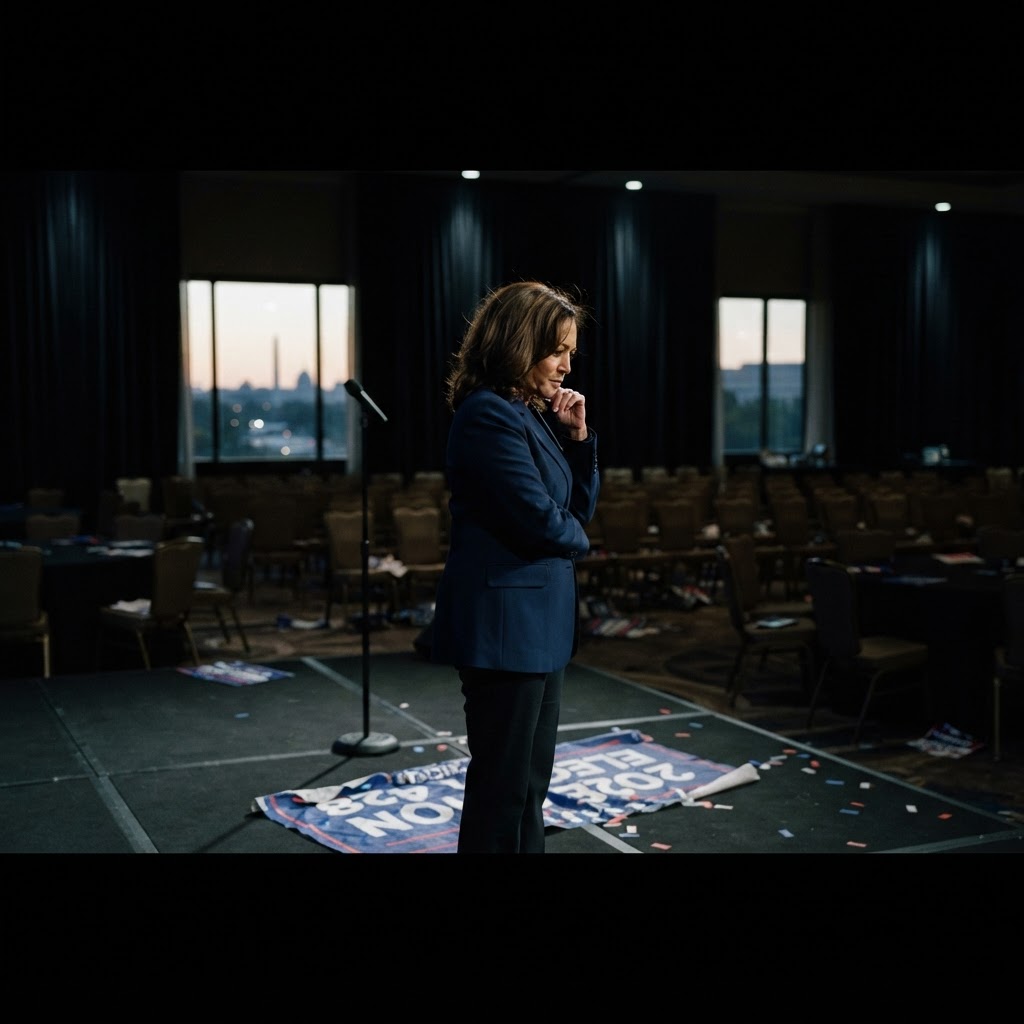
For months, candidates competed against members of their own party. They sought delegates, endorsements, campaign contributions, and organizational support. The convention ends that competition. Thousands of delegates who arrived representing different campaigns leave representing one presidential ticket.
The institution has chosen its leader.
That transformation may be the convention's greatest achievement. Healthy political parties must compete internally without destroying themselves in the process. They must allow vigorous disagreement while preserving enough unity to contest the general election. The convention is the mechanism through which that transition occurs. It converts competition into cohesion and individual campaigns into a single national organization.
Only then is the hidden campaign largely complete.
The institution has been built.
The nominee has been chosen.
The legal requirements have been satisfied.
Now, for the first time, the campaign the public recognizes can truly begin.
Why So Few Succeed
Every presidential election seems to revive the same conversation.
Americans express frustration with the two major political parties. Commentators wonder whether the country is finally ready for a viable third party. Wealthy entrepreneurs announce plans to reshape American politics, while independent candidates promise to break the existing system and offer voters a new choice.
On the surface, the argument sounds persuasive.
If millions of Americans are dissatisfied with Republicans and Democrats, why shouldn't another political party emerge to challenge them?
History suggests the answer is far more complicated than public frustration alone.
The United States has never lacked political movements. Reformers have appeared during financial crises, unpopular wars, corruption scandals, periods of social unrest, and moments of extraordinary political polarization. Many inspired passionate supporters. Some permanently changed the national conversation.
Very few built institutions that endured.
The reason has surprisingly little to do with ideology.
It has everything to do with organization.
A political movement asks people to believe in an idea.
A political party asks people to dedicate years of their lives to building an institution.
That difference changes everything.
Why is creating a successful political party so incredibly difficult?
At first glance, it shouldn't be.
Every election seems to reveal millions of dissatisfied voters. Polls routinely show frustration with both major political parties. Political commentators regularly speculate that the country is ready for a new movement, while wealthy entrepreneurs and independent candidates periodically announce that they intend to build an alternative capable of breaking the Republican-Democratic duopoly.
On paper, the opportunity appears obvious. America has no shortage of money, talented organizers, or people willing to support new ideas. Technology has made communication easier than at any point in history. A message that once required months of travel can now reach millions of people in a matter of hours.
Yet history tells a remarkably different story.
The United States has produced countless political movements, but very few enduring political parties. Time and again, charismatic leaders have attracted enormous crowds, generated intense media attention, and convinced supporters that they were witnessing the birth of a lasting political realignment. In most cases, however, the excitement faded long before the institution had time to mature.
The explanation has surprisingly little to do with ideology.
Political ideas are relatively easy to create. Organizations are not.
A movement begins when people decide they agree with one another. A political party begins only after those same people decide to devote years—sometimes decades—to building something larger than themselves. That means organizing county committees, recruiting candidates for local office, learning state election laws, raising money for races that will never make national news, maintaining voter databases, resolving internal disagreements, training volunteers, and repeating that work year after year whether the last election ended in victory or defeat.
Most of that work is invisible.
It happens in church fellowship halls, public libraries, hotel conference rooms, union halls, community centers, and rented offices scattered across thousands of American towns. It rarely attracts reporters because it lacks the drama of campaign rallies or televised debates. Yet without it, no presidential campaign can survive for very long.
The Republican Party offers perhaps the clearest example.
Today, it feels permanent, almost as though it has always existed. In reality, it was once an untested political experiment confronting many of the same challenges every new party faces today. When the Republicans nominated John C. Frémont in 1856, they lost the presidency. Judged solely by electoral results, the campaign appeared unsuccessful.
But elections tell only part of the story.
While Frémont was campaigning, Republican organizers were doing something far more significant than pursuing a single election. They were building state committees, strengthening county organizations, recruiting local candidates, attracting experienced political leaders, and expanding a national network that would continue functioning after the campaign ended. Four years later, Abraham Lincoln inherited that growing institutional framework and used it to capture the presidency.
Lincoln undoubtedly changed American history.
He also benefited from an organization that had spent years preparing for his arrival.
The opposite lesson can be found in Theodore Roosevelt's Bull Moose campaign of 1912. Roosevelt was already one of the most famous men in the world. He had served as President, enjoyed extraordinary public popularity, and possessed the rare ability to command national attention simply by entering a room. His Progressive Party electrified voters, drew enormous crowds, and transformed the election into one of the most memorable contests in American history.
Yet almost as quickly as it emerged, the party began to disappear.
The campaign had been built around Roosevelt's extraordinary personality rather than around a durable institutional structure. Once he left the stage, there was no nationwide organization capable of sustaining the movement. The ideas continued influencing American politics for decades, but the party itself steadily dissolved.
Ross Perot's presidential campaign followed a remarkably similar path eighty years later. His 1992 independent candidacy attracted nearly twenty percent of the national popular vote, demonstrating that millions of Americans were willing to support an alternative to the two major parties. Encouraged by that success, Perot attempted to transform the campaign into the Reform Party.
The transition proved far more difficult than the campaign itself.
Building enthusiasm had been possible because Perot possessed extraordinary personal resources and public credibility. Building a permanent institution required something entirely different. Local organizations needed leadership. County committees had to survive after the election. Internal disagreements demanded resolution. New candidates had to be recruited. Thousands of volunteers needed reasons to remain engaged long after the excitement surrounding the presidential race had disappeared.
Like so many political movements before it, the campaign proved stronger than the institution.
That pattern appears repeatedly throughout American history. It is why historians often remember political movements more vividly than the organizations they attempted to create. Inspiring people to support an idea is difficult, but inspiring them to spend years maintaining a political institution requires a very different kind of commitment.
The Libertarian Party and Green Party illustrate this distinction in an interesting way. Neither has seriously threatened to win the presidency, yet both have accomplished something many far more celebrated political movements failed to achieve. They endured. Election after election, they continued recruiting candidates, organizing conventions, maintaining state affiliates, complying with election laws, and preserving national organizations despite limited electoral success.
Measured only by presidential victories, they appear unsuccessful.
Measured by institutional survival, they represent a far more significant achievement.
Ultimately, this is why creating a political party is so extraordinarily difficult. Winning a single election requires persuading voters to support a candidate on one particular day. Building a political party requires creating an organization capable of competing not once, but repeatedly, through changing political climates, new generations of leadership, financial setbacks, electoral defeats, and inevitable internal disagreements.
One challenge is measured in months.
The other is measured in generations.
That is the difference between launching a campaign and building an institution. It also explains why presidential elections are often decided long before the public begins paying attention. By the time Americans watch candidates debating on television, the organizations competing behind those candidates have often spent years preparing for that moment.
The election that everyone sees is only possible because another election—the one fought for organization, structure, and institutional strength—has already been taking place behind the scenes.
The Campaign You Never Saw
The next presidential campaign has probably already begun.
It may not look that way. There may be no campaign logo, no nationally televised announcement, and no candidate standing before a row of American flags promising to fight for the country's future. Most of the people involved probably don't think of themselves as participating in a presidential campaign at all.
Some are recruiting candidates for county commissioner or school board. Others are organizing precinct meetings, updating voter rolls, attending state party conventions, raising money for local races, or reviewing proposed changes to election law in state legislatures. Lawyers are studying filing deadlines that won't matter for months. Volunteers are knocking on doors for candidates who will never appear on a national news broadcast. Somewhere, a county chairman is trying to persuade a young activist to attend their first committee meeting. Elsewhere, campaign professionals are quietly analyzing voter turnout from the last election, searching for patterns that might matter in the next one.
None of those activities will dominate the evening news.
Yet every one of them is part of the next presidential election.
That is the paradox at the heart of American politics. The most visible democratic exercise in the world depends upon work that is almost entirely invisible. The campaign Americans follow on television is supported by an enormous organizational structure that has been evolving long before the candidates step onto a debate stage or shake hands at a county fair.
The irony is that most of the people performing this work are not seeking recognition. They are not writing speeches, appearing on cable news, or attracting millions of followers on social media. Many are volunteers. Others are local party officials, attorneys, accountants, organizers, or longtime activists who understand that political parties survive only if someone is willing to do the work between elections.
History suggests that this has always been true.
When historians look back at transformative presidential elections, they naturally focus on the individuals whose names appeared on the ballot—Lincoln, Roosevelt, Reagan, Obama, Trump, and others whose victories altered the direction of the country. Those leaders deserve the attention they receive. Great candidates matter, and exceptional leadership can reshape history.
But candidates alone do not build enduring political organizations.
Abraham Lincoln inherited a Republican Party that had spent years constructing state organizations after its defeat in 1856. Franklin Roosevelt benefited from a Democratic Party that had developed over generations. Ronald Reagan emerged from a conservative movement that had invested decades in building intellectual institutions, recruiting candidates, organizing at the grassroots level, and persuading voters long before he accepted the Republican nomination in 1980. Even candidates who transform their parties do so by working through institutions that already exist.
That pattern repeats itself because institutions possess qualities that individuals do not.
Candidates retire. Volunteers move away. Elections are won and lost. Political coalitions shift, and public opinion changes with each generation. Institutions, however, accumulate experience. They remember previous campaigns, preserve organizational knowledge, train future leaders, and adapt without having to begin again from the beginning every four years.
This is why creating a successful political party is so extraordinarily difficult.
Winning an election requires persuading millions of people to support a candidate.
Building a political party requires persuading thousands of people to devote years—sometimes decades—to creating an institution that may outlive every individual involved in its founding. That commitment cannot be manufactured during a single campaign. It develops slowly through repetition, shared purpose, and the often-unnoticed work of people who continue showing up long after the television cameras have left.
Once you understand that distinction, presidential elections begin to look very different.
The announcement speech is no longer the beginning of a campaign. It is the public unveiling of years of preparation. A campaign rally reflects more than an enthusiastic crowd; it represents thousands of hours spent organizing volunteers, raising money, complying with election laws, and strengthening local organizations. Even Election Day itself appears in a different light. Rather than the culmination of a year's worth of campaigning, it becomes the visible conclusion of a much longer process that most Americans never have an opportunity to see.
That hidden process deserves greater attention because it reveals something important about the American political system itself.
Democracy is often described as a series of elections, but elections alone do not sustain democratic government. Institutions do. They provide continuity when leaders change, preserve organizational knowledge between generations, and transform public enthusiasm into lasting civic participation. They are imperfect, frequently frustrating, and constantly evolving, yet they remain essential to the orderly transfer of political power that has distinguished the American republic for nearly two and a half centuries.
Perhaps that is why the opening scene of every presidential campaign is so easy to misunderstand.
A candidate walks onto a stage. The crowd applauds. Television anchors announce that the race for the White House has officially begun.
It feels like the first chapter.
In reality, it is closer to the final act.
The real campaign has been unfolding quietly for years—in county committee meetings, state conventions, legal offices, campaign headquarters, volunteer phone banks, fundraising dinners, and neighborhood gatherings across America. By the time the nominee steps to the podium, much of the difficult work has already been done. The organization has been built, the rules have been navigated, the volunteers recruited, the candidates nominated, and the foundation carefully laid.
Most presidential campaigns don't begin with an announcement speech.
They begin years earlier, in places that rarely make the evening news.
By the time America notices the campaign, it is already well underway.