
The United States of America Is More Than an “Idea”
Recent commentators have frequently asserted that the United States of America is merely an “idea.” This claim carries several major implications, not least of which is its logical extension: if the United States is just an “idea,” then the U.S. Constitution and American models of governance can be used as a cookie-cutter to create identical societies anywhere in the world.
Such thinking was immensely popular during the wave of decolonization following World War II. In the 19th century, Brazil and Liberia tried to copy the American system, and both devolved into chaos and civil war. In the 20th century, the Philippines and South Korea attempted to copy the American system, but suffered military coups and authoritarian rule before stabilizing. When nations try to copy the American system, the results are often less than spectacular.
Geography Is Destiny
When the United States fought Great Britain in the War of 1812 (1812–1815), the conflict overlapped with the final phase of the Napoleonic Wars. Napoleon would eventually be defeated at Waterloo in 1815 by a coalition force commanded by Arthur Wellesley, 1st Duke of Wellington, and Field Marshal Gebhard Leberecht von Blücher of Prussia.

Arthur Wellesley, 1st Duke of Wellington
Before Waterloo, Wellington had fought a grueling, successful campaign in the Iberian Peninsula and invaded southern France in 1813, ahead of the much larger coalition forces of Russia, Austria, and Prussia crossing France’s eastern border. When Napoleon abdicated for the first time in 1814, Britain considered sending its finest general to North America to fight the United States.
On November 9, 1814, Wellington wrote to Prime Minister Lord Liverpool advising against sending him to America. Wellington doubted that a decisive military result could be achieved unless the British controlled the Great Lakes alongside the Mississippi and St. Lawrence rivers, noting that America’s heavily forested heartland offered difficult terrain for European-style warfare.
The commander who would soon defeat the greatest military mind of the age had correctly identified two of America’s foundational strengths early on: the Mississippi and St. Lawrence river systems.
Who Cares About Two Rivers?

In an age when trucks, trains, and airplanes are commonplace, riverine transport is easily overlooked. Yet water transport remains the cheapest means of moving cargo today, costing roughly $0.97 per ton-mile compared to approximately $5.35 per ton-mile for trucking. In the pre-industrial world, when overland freight relied on draft animals, the cost disparity was even more dramatic.
Both the Mississippi and St. Lawrence rivers provide deep access into North America’s interior, allowing bulk goods to be shipped vast distances to coastal ports at an economically viable cost. A Russian farmer in the Urals would have been hard-pressed to ship grain overland to Moscow. By contrast, an American farmer near St. Louis could float goods down to New Orleans at a fraction of the cost. Through a massive network of navigable tributaries—including the Ohio, Missouri, Arkansas, and Illinois rivers—settlers across multiple states could move their produce directly to international shipping lanes in the Gulf of America.
This geography gave the young United States a monumental economic advantage, enabling interior farmers to enter global markets at highly competitive prices. It incentivized agricultural production far beyond mere subsistence, drawing immense capital into the developing nation. Geography gifted American agriculture and industry the most extensive natural transport network on earth. Conversely, a Russian farmer near the Urals was trapped by geography: most major Siberian and northern rivers empty into the frozen Arctic Ocean, which is of little use for reaching global markets. With little incentive to produce beyond subsistence levels, Russian agriculture could not match the export dynamism of the American heartland.
Natural Resources
If you ask an average American why the Allies won World War II, you will likely hear references to “better tanks,” General George S. Patton, or the notion that freedom and justice inevitably prevail. The first claim is qualitatively false, General Patton was brilliant on the operational level but not single-handedly decisive, and the last assertion is naive.
The most decisive material factor in the Allied victory in the Second World War was oil. In 1940, the United States accounted for roughly 60% of the world’s total crude oil production. Every two to three days, American wells pumped the equivalent of Japan’s entire annual oil consumption. Beyond petroleum, the United States possessed nearly every raw material and fuel source required to sustain a massive industrial war economy.
Axis powers were not so fortunate. Neither Japan nor Germany possessed significant domestic oil reserves. When the United States imposed an oil embargo on Japan in 1941, Tokyo lost roughly 80% of its oil imports. In Europe, Adolf Hitler was forced to rely on the Ploiești oil fields in Romania, and the disastrous campaign culminating in the Battle of Stalingrad was driven by his desperate bid to seize the oil fields of the Caucasus.
To this day, China imports the vast majority of its crude oil by sea. The reality that the United States Navy could interdict those maritime energy lifelines remains one of the primary deterrents preventing Beijing from invading Taiwan.
“East and West by Fish”
German Chancellor Otto von Bismarck, who united the disparate German states and founded the German Empire in 1871 after defeating France, is apocryphally credited with observing:
“The Americans are a very lucky people. They’re bordered to the north and south by weak neighbors, and to the east and west by fish.”
Germany was historically surrounded by major continental powers, including France, Austria, and Russia. Berlin had to expend immense wealth guarding its land borders from invasion, maintaining one of the largest standing armies in the world—a force capable of mobilizing millions of reservists in weeks and deploying them by rail to fight on either an eastern or western front.
The United States, by contrast, had no need to maintain a massive peacetime army to guard against Canada or Mexico. America fought only one major conflict involving each neighbor—the War of 1812 and the Mexican-American War—and both concluded before 1850. Shielded by two oceans and peaceful borders, the United States avoided the crushing fiscal burden of a large standing military during peacetime, allowing capital to flow instead into infrastructure, commerce, and private enterprise.
Consider 1914: at the outbreak of World War I, as Germany mobilized millions of soldiers and moved vast quantities of artillery and ammunition across Europe, the regular United States Army numbered fewer than 100,000 men. While European powers clashed on an industrial scale, the U.S. Army functioned largely as a constabulary and border patrol force, far removed from the massive armies it had fielded during the Civil War five decades earlier.
It Was Not Just Luck
But why didn’t the early Spanish and French colonists, or indigenous populations develop with such geographic advantages? The indigenous population was a stone-age society that, although sophisticated in its own right, was not equipped to take advantage of the geography. While the Spanish and French were Christian, they had not the same intentions as many of the settlers to the east who would found the United States.
To understand the United States, however, one must look beyond material geography to the colonial societies that preceded the republic. Though often glossed over in modern textbooks, the early European settlers of North America came from diverse backgrounds: German Quakers and Pietists, English Cavaliers defeated in the English Civil War, New England Puritans, Scots-Irish Presbyterians, and many others.
Despite sharp sectarian and regional differences, they shared a foundational commonality: they were overwhelmingly Christian. A royalist Cavalier in Virginia held markedly different political and ecclesiastical views from a Quaker in Pennsylvania, yet both knew that Jesus Christ was Lord and God as the ultimate moral authority.
From this explicitly Christian cultural matrix emerged the modern world’s first universal condemnation of slavery. The 1688 Germantown Quaker Petition Against Slavery was one of the earliest documents in Western history to assert that human bondage was categorically immoral since Gregory of Nyssa preached against the institution in the fourth century A.D. While societies across the globe had periodically regulated, restricted, or abolished slavery for specific ethnic or religious groups, none had declared the practice universally wrong on principle.

The 1688 Germantown Declaration
The 1688 Germantown Declaration was drafted by German immigrants raised in the aftermath of the Thirty Years’ War, a conflict in which between 25% and 50% of the German population perished amidst mercenary pillaging and sectarian violence. Invoking the Golden Rule, the authors condemned chattel slavery universally, explicitly contrasting Christian morality with the slave trade practiced by corsairs and the Muslim Ottoman Empire.
When William Penn founded the Province of Pennsylvania in 1681, he tellingly described the venture as a “Holy Experiment.”
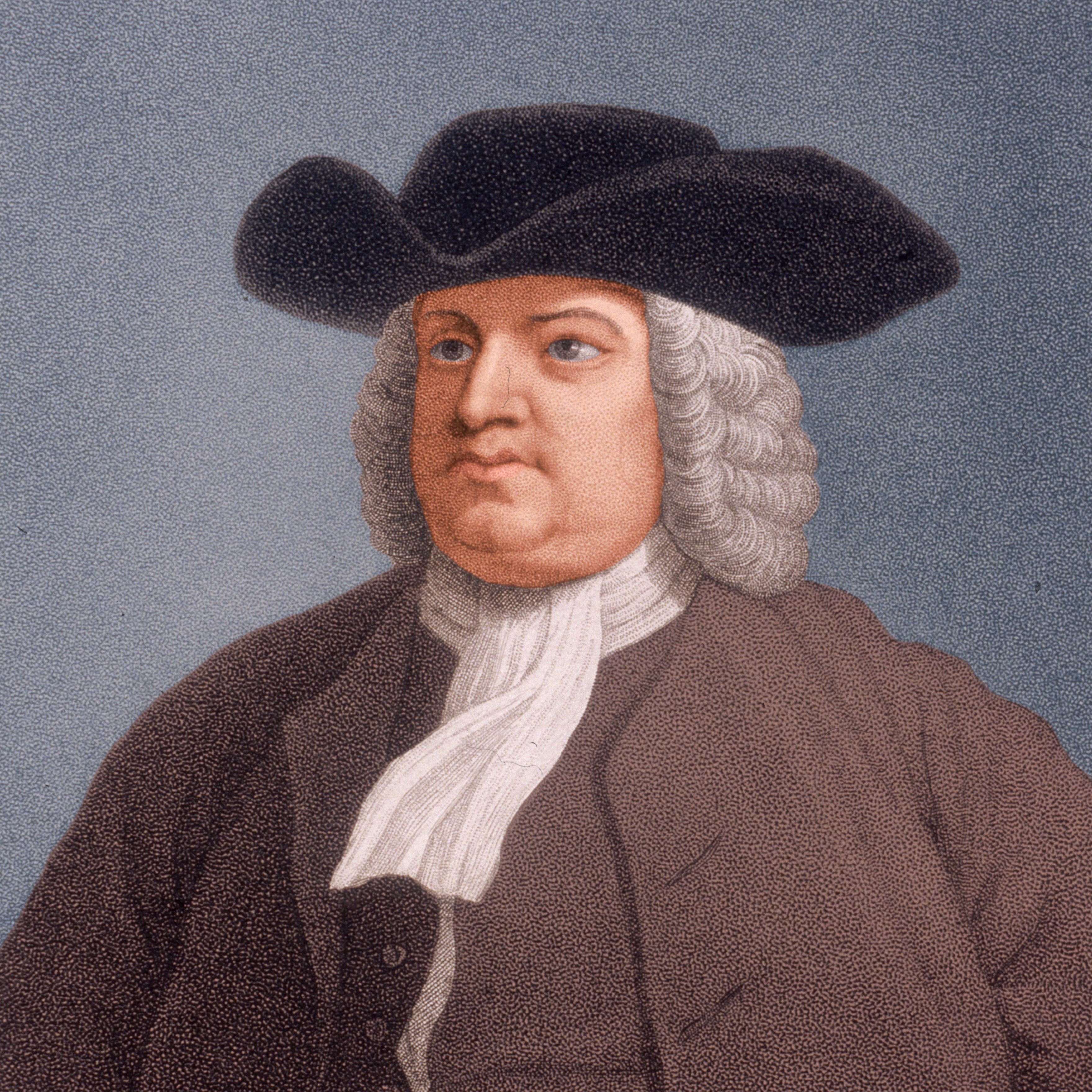
William Penn
America: More Than an Idea
The identity of the United States is inseparable from its physical geography, its natural resource endowment, its strategic insulation, and its Christian origins. Without the Mississippi and St. Lawrence river systems, the American economy could not have integrated and scaled so rapidly. Without abundant domestic oil, iron ore, and coal, the Arsenal of Democracy could not have overwhelmed the Axis powers in World War II. And without its Christian colonial foundation, America would not have inherited the moral vocabulary and social institutions that shaped the Founding Fathers.
America is not merely an abstract “idea.” It is a concrete nation forged by a specific people in a specific land, deeply rooted in both its physical continent and its Christian heritage. When other nations lacking these unique geographic and cultural foundations have attempted to import the American constitutional blueprint wholesale, the results have rarely been smooth.
Building foreign policy on the assumption that the American system is a universal cookie-cutter capable of producing identical societies anywhere on earth remains one of the most foolish, oft-repeated mistakes in American history.