President Donald Trump is moving to strike at the financial bloodstream of illegal immigration, ordering Treasury Secretary Scott Bessent to target the bank accounts, credit access, remittance channels, payroll schemes, and financial loopholes that have allowed illegal aliens, smugglers, cartel networks, and foreign fraudsters to operate inside the United States.
The move marks a major escalation in Trump’s second-term immigration agenda. Rather than treating illegal immigration as merely a border problem, the administration is now going after the economic infrastructure that makes it possible for millions of illegal aliens to live, work, borrow, bank, collect benefits, and send money abroad while violating U.S. immigration law.
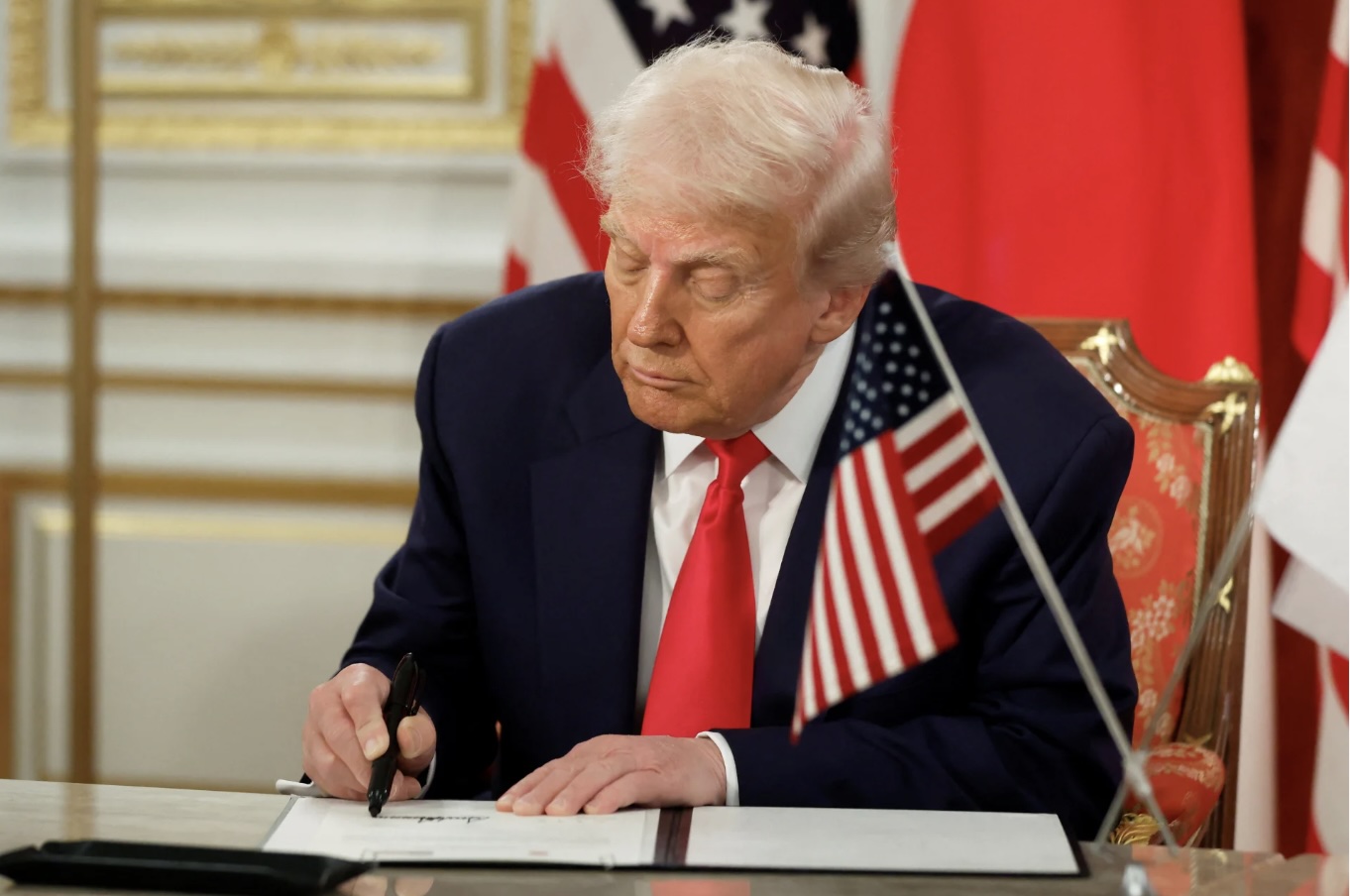
The executive order, titled “Restoring Integrity to America’s Financial System,” directs the Treasury Department and federal regulators to increase scrutiny of financial activity tied to illegal immigration, cartel operations, human smuggling, labor trafficking, welfare fraud, and off-the-books employment schemes.
Trump announced the crackdown in a forceful Truth Social post, accusing illegal immigrants and foreign fraudsters of draining American taxpayers while exploiting a financial system that should serve citizens and lawful residents.
“Illegal Immigrants and Foreign Fraudsters steal BILLIONS every year from the American Taxpayer,” Trump wrote.
The president said his administration would move against banks, credit card companies, lenders, and financial institutions that allow America’s financial system to be used by human smugglers, drug traffickers, illegal immigrants, and cartel-linked operators.
For the America First movement, the principle is simple: illegal aliens should not have easy access to American banks, American credit, American welfare benefits, American loans, or American financial infrastructure.
“Access to our Nation’s Financial Systems must be limited to those who have a Legal Right to be here, and who are engaged in Lawful and Legitimate Commerce,” Trump wrote.
The order targets one of the least-discussed pillars of the illegal immigration crisis. For years, illegal aliens have been able to enter the United States, find work through shadow labor markets, open financial accounts, send remittances abroad, obtain loans, and participate in large parts of the economy despite having no legal right to remain in the country.
Trump’s new policy aims to make that model far harder to sustain.
The order directs regulators to examine payroll tax evasion, concealed account ownership, off-the-books wage schemes, labor trafficking, suspicious financial transfers, and the use of Individual Taxpayer Identification Numbers without verified legal presence documentation.
ITINs were created in 1996 for people without Social Security numbers who needed to file tax documents. Immigration hawks argue the system became one of many bureaucratic workarounds that helped normalize illegal immigrants’ participation in the U.S. economy.
Now, the Trump administration wants banks to look more closely at who is using the financial system and why. Regulators are being told to rethink “know your customer” rules, which already exist to fight money laundering and terrorism financing.
Under Trump’s approach, immigration status would become part of a bank’s assessment of whether a customer poses a financial-crime risk. Supporters say that is basic common sense.
Treasury Secretary Scott Bessent has previously defended tougher oversight. “I don’t think it’s unreasonable, because: Why don’t we have information on who’s in our banking system?” he said in April.
Trump also made clear that accounts used to support illegal immigration or store welfare benefits received by illegal aliens could be shut down. He said funds may ultimately face seizure and be returned to taxpayers.
“Bank Accounts being used to enable Illegal Immigration, or to store the Welfare received by Illegal Aliens, will be shut down, and funds will ultimately face Impoundment and Seizure so they can to be returned to Taxpayers,” Trump wrote.
The president also blasted blue states for creating backdoor access into the financial system through driver’s licenses and Biden-era immigration documents. Trump argued that such documents should never have been enough to open the door to American banking.
“It is not ludicrous, but profoundly dangerous, that any Illegal Alien can simply present a Blue State Drivers License, or Biden Border Document, and have unrestricted access to the U.S. Financial System,” Trump wrote.
The order also sends a direct message to anti-ICE rioters and open-border activists. Trump said their disruptions will not intimidate the administration, but instead strengthen its resolve.
“This also sends a clear message to the anti-ICE rioters that your violent disruptions are only strengthening our resolve,” Trump wrote.
Republican immigration hawks quickly praised the move. Rep. Andy Ogles of Tennessee called it an “excellent move” and said illegal immigrants should have no access to U.S. financial institutions.
“Illegals should have 0 access to America’s financial institutions,” Ogles said. “Debank and deport them ALL.”
Sen. Jim Banks of Indiana also backed the crackdown, saying illegal immigrants can exploit credit and loans while American citizens are left absorbing the risk.
“This is a great way to protect American consumers!” Banks said. “Illegal aliens take out loans that they never intend to repay. Americans are left with the bill.”
The Immigration Accountability Project Action group said Trump had “officially moved toward de-banking illegal aliens,” portraying the order as a major step toward restoring national control over both immigration and finance.
Migration advocates immediately sounded the alarm. Mexican journalist Anna Maria Salazar warned that the order could make it nearly impossible for undocumented migrants to send remittances, receive wages, obtain loans, or access basic financial services.
“With this executive order, it will be nearly impossible to send remittances to Mexico or receive payments, salaries, or loans if you are undocumented in the United States,” Salazar said.
For Trump supporters, that criticism highlights exactly why the order matters. If access to banking, credit, wages, remittances, and welfare makes illegal immigration easier and more attractive, then cutting off that access becomes one of the strongest enforcement tools available.
The administration is also targeting billions of dollars leaving the country through criminal activity and remittance channels. Trump said the new order could help stop vast sums from flowing out of the United States.
“My Executive Order will also allow us to stop Billions in leaving our Country in all manner of criminal activity,” Trump wrote.
Some reports indicate the final order was softened after pressure from lobbyists representing banks, employers, landlords, and other interests that benefit from migrant labor, renters, borrowers, and consumers.
American Banker reported that the order stopped short of requiring banks to verify citizenship directly. Instead, it directs agencies to issue guidance on indicators of suspicious activity involving undocumented workers.
Semafor similarly reported that earlier proposals would have required financial institutions to collect proof of citizenship from customers, but that the final version was narrowed. The outlet described the change as a win for Wall Street.
That means the battle is not over. Immigration hawks are expected to press Bessent and federal regulators to make the rules as strong as possible, while banks, employers, and migration advocates push to preserve loopholes.
The fight now moves to the Treasury Department, regulators, courts, financial institutions, and lobbying offices. The question is whether Washington will finally treat illegal immigration as a systemic financial problem — or allow business interests to water down enforcement once again.
For Trump’s base, the answer is obvious. Illegal immigration survives because it is subsidized, facilitated, and normalized by institutions that benefit from cheap labor, new consumers, remittance flows, and political cowardice.
Trump is now moving to attack those incentives directly.
The executive order reflects a broader America First understanding of sovereignty. A nation is not sovereign if illegal aliens can enter unlawfully, work unlawfully, bank freely, borrow money, receive benefits, send cash abroad, and rely on blue-state documents to access the system.
A sovereign country controls its borders, its labor market, its benefits system, and its financial infrastructure.
Trump framed the policy as potentially one of the most effective ways to reverse the Biden-era border crisis. “It has been said this measure we are taking is the most effective means of reversing Biden’s Border Invasion,” he wrote. “We shall soon find out!”
The political message is unmistakable. Trump is telling illegal aliens, cartels, smugglers, employers, banks, blue-state officials, and anti-ICE radicals that the easy-money infrastructure of illegal immigration is now under federal attack.
For MAGA voters, this is exactly what they sent Trump back to Washington to do: secure the border, back ICE, protect taxpayers, deport illegal aliens, stop cartel networks, and remove every incentive that made illegal immigration profitable.
The order shows that Trump’s immigration crackdown is no longer limited to fences, raids, and deportation flights. It is becoming a full-spectrum campaign against the systems that made mass illegal migration possible.
The old Washington consensus treated illegal immigration as a humanitarian management problem. Trump is treating it as a sovereignty crisis, a financial-security threat, a taxpayer scandal, and a cartel-enabled assault on the American people.
His message could not be clearer: America’s banks, benefits, credit systems, and financial institutions exist for Americans and lawful residents — not for illegal aliens, foreign fraudsters, smugglers, traffickers, and criminal cartels.