

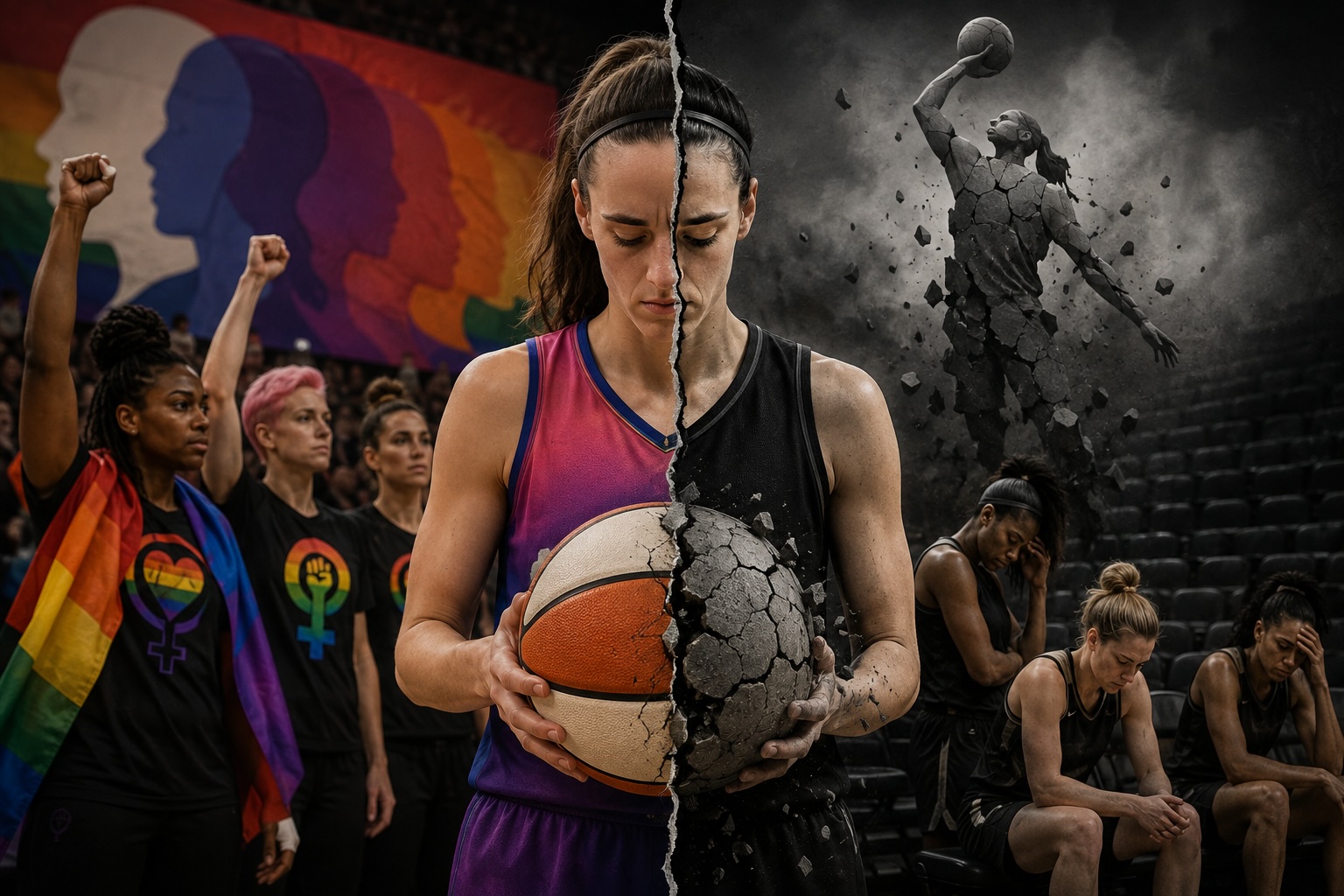
The WNBA’s latest self-inflicted wound confirms what many fans already know: the league has subordinated women’s basketball to progressive ideology, and the results are toxic. Indiana Fever guard Sophie Cunningham stated the obvious—that biological males do not belong in women’s sports and that protecting young girls in locker rooms and competitions is “common sense.” Instead of defending fair play, Minnesota Lynx coach Cheryl Reeve and segments of the WNBA establishment responded with lectures about “safe spaces,” “protecting trans kids,” and dismissing common-sense concerns as problematic narratives. Critics rightly labeled Reeve’s comments “pure bullying” and “insane.”
Cunningham’s remarks, made in an ESPN profile, were straightforward. She rejected the charge of hatred and insisted on truth: girls and women should not have to compete against biological men. Supporters rallied outside games, including in Minneapolis ahead of the Fever-Lynx matchup, holding signs thanking her and defending single-sex sports. Reeve pushed back hard. She argued every child has a right to sports “regardless of being gender diverse,” framed transgender inclusion as a human rights issue, and rejected the idea that biological males in girls’ spaces pose a problem. She portrayed the debate itself as driven by a faction making the issue larger than it is, while downplaying the fairness and safety stakes for female athletes.
This is not leadership. It is the same ideological capture that has hollowed out other women’s sports. No publicly known transgender woman currently plays in the WNBA, yet the league and its coaches treat any defense of sex-based categories as a threat requiring immediate correction. When young fans sat courtside supporting Cunningham, they were met with confrontation and derision. Reeve’s suggestion that such girls do not understand “real problems” only amplified the perception of elite gaslighting. The message is clear: biological reality and the integrity of the female category must yield to inclusion dogma.
The broader pattern is unmistakable. The WNBA has spent years prioritizing social messaging over the product on the court. Physical targeting of high-profile players, uneven officiating, and internal culture wars have already strained fan goodwill. Caitlin Clark’s arrival delivered unprecedented attention and ratings; the league’s response has often been resentment and uneven protection rather than celebration. Now, by elevating transgender ideology above the basic fairness that defines women’s sports, it risks alienating the very audience that pays attention.
Cunningham’s stand is not radical. It is the majority view among parents, female athletes, and ordinary fans who understand that sex is binary and sports categories exist for a reason. The WNBA’s refusal to affirm that reality—opting instead for lectures and ostracism—reveals a league more committed to progressive orthodoxy than to its own product. Until that changes, the self-destruction will continue.