
Globalist blue-state Democrats are moving to confiscate payouts from President Donald Trump’s $1.8 billion anti-weaponization fund, launching a coordinated campaign to tax the payments at 100 percent before alleged victims of federal abuse can receive meaningful compensation.
The effort marks the latest escalation in the long-running war between Trump’s America First movement and Democratic officials who have spent years defending the very institutions conservatives say were weaponized against them.
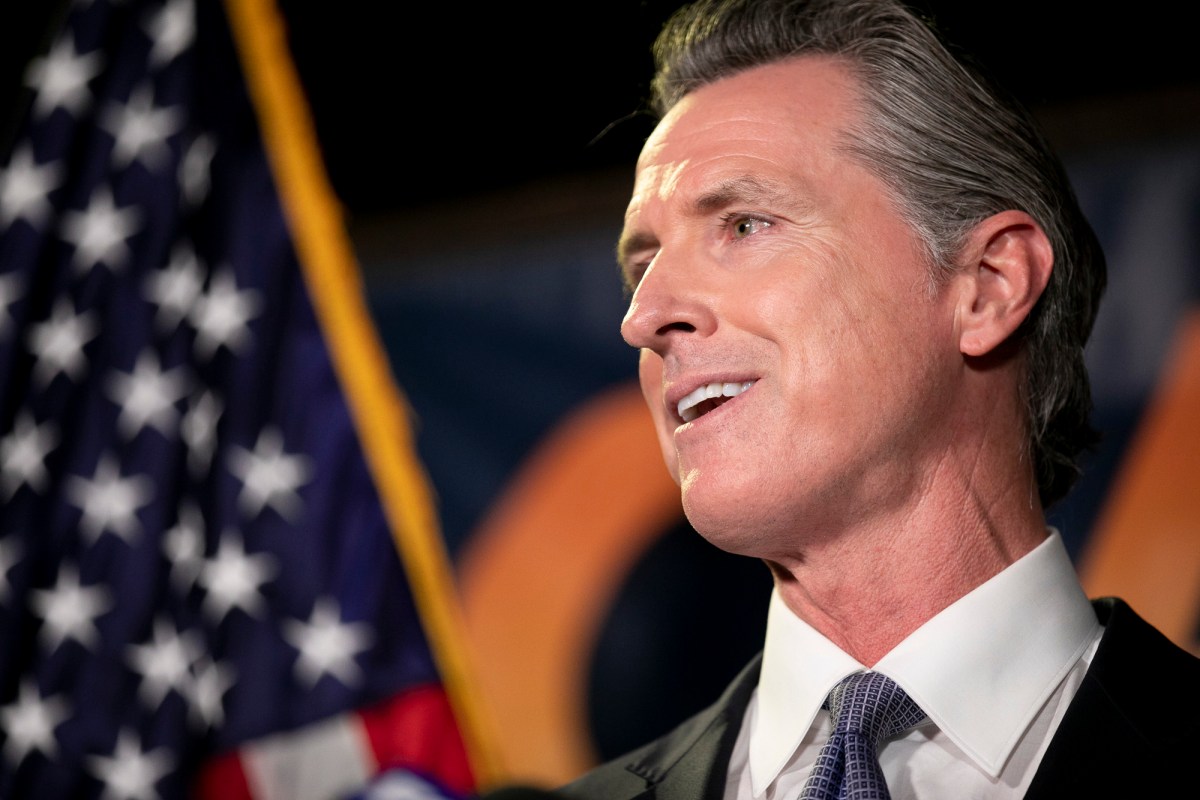
California Gov. Gavin Newsom has endorsed the idea, while Democrats in New York, Wisconsin, Illinois, and New Jersey are preparing similar measures. Their position is clear: if Trump creates a fund to compensate people who claim they were wrongly targeted by the government, blue states will try to seize every dollar.
The fund was created through a settlement connected to Trump’s lawsuit against the IRS over the leak of his tax records. Trump dropped a $10 billion lawsuit in exchange for the creation of a $1.776 billion pool for people who say they were wrongly investigated or prosecuted by the government.
For Trump supporters, the fund represents one of the first real attempts to make the administrative state answer for years of political targeting. For Democrats, it has become another excuse to use government power against the president’s allies.
New York Assemblyman Alex Bores is pushing one of the most aggressive proposals, a 100 percent tax on fund payments received by New York residents. In plain terms, Albany would take the entire payout.
“It’s simple: If you’re a New Yorker and you take from this illegal slush fund, New York state will tax 100 percent of it,” Bores said in a video posted on X.
He made the political purpose even clearer with another line. “If you storm the Capitol and you take from this slush fund, too bad, we’re taking it.”
That language reveals the core strategy. Democrats are not waiting to determine who was wrongfully targeted, who was overcharged, or who suffered legitimate government abuse; they are branding potential recipients as enemies and moving to confiscate their compensation in advance.
New York Gov. Kathy Hochul signaled support for the effort. “I have no problem with there being consequences for people who accept that money,” she told reporters.
Hochul called it “obscene” to “award people who have committed crimes or injustices.” But critics argue the real obscenity is a state government threatening to punish residents for accepting compensation tied to alleged federal misconduct.
California is moving in the same direction. Assembly Budget Committee Chair Jesse Gabriel said Democrats are preparing to put a tax on the payouts inside the state budget.
“That money belongs to taxpayers, and we’re going to make sure it stays with taxpayers,” Gabriel said.
Newsom endorsed the plan, saying, “It’s an action we look forward to taking.” The remark placed California once again at the front of the anti-Trump resistance, where high taxes, lawfare, and political retaliation have become routine features of governance.
In Colorado, Sen. Michael Bennet, the leading Democratic candidate for governor, attacked the fund as corrupt. “The slush fund is a blatantly corrupt theft of taxpayer dollars, and we need to do everything we can to stop it,” Bennet told The Washington Post.
Bennet claimed the fund would not “wear well” politically with either party. Yet the Democrats’ proposed remedy — confiscating 100 percent of payouts — may be even more politically revealing.
The fight has also drawn attention because of Tina Peters, the former Colorado county clerk recently granted clemency by Gov. Jared Polis. Peters helped copy voting-machine hard drives while challenging the 2020 election, and Vice President JD Vance said it was “reasonable” that she could receive compensation.
Wisconsin Democrats have introduced the No Taxpayer Dollars for Insurrectionists Act. The name alone shows how Democrats intend to frame the issue: not as a question of government abuse, but as another opportunity to label political opponents as criminals before any claim is reviewed.
Senate Minority Leader Dianne Hesselbein said she wants candidates asked whether taxpayer money should be used to pay “insurrectionists.” “I truly hope that people ask everybody who’s running for office if they believe they should be using taxpayer money to pay insurrectionists,” she said.
For MAGA voters, this is exactly the mentality that produced the weaponization crisis in the first place. Declare your opponents illegitimate, attach a toxic label, then use the machinery of government against them.
Democrats in Congress have few options while they remain in the minority. So blue-state governors and lawmakers are now turning to tax codes as a substitute weapon.
The plan is brutally simple. If Washington compensates alleged victims of weaponized government, blue states will strip those victims of the money.
Critics say this is not normal taxation. A 100 percent tax is confiscation dressed up in budget language.
The Justice Department responded with open contempt for the blue-state maneuver. Natalie Baldassarre, a DOJ spokesperson, accused Democratic governors of loving lawfare while failing their own residents.
“Instead of flaunting their love of lawfare and taxing constituents into oblivion, blue-state governors should focus on preventing more of their residents from fleeing in droves to free states with lower taxes, less crime, and governments that actually serve the people they represent,” Baldassarre said.
Treasury Secretary Scott Bessent was even more blunt about Newsom’s proposal. “There’s no cure for stupid,” he told reporters.
Legal experts say the Democratic plan could face serious constitutional challenges. A 100 percent tax raises obvious questions about whether states are raising revenue or simply destroying a federal compensation program they oppose.
Duke Law professor Lawrence Zelenak cited Justice Oliver Wendell Holmes Jr.’s warning that “the power to tax is not the power to destroy while this Court sits.” That principle could become central if blue-state tax schemes are challenged.
Joseph Bishop-Henchman of the National Taxpayers Union Foundation said courts generally defer to lawmakers on taxes, but a 100 percent levy is extraordinary.
“It would be an unusual thing for states to do, which normally would cut against them,” Bishop-Henchman said. “But the entire issue is also unusual.”
He said courts may examine whether the proposals function as bills of attainder, excessive fines, or unconstitutional takings. “It would be hard to argue that a 100 percent tax is anything other than a taking,” he said.
Supporters of the proposals argue states can tax government payments like other income. Corey Husak of the Center for American Progress said states may have authority to tax anti-weaponization awards.
But even Husak acknowledged enforcement problems if recipients are not publicly disclosed. “It’s possible no one outside of the fund’s administrators and the Trump family will know who the money is going to,” he said.
The fund itself is already under legal scrutiny. U.S. District Judge Leonie M. Brinkema in Virginia has temporarily blocked the administration from moving ahead while the courts examine challenges to the program.
A June 12 hearing has been scheduled. Critics claim the fund could benefit Trump allies, while supporters argue that objection is political cover for protecting a weaponized bureaucracy from accountability.
For the America First movement, the issue is bigger than the fund itself. It is about whether the government can target citizens for their politics and then avoid consequences when those citizens seek redress.
Trump’s supporters see the blue-state tax push as a confession. Democrats deny the system was weaponized, but the moment a compensation mechanism appears, they move immediately to crush it.
That is why the controversy has become so politically potent. It captures the entire MAGA argument about modern government in one fight: federal agencies target conservatives, courts delay accountability, Democrats deny wrongdoing, and blue states try to confiscate compensation.
Democratic officials insist they are defending taxpayers. But to Trump voters, they look like they are defending the system that abused taxpayers in the first place.
The 100 percent tax push also exposes the divide between red and blue governance. Trump is trying to punish weaponization; Democratic states are trying to punish those who claim to have been weaponized against.
As the 2026 campaign season approaches, Republicans are likely to turn the issue into a national referendum on lawfare. They will argue that Democrats are not merely opposed to Trump, but opposed to accountability for government abuse when the victims are conservatives.
Democrats will keep calling the fund corrupt. But their own response — total confiscation through taxation — may only strengthen the MAGA case that the left views state power as a tool of political punishment.
The legal battle will decide whether blue states can get away with it. The political battle has already clarified what each side wants.
Trump wants compensation for people who say they were abused by a weaponized government. Blue-state Democrats want to take the money before those people can benefit from it.
For the America First movement, that is the scandal in its simplest form. The same political machine accused of weaponizing government now wants to weaponize taxation to make sure its alleged victims are never made whole.