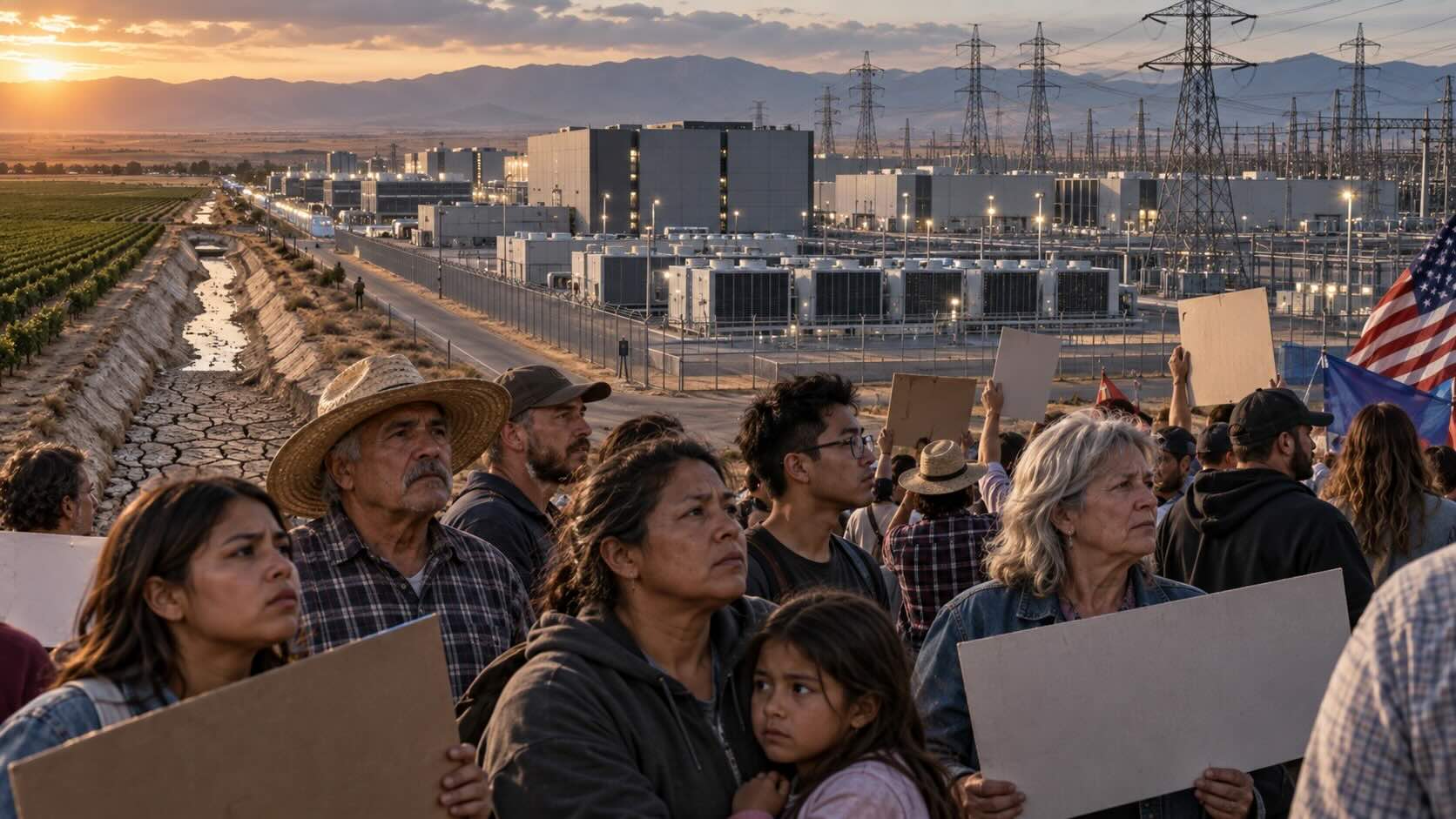
Data center construction proposals are continuing to provoke opposition in California, as elections approach.
The issue has prompted both Republican and Democratic grassroots opposition nationwide, as data centers have accelerated public fear about AI advancement. In Kings County, California, Democratic congressional candidate Randy Villegas is attempting to use the issue against Republican Representative David Valadao, who is facing a close race for reelection.
Villegas recently called for a moratorium on data center construction, and said, “The advancement of technology … should not be an excuse to throw our communities under the bus.” The county is currently considering a proposal regarding a new data center on a fairgrounds site.
California currently has the third-highest number of data centers in any state, and the issue has divided the state’s Democratic politicians. Governor Gavin Newsom previously vetoed a bill that would have blocked local governments from approving new data centers, unless developers disclose their water plans and cover related additional costs. A recent similar bill was sent to Newsom’s desk, and currently awaits his signature or veto.
Leading figures in both parties across the country have expressed opposition to data centers and the AI industry more generally. Democratic socialist Senator Bernie Sanders previously proposed a national moratorium on data center construction, and Florida Republican Governor Ron DeSantis claimed that the country did not have enough grid capacity for the AI industry’s data center expansion plans. Meanwhile, President Donald J. Trump recently made headlines with Truth Social posts saying that communities refusing data centers were choosing to be “backwards and poor.”
While opposition to data centers is often framed in terms of their resource use, the backlash may very well continue even if regulations are enacted, due to people’s fear of job loss via AI automation. Since the acceleration of AI development in recent years, we have faced speculation regarding a future of large-scale job loss, without a meaningful explanation of how the situation will resolve. Until people have a clearer vision of that future and what it actually looks like, data centers will no doubt continue to split both parties going into the 2028 presidential election.