A new report has renewed concerns about ideological training inside Canadian public schools.
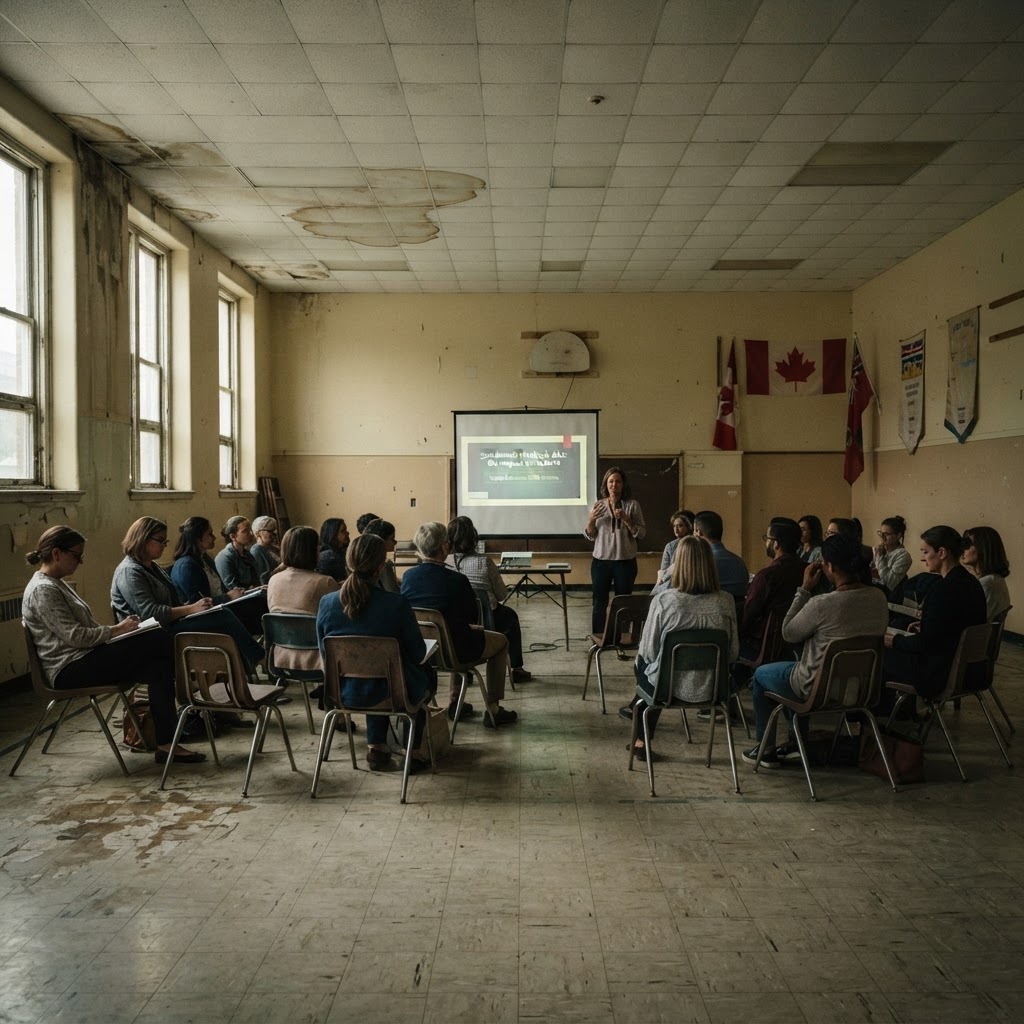
According to The College Fix, teachers at an unnamed elementary school in Ontario’s York Region District School Board received a presentation featuring several “anti-oppression agreements.” One item called on employees to acknowledge that their workplace is a “white supremacist” institution.
Journalist Jonathan Kay shared the presentation on X, saying it appeared at a September 14 staff gathering. The material asked teachers to reflect on how they “perpetuate racism” and to consider how to “dismantle structures and systems of white supremacy” rather than “debating whether these lived realities exist.”
The slide also included a series of prescribed statements. Staff members were shown language such as “I will focus on the impact of actions rather than their intentions,” “When I think I know it all, I will check myself,” “I will work together to maintain a brave space rather than a comfortable one,” and “I commit to advocating for what is just, even when faced with resistance.”
The National Post reported that the district used the agreements during the September meeting and did not reply to a request for comment. Kay added that educators were not required to recite the statements or otherwise “indicate commitment.”
The College Fix noted that the presentation closely resembled training material the district used three years earlier for English as a Second Language instruction. In the earlier version, each statement began with “I choose to,” but the presentation crossed out those words and replaced them with the highlighted term “will."
The slide stated that the agreements were “adapted” from the work of White Fragility author Robin DiAngelo and Glenn Singleton’s Courageous Conversations program. DiAngelo defines white fragility as “a state [for white people] in which even a minimum amount of racial stress becomes intolerable.” The College Fix also reported that she has argued America has too many white teachers and described whites who apply equal treatment to everyone as “dangerous.”
Singleton has contended that racial groups communicate differently, asserting that white people tend toward “verbal,” “intellectual” and “task-oriented” communication, while black people use language that is more “emotional” and “personal.”
In 2024, the York board released its Dismantling Hate and Oppression Framework, which states that schools continue to face a “persistence of colonial ideology and culture.” The document further says “the ideology of white supremacy impacts attitudes and behaviours in all peoples, regardless of race, culture, gender, or religion.” It recommends “embed[ding] actions to dismantle hate, oppression, and discrimination” within the School Improvement Plan.
That same year, the Elementary Teachers Federation of Ontario argued in an anti oppressive framework that activities such as “Crazy Hair Day” are “inherently oppressive” because they “perpetuate a ‘dominant Euro-centric culture’ while also stigmatizing the mentally ill.”