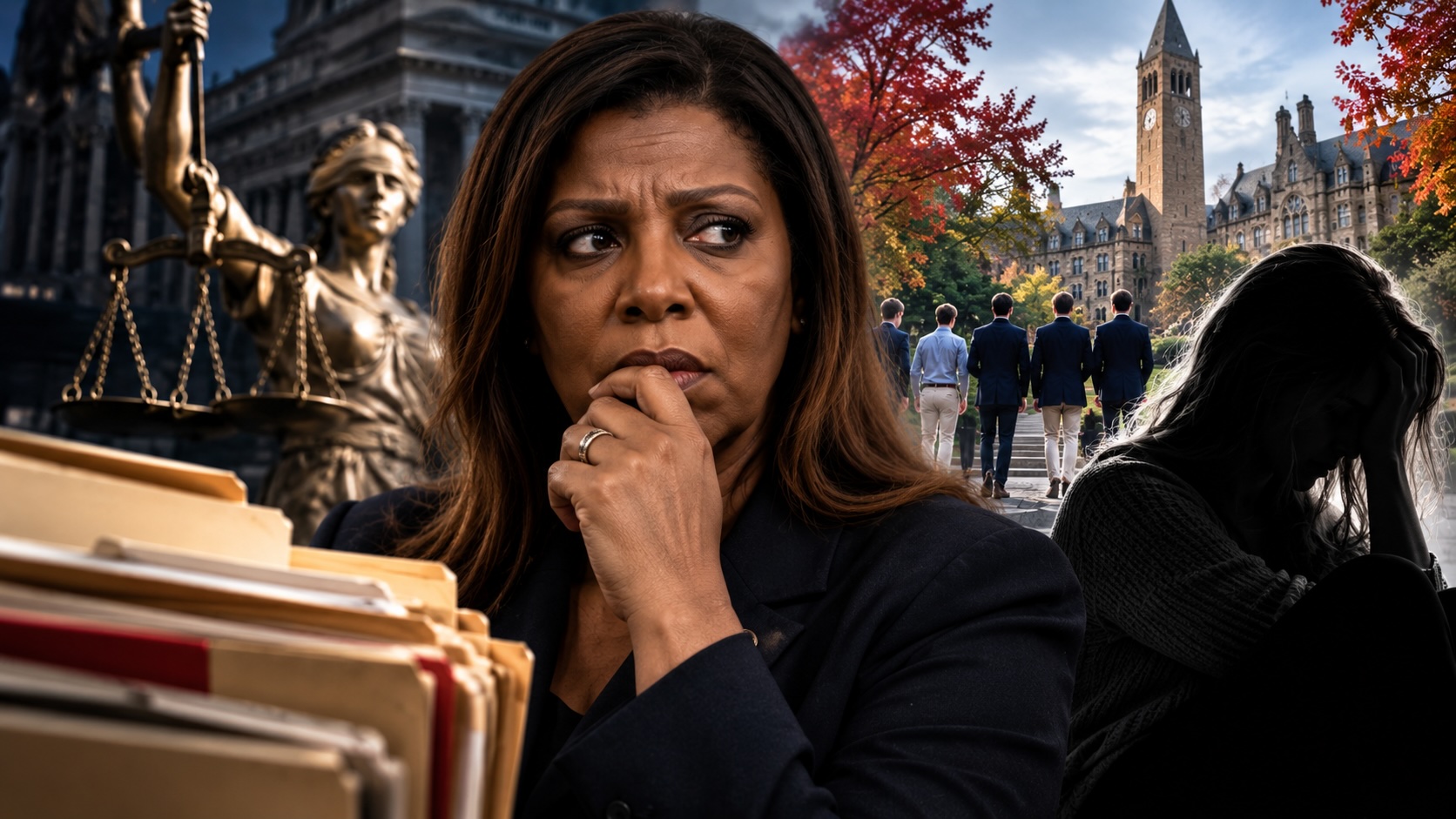

Gov. Kathy Hochul wants to change New York's rape law. Her push comes as she named Attorney General Letitia James special prosecutor in the Cornell 7 case.
"Voluntary intoxication is not a license for sexual assault or gang rape, period," Hochul said at an Oct. 2 news conference in Manhattan.
The change she backs would make it a crime to have sex with someone who got drunk or high on their own and became too impaired to consent, if the accused should have known it.
Supporters say it closes a gap that lets rapists go free. Critics, including some Democratic lawmakers and public defenders, say it could lead to wrongful convictions.
The bill also leaves a question unanswered: what happens when both people are too drunk to consent? Nothing in it stops a prosecutor from charging both.
WHAT THE LAW SAYS NOW
Under New York law, rape charges generally require force, a clear refusal, or a victim who was unconscious or mentally incapacitated by drugs given without consent.
If someone is drugged without knowing it, the law treats them as unable to consent. If someone drinks or takes drugs by choice, it doesn't count, unless they are unconscious or unable to communicate.
Supporters of the change call this the "voluntary intoxication loophole."
That rule is why Tompkins County District Attorney Matthew Van Houten said he couldn't charge the seven Cornell men in 2024. The accuser's own sworn statement described her drug use and sexual conduct as voluntary.
WHAT THE BILL WOULD DO
The bill, A101 in the Assembly, is sponsored by Assembly Member Jeffrey Dinowitz. Sen. Nathalia Fernandez of the Bronx sponsors the Senate version.
It would allow sex-crime charges when the victim was voluntarily intoxicated, if a reasonable person in the accused's position should have known the victim couldn't consent because of intoxication.
The Senate has passed a version at least four times since 2019. It has never come to a vote in the Assembly.
Assembly Speaker Carl Heastie said: "We did not have enough votes within the Majority conference to pass the bill."
He has formed a working group to fix the problems, with recommendations expected before the end of the year.
 Hochul
Hochul said lawmakers could take it up in January. She is up for re-election in November.
Supporters, including the anti-sexual-violence group RAINN and Manhattan District Attorney Alvin Bragg, stress that the bill doesn't make drunk sex a crime. It covers only people so impaired they couldn't consent, and only when the accused knew or should have known it.
THE DUE PROCESS CONCERNS
Some lawmakers, including Assembly Member Latrice Walker, and public defense groups say the bill is too broad and could lead to wrongful convictions.
"Should have known."
The bill doesn't require proof that the accused actually knew the other person was too impaired. It's enough that a reasonable person should have known. Most serious crimes require proof of what the accused actually knew or intended. Under this standard, a person could face a felony rape charge for failing to recognize how impaired someone else was.
Deciding after the fact. Incapacity is judged afterward, usually from memory. Often there's no blood test, no video, and no sober witness. People in an alcohol blackout can walk, talk, and appear to agree, then remember nothing.
A jury would have to decide, months or years later, how impaired someone was at a particular moment, and whether the other person should have seen it.
Regret versus incapacity. Critics also worry about cases where consent is given in the moment and regretted later. Supporters respond that regret alone wouldn't meet the standard: prosecutors would still have to prove incapacity beyond a reasonable doubt.
WHEN BOTH ARE DRUNK, WHO IS THE VICTIM?
The bill applies to men and women alike. It asks what a "reasonable person" in the accused's position should have known. In criminal law, that reasonable person is generally assumed to be sober. And New York's Penal Law says intoxication is not a defense to a crime.
So take two people who both get too drunk to consent and have sex. Under the bill's wording, each one's drunkenness is what makes the sex a crime against them, and neither one's drunkenness is an excuse for what they did. Each is both an offender and a victim.
Nothing in the bill stops a prosecutor from charging both.
But a case against both runs into a problem. Each person is the key witness against the other, and each has a Fifth Amendment right not to testify while facing a charge. To get a conviction, a prosecutor would likely have to drop the charge against one person or give that person immunity so they could testify against the other.
In other words, the prosecutor would decide who the victim is. The facts of the night might be the same for both. Who goes to police first could decide the rest.
Supporters say prosecutors wouldn't bring such cases. Critics say a law shouldn't depend on prosecutors choosing not to use it.
The Cornell case shows the problem. According to The New York Times, one of the seven men says he was too drunk to consent when the accuser performed oral sex on him.
Had the bill been law in October 2024, if prosecutors found he was too impaired to consent, and that she should have known it, she could have faced a charge too.
The bill doesn’t affect the Cornell case. A new criminal law can't be applied to conduct that happened before it passed. To bring charges, James would need evidence of force, a clear refusal, a victim who was unconscious or unable to communicate, or a drug given without consent.

WHAT IT HANDS PROSECUTORS AND ACCUSERS
Today, when two adults drink by choice, stay conscious and have sex, there is usually no rape case to bring. The bill would change that.
Many ordinary nights involving alcohol could become potential felonies, whether or not anyone is ever charged.
A rape charge carries the threat of prison and the sex offender registry. That threat alone can push a defendant to plead guilty to something lesser, even with a defense.
It also gives anyone with a grudge a new charge.
An accusation can do damage long before a jury hears it. In a breakup, a divorce, or a custody fight, a rape complaint can bring an order of protection, cost a parent time with children, or force a settlement. The bill would widen what can be alleged: not force, not a drugged drink, but that the other person drank too much and the accused should have noticed.
Nothing in the bill addresses who is the victim when both people drank, how impairment is to be measured after the fact, or what protects the accused when the only evidence is one person's memory of a night they say they can't remember.
By Art Voice - https://artvoice.com/too-drunk-to-consent-too-drunk-to-notice-hochul-s-rape-bill