
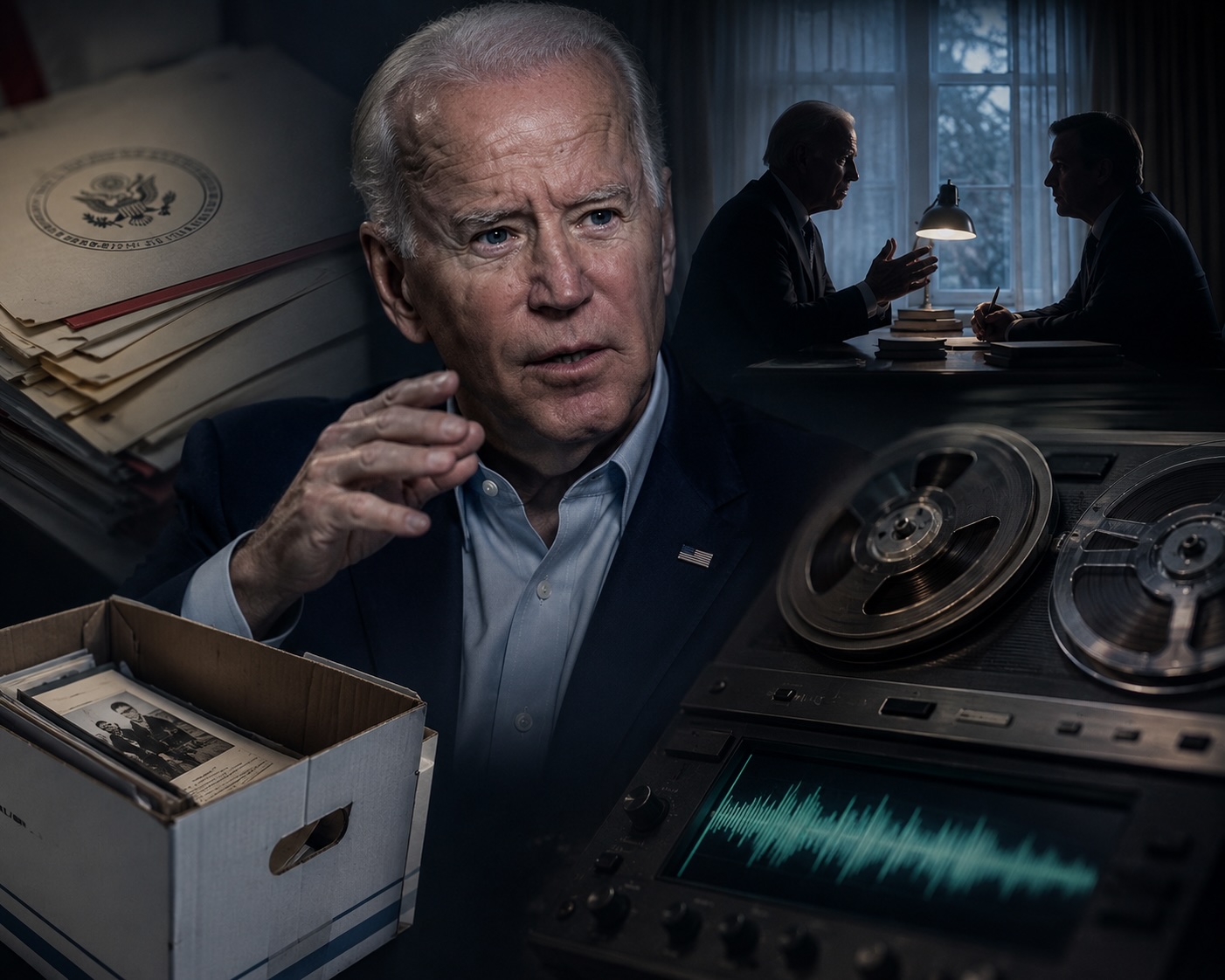
Newly released audio recordings capture former President Joe Biden acknowledging possession of classified documentsat his home and discussing sensitive material with his memoir ghostwriter years before the 2020 campaign.
The Oversight Project, a conservative watchdog group, released roughly two hours and 45 minutes of audio along with 117 pages of transcripts on July 27-28, 2026, after Biden dropped a prolonged legal effort to block their disclosure. The interviews, conducted in 2016 and 2017 with Mark Zwonitzer while working on the 2017 memoir Promise Me, Dad, contain multiple references to classified information.
In a February 16, 2017, session—shortly after leaving the vice presidency—Biden can be heard saying, “I just found all the classified stuff downstairs.” He then described writing a lengthy handwritten memorandum to President Barack Obama arguing against additional troop deployments to Afghanistan.
On other occasions Biden warned Zwonitzer about the material. “Some of this may be classified so be careful with it,” he said in one exchange. In another he stated, “The next thing I have here is, um, this is classified.” Significant portions of the audio and transcripts are redacted precisely because they involve classified content from CIA, Defense Department, and other national security sources.
During an October 2016 conversation, while still serving as vice president, Biden told Zwonitzer he possessed extensive notes the White House did not know about: “I have extensive notes over this period of time. They didn’t know I have this.”
The recordings were originally obtained during Special Counsel Robert Hur’s investigation into Biden’s handling of classified documents found at his Delaware home and a private office. Hur’s February 2024 report concluded that Biden willfully retained classified materials but declined prosecution, citing insufficient evidence for a likely conviction and describing Biden as “a sympathetic, well-meaning, elderly man with a poor memory.” The newly public tapes reinforce that Biden was aware of the documents’ presence years earlier and shared details of them with an uncleared individual.
Oversight Project officials highlighted the redactions as evidence of knowing disclosure of classified information. No classified material is known to have appeared in the published book itself. The release follows years of litigation and comes after Biden’s attorneys abandoned efforts to keep the files private.
The audio also contains frequent pauses, forgotten names, and memory lapses during the 2016-2017 sessions, details that have drawn additional attention given later questions about Biden’s cognitive fitness.