

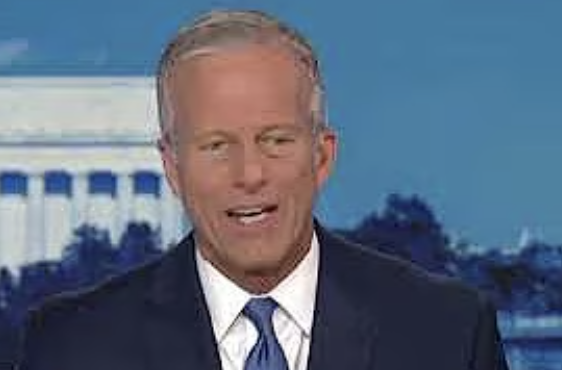
Senate Majority Leader John Thune commands considerable influence in Washington, but the latest Rasmussen report finds little public enthusiasm for him. Just 28% of likely voters view him favorably, compared with 31% in November 2025. Only 8% hold a very favorable impression, while 36% remain unsure about him.
Those figures measure favorability, not job approval. Rasmussen identifies Thune as the lowest rated congressional leader, but his substantial unfamiliarity rating also matters. The article contains conflicting unfavorable figures, spelling out 33% while printing 36%, so that result requires clarification.
Thune’s immigration record gives restrictionist critics specific grounds for dissatisfaction. In 2018, he proposed pairing protections for existing DACA recipients with a $25 billion border security trust fund. Dan Cadman of the immigration center, the Center for Immigration Studies, called the proposal’s inadequacy a “surprise and disappointment.” Cadman argued that the narrower bargain would preserve DACA through legislation without securing sufficiently comprehensive reforms.
Thune’s later SEASONAL Act proposal would let qualifying governors seek additional temporary foreign workers beyond the national cap. That approach favors expanding employer access to foreign labor rather than reducing admissions.
On foreign policy, Thune has explicitly supported making regime change an objective of military action against Iran.
“In my view, if you’re going to do something there, you better well make it about getting new leadership and regime change,” he said, according to the Libertarian Institute. “If you’re going to take some sort of action, I think you want to achieve a result that actually brings about the transformational change that I think we want in the region.”
Critics also fault his support for advancing foreign assistance after border provisions disappeared from the 2024 package. Thune has defended Ukraine assistance as a way to help Ukrainians fight without eventually drawing American troops into conflict with Russia.
Republicans should replace the combination of foreign intervention and immigration expansion with military restraint, stronger immigration limits and an economic agenda centered on American workers. The midterm setback should prompt populists to reconsider who they trust leaders in the Republican Party. Rejecting Thune’s policy direction offers populists a concrete starting point.
This type of Republican must never be given the time of day from here on out.