


In the summer of 2020, as Minneapolis burned from rampant rioting, racking up millions of dollars in property damage, the “defund the police” rhetoric only grew louder.
Mayor Jacob Frey’s progressive stance in the aftermath of George Floyd’s death struck as a dangerous disconnect from the harsh realities facing the city he was elected to lead: rising crime, shuttered businesses, and growing concerns about neighborhood safety.
The staffing crisis at the Minneapolis Police Department (MPD) became imminent after George Floyd’s death in May 2020 and remains ongoing. A massive wave of officers quit or retired amid an intense national debate over policing policies. MPD numbers plummeted from roughly 920 sworn officers in 2019 to a low of around 560 by early 2024.
This has severely strained public safety.
911 call response times lengthened, crime has escalated in many neighborhoods, and residents reported feeling less protected. Despite recruitment pushes, the department has struggled with retention.
As of recent 2026 updates around the court ruling, sworn officer counts stood at approximately 630 (per city data cited by The Center Square), still well below the charter-mandated minimum of 731 officers. This left the department roughly 100 officers short.
The mandate builds on a 2022 Minnesota Supreme Court ruling, stemming from the earlier Spann lawsuit, that affirmed the city’s obligations. Despite some prior progress, the department has remained chronically understaffed for years.
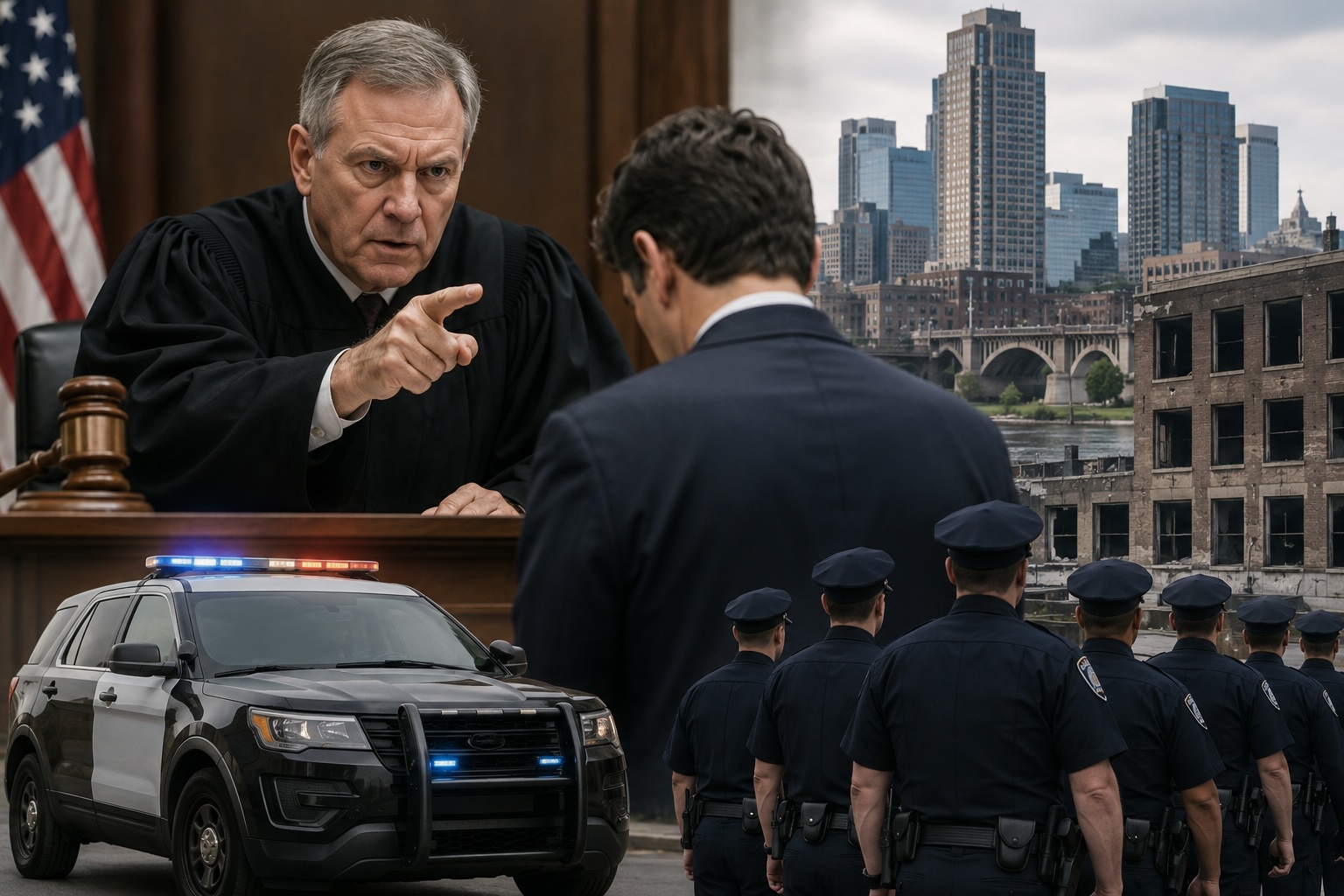
On June 25, 2026, Hennepin County District Judge Laura M. Thomas ordered Minneapolis Mayor Jacob Frey to restore the city’s police department to its charter-mandated minimum staffing level by January 4, 2027, or face a contempt-of-court trial.
Legal analysts have described the hard deadline backed by a contempt threat as extraordinary.
The decision stems from the Upper Midwest Law Center (UMLC) lawsuit filed in March 2026. It enforces Section 7.3(c) of the Minneapolis City Charter, requiring at least 1.7 sworn officers per 1,000 residents, equating to a minimum of 731 based on current population figures.
“The city charter is not optional. The Minnesota Supreme Court already recognized this staffing requirement, and Minneapolis officials have a legal duty to comply. Residents deserve the public safety protections guaranteed under the law,” said Doug Seaton, President of the Upper Midwest Law Center.
The city has invested heavily in rebuilding the force they once wanted to defund.
Multimillion-dollar advertising and recruitment campaigns have been launched, including a $1 million targeted marketing campaign in 2024, with the city allocating tens of millions overall from the budget toward broader hiring, bonuses, training, and retention efforts since 2024.
More than 150 new hires were added in recent periods (with surges such as classes of ~27–33 officers), supported by a reported surge in applications.
The sudden resignation of Police Chief Brian O’Hara only adds more uncertainty, potentially undermining leadership stability at a time when the department needs it most.
Officials have emphasized progress in creating a more diverse department through DEI initiatives, with cadets currently in training.
Many argue that retention problems continue to undermine these gains, and as of mid-2026, the department was approximately 82–93 officers below the 731 minimum.
The ruling places direct responsibility on Mayor Frey. If the January 4, 2027, deadline is missed, he could be required to testify at a trial on April 26, 2027.
