


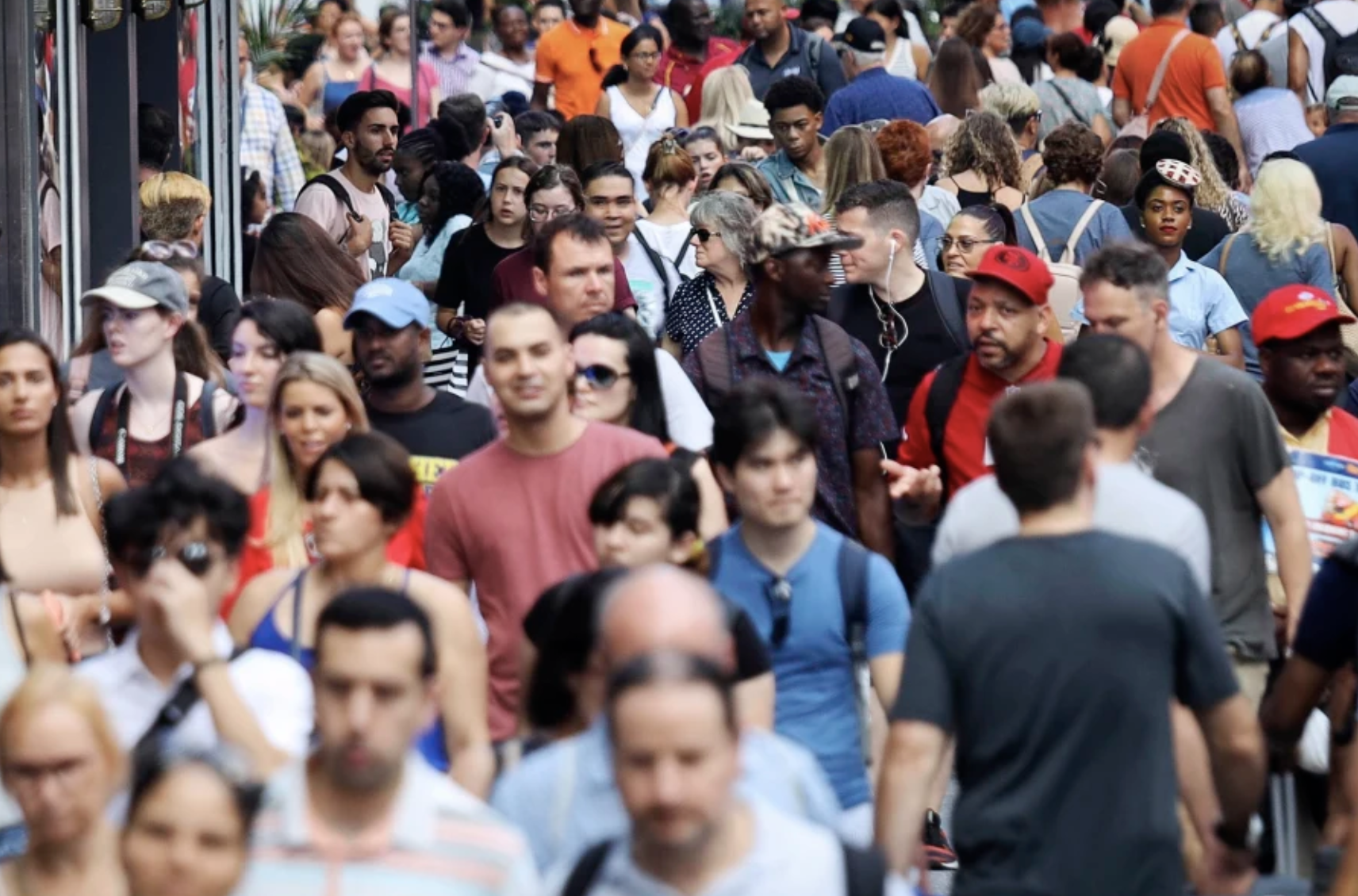
New census projections are triggering a political wake-up call across the United States, as fresh data confirms the country is undergoing a rapid demographic transformation driven by decades of loose immigration policies and political inaction.
According to the latest figures, reported on by the New York Post, the U.S. is on track to become a “majority-minority” nation by around 2050—an outcome that underscores how dramatically the country has changed in just a few short generations.
The pace of that change is what is drawing the most concern. In 1980, roughly 80 percent of Americans identified as white; by mid-century, that figure is expected to fall to about 47 percent, with further declines already projected.
This is not a slow, organic shift. It is a rapid transformation unfolding over decades, not centuries—driven by policy decisions that critics say were never seriously debated with the American public.
At the state level, the shift is already well advanced. Large states such as California and Texas have already undergone major changes, while others like Florida, New Jersey, and New York are rapidly moving in the same direction.
By 2050, at least 16 states are expected to have populations where no single group holds a majority. By 2060, that reality could define nearly half the country.
The drivers are clear and widely acknowledged. Sustained high levels of immigration, combined with internal migration and declining birth rates, have accelerated the pace of change.
For many Americans, this is no longer a distant projection—it is happening now. Communities, schools, and housing markets are already reflecting these shifts.
Critics argue that this transformation is the result of deliberate policy choices. For years, they say, political leaders prioritized global economic interests over long-term national stability.
Now, under Donald Trump, that approach is being challenged head-on. The administration has made immigration enforcement and border security central pillars of its agenda.
Agencies like U.S. Immigration and Customs Enforcement have been empowered to step up operations, enforce existing laws, and restore control to a system that many viewed as spiraling.
Supporters say this marks a long-overdue course correction. After years of what they describe as weak enforcement, the federal government is once again prioritizing sovereignty and rule of law.
The shift is not just about enforcement—it’s about direction. Trump’s policies aim to slow the pace of change and ensure it happens under clear, controlled conditions.
Advocates argue that without firm borders, no nation can effectively plan for its future. They say immigration policy must reflect national priorities, not global pressures.
At the same time, the broader debate is expanding. Questions about identity, economic pressure, and social cohesion are increasingly shaping political discourse.
Supporters of high immigration levels continue to emphasize diversity and economic growth. But critics counter that rapid, large-scale change comes with real consequences.
They point to strained public services, rising housing costs, and increased pressure on schools and healthcare systems. In their view, these are not abstract concerns—they are everyday realities.
The United States is not alone in facing these challenges. Across Europe, similar demographic shifts have triggered political upheaval and a surge in nationalist movements.
Countries like France, Germany, and Sweden have seen immigration reshape both society and politics. Establishment parties have struggled to keep up, while nationalist parties have surged.
That same dynamic is now playing out in the United States. Demographic projections are no longer background data—they are driving political strategy and voter behavior.
Analysts warn that rapid population shifts can strain infrastructure and destabilize communities if not carefully managed. These pressures are already visible in major cities.
For many voters, the issue comes down to control. Who decides immigration policy—and whether those decisions reflect the will of the public—has become a central question.
Supporters of Trump’s approach argue that the administration is finally addressing that concern. Through stronger enforcement and clearer policy direction, they say the system is being brought back under control.
They point to increased deportations, tighter border enforcement, and expanded ICE operations as evidence that the tide is beginning to turn.
The goal, they say, is not to halt change entirely—but to slow it, manage it, and align it with national interests.
As these trends continue, the stakes are rising. The demographic trajectory is becoming clearer with each new projection.
What remains uncertain is whether future leaders will maintain this course—or revert to policies that critics say led to the current situation.
For now, the message from the Trump administration is unmistakable: restore control, enforce the law, and put American interests first.
