


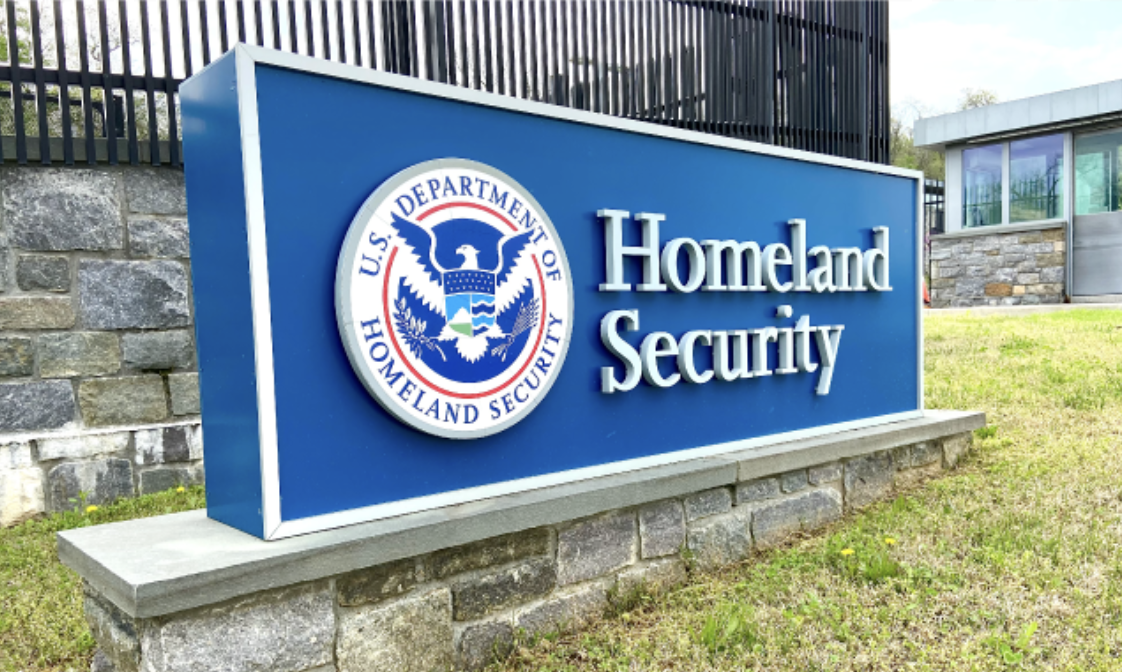
The Trump administration is pushing forward with one of the most aggressive and far-reaching immigration enforcement efforts in modern American history, expanding its focus beyond illegal entry to ensure that even legal residency is held to the highest standard.
At the center of the initiative, according to a report from the New York Times, is a newly established unit within the Department of Homeland Security dedicated to reviewing thousands of green card holders—a move supporters say reflects President Donald Trump’s unwavering commitment to restoring order, accountability, and trust in the U.S. immigration system.
For years, critics have argued that immigration enforcement stopped at the border, leaving glaring gaps within the system itself. Trump’s approach directly confronts that weakness, signaling that immigration laws will be enforced comprehensively—not selectively.
Officials say the program is focused on identifying individuals who may have obtained their status fraudulently or who pose risks to American communities. Early results suggest a wide-ranging review effort already underway.
Nearly 3,000 green card cases have been reviewed or are under assessment, with more than 500 still under active scrutiny.
More than 50 individuals have already been identified as potential deportation cases—figures that, while early, underscore the administration’s determination to enforce the law wherever violations are found.
Supporters of the effort argue that the numbers tell a deeper story: not of overreach, but of diligence. In their view, even one fraudulent or dangerous case is one too many when it comes to national security.
The administration has made clear that this is about more than statistics—it is about restoring the principle that legal status in the United States is a privilege, not an untouchable entitlement.
“U.S.C.I.S.’s first and foremost mission is to safeguard America by rigorously vetting and screening aliens,” said agency spokesman Zach Kahler.
The creation of the “Tactical Operations Division” marks a decisive shift toward proactive enforcement. Instead of waiting for problems to surface, authorities are actively seeking them out.
Within the division, specialized teams are reviewing lawful permanent residents, denaturalization cases, and refugee admissions—building what officials describe as a full-spectrum enforcement framework.
This, for Trump supporters, represents something long overdue: a government that finally takes its own laws seriously.
Critics have raised concerns about resources and scale, pointing to the relatively small percentage of cases flagged so far. But those arguments have done little to slow the administration’s momentum.
To supporters, the criticism misses the point entirely. The goal is not to maximize deportations—it is to ensure that every case has been properly vetted and that no one slips through the cracks.
Officials say those under review include individuals with serious criminal histories, including domestic violence and drug-related offenses, as well as cases involving alleged fraud.
There are also national security dimensions. Some cases involve individuals suspected of ties to organizations engaged in illicit or hostile activities.
For many Americans, these revelations reinforce a sense that stricter oversight is not only justified, but necessary.
“This intense focus on revetting is new,” one immigration expert acknowledged, highlighting just how dramatically the policy marks a departure from previous administrations.
The initiative fits squarely within Trump’s broader immigration agenda—one defined by a clear emphasis on sovereignty, security, and the rule of law.
In recent months, the administration has expanded efforts to review refugee admissions and revisit naturalization cases, signaling a system-wide reset.
Supporters argue that these steps are essential to rebuilding confidence in immigration institutions that had become, in their view, overly permissive and poorly enforced.
At the same time, the administration is grappling with a backlog of more than 11 million immigration applications—a problem that critics say complicates enforcement efforts.
But Trump’s allies see the backlog itself as evidence of systemic failure—one that must be addressed not only through processing, but through stricter standards and accountability.
The revetting campaign also sends a clear message: immigration laws apply to everyone, regardless of how they entered the system.
For many working Americans, that message resonates strongly. It speaks to a broader demand for fairness, consistency, and the protection of national interests.
Opponents warn that the effort could create uncertainty among long-term residents. But administration officials emphasize that due process remains intact, with every case subject to judicial review.
Deportation is not automatic, they note. Individuals retain the right to challenge decisions before an immigration judge.
Still, the policy signals a fundamental shift: legal status is no longer seen as beyond scrutiny if it was obtained improperly or abused.
For Trump, the effort represents a defining feature of his presidency—a promise kept to voters who demanded stronger borders and stricter enforcement.
It also reflects a broader philosophy: that a nation’s sovereignty depends on its willingness to enforce its own laws, without exception.
As the program expands, tens of thousands more cases are expected to be reviewed, marking only the beginning of a much larger initiative.
