


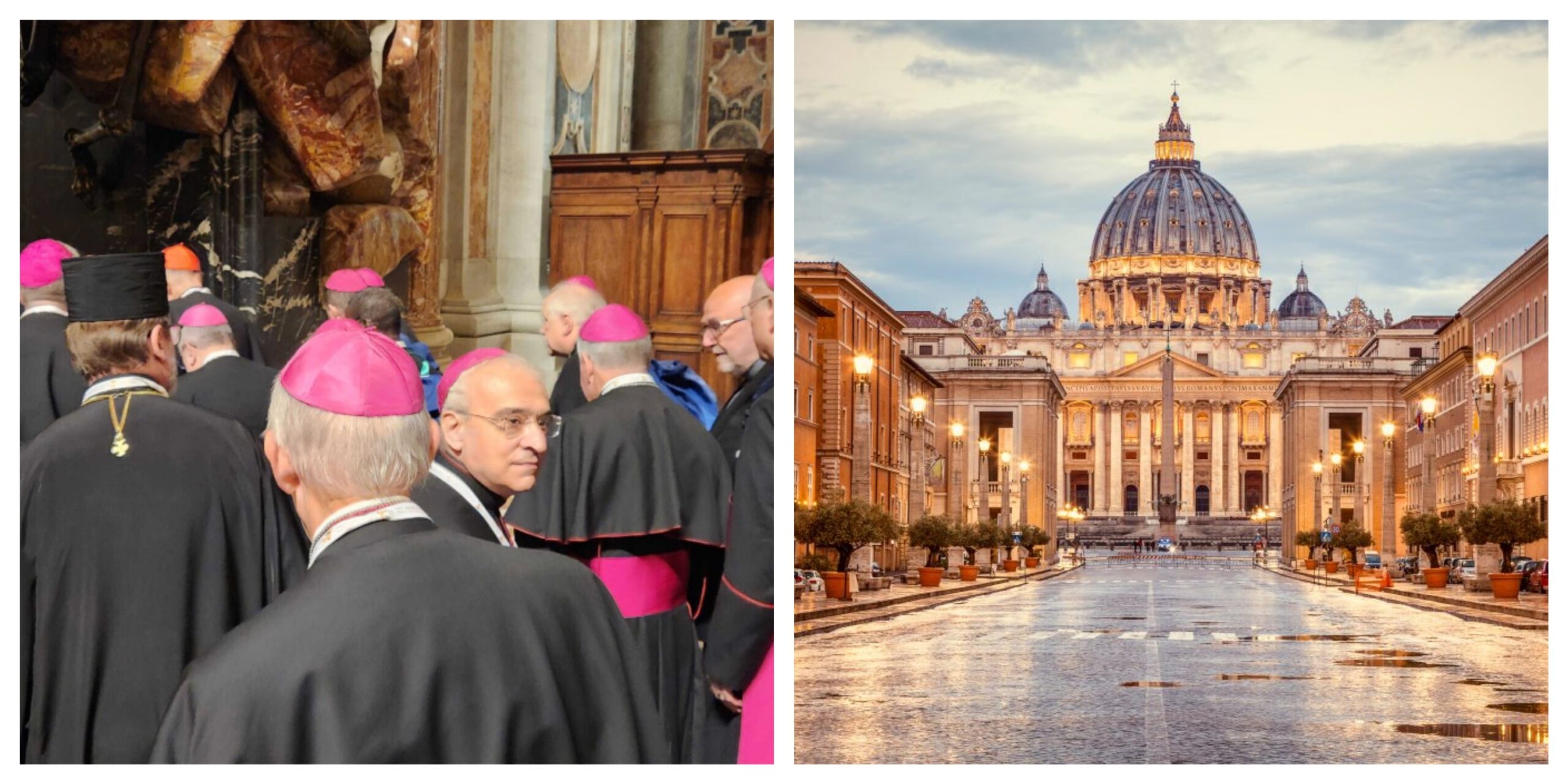
A new report from a Vatican Synod working group is raising eyebrows among Catholics by suggesting that being in a same-sex relationship is not necessarily sinful.
The 32-page Final Report from Study Group 9, which was released on May 5, 2026, draws heavily on personal stories from two people with same-sex attraction. It presents their experiences as “stages of development” and “experiences of goodness.” One testimony claims the person discovered that “sin, at its root, does not consist in the (same-sex) couple relationship” but rather in “a lack of faith in a God who desires our fulfilment.”
The document also takes a swipe at Courage, a Catholic ministry that supports people with same-sex attraction who choose to live chastely according to Church teaching. It describes Courage’s approach as “problematic” and compares it to “reparative therapy,” saying it can separate faith from sexuality.
The report leaves the door open on the bigger question of marriage. It asks whether the Church can speak of “marriage” in relation to same-sex couples, even while acknowledging the “evident impossibility of procreation.” It adds that answers “cannot be anticipated with pre-established formulas” and calls for more “synodal discernment” on how to handle children raised in same-sex unions.
Cardinal Mario Grech, Secretary General of the Synod, welcomed the document. He said it offers “concrete tools for addressing the most difficult questions” by listening to people’s real lives and applying the synodal method. The report is part of ongoing work from the Synod on Synodality. While it doesn’t change official doctrine, it reflects a push to reframe the conversation around “lived experience.”
For now, the Catholic Church’s teaching remains unchanged. The Catechism of the Catholic Church states that homosexual acts are “intrinsically disordered” and “of grave depravity,” based on Scriptures such as 1 Corinthians 6:9-10 and long-standing tradition. Same-sex attraction itself is described as “objectively disordered,” though the Church calls for respect, compassion, and sensitivity toward people who experience it.
The document is already sparking debate. Some see it as a compassionate step forward while others are concerned that it softens clear biblical and doctrinal teaching on sexuality and marriage. Whether it leads to any real changes in pastoral practice will likely be watched closely in the months ahead.
