
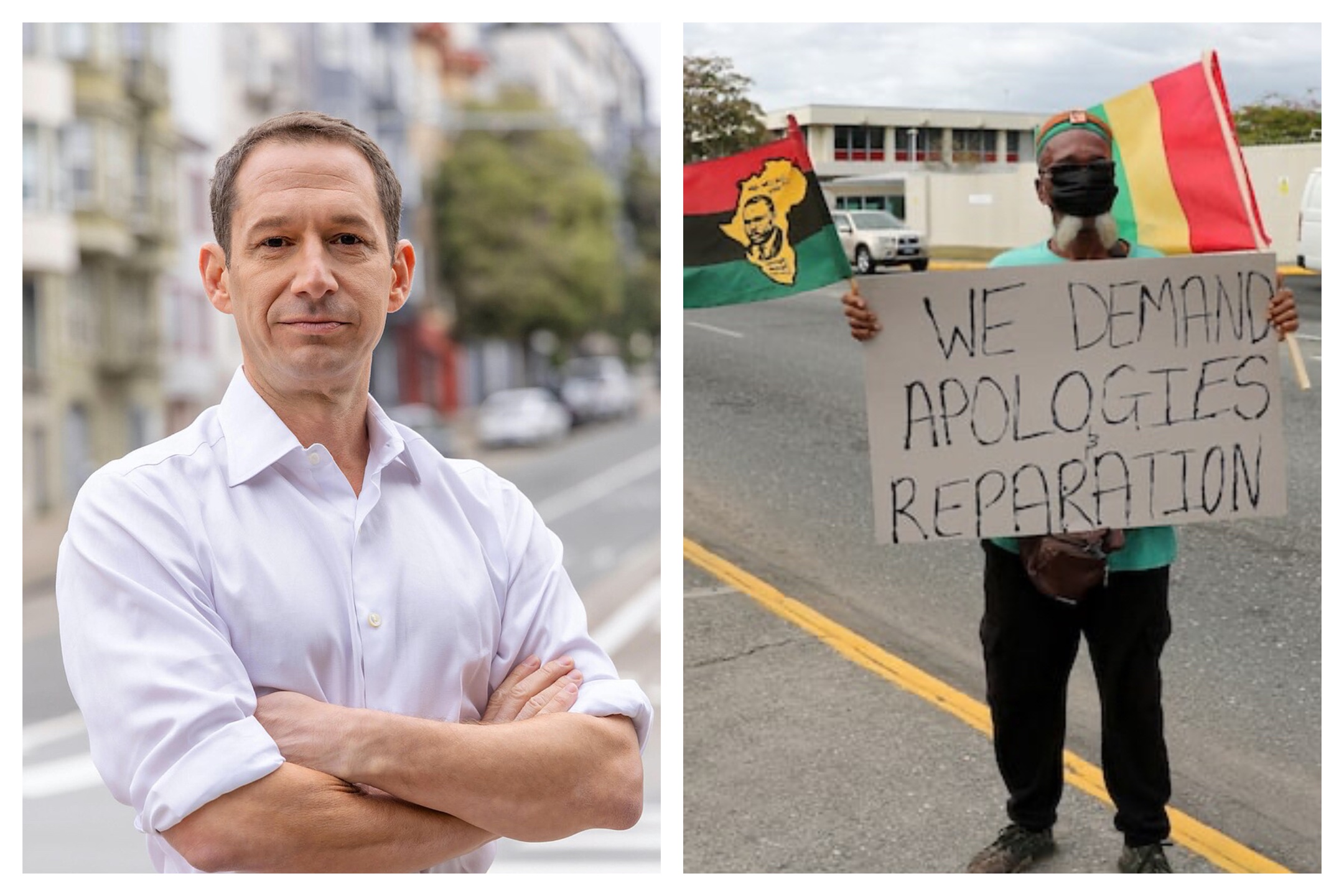
San Francisco Mayor Daniel Lurie, who was elected on a tough-on-crime, fiscally-sensible platform, recently demonstrated that he was unwilling to say no to his party on racial gobbledygook.
At the end of December, Lurie signed a bill into law that would establish a reparations fund. The Board of Supervisors had previously passed the bill unanimously. Amusingly, the fund will be based on private donations, continuing the Democratic pattern of not fully committing to the cause.
Lurie emphasized his focus on the city’s finances in signing the bill, saying, “We are not allocating money to this fund – with a historic $1 billion budget deficit, we are going to spend our money on making the city safer and cleaner.” He also likely knows that deficit or no, he would face a backlash even in San Francisco if he committed taxpayer money to the fund.
Critics speculated that Lurie purposely signed the bill during the Christmas season to avoid scrutiny. San Francisco journalist Erica Sandberg remarked, “This was not taken to community forums and groups, nothing. It was done basically in the dark of night.” Whatever the public thinks, though, the issue is clearly uncontroversial among the city’s political class. The same Board of Supervisors that unanimously passed the bill begins each session with a white-guilt mantra acknowledging that they are on Native American land. It’s no shock that they wouldn’t push back on this.
If taxpayer funds were allocated to the fund, it wouldn’t be cheap. The 2023 African American Reparations Committee in the city called for up to $5 million lump-sum payments to eligible black adults, as well as an annual guaranteed income. The proposal reads like a pipe dream, but is still theoretical for the time being.
It’s likely that it will stay theoretical. In an ideal world, though, Democrats would stop feeling the need to pander on the issue. But that’s unlikely as long as Blame Whitey is still the glue that holds their coalition together.

