As the Russo-Ukrainian grinds into its fifth year, even the leadership of the Kyiv regime is now openly acknowledging that only President Donald Trump has the authority, leverage, and credibility to finally put an end to the bloody conflict.
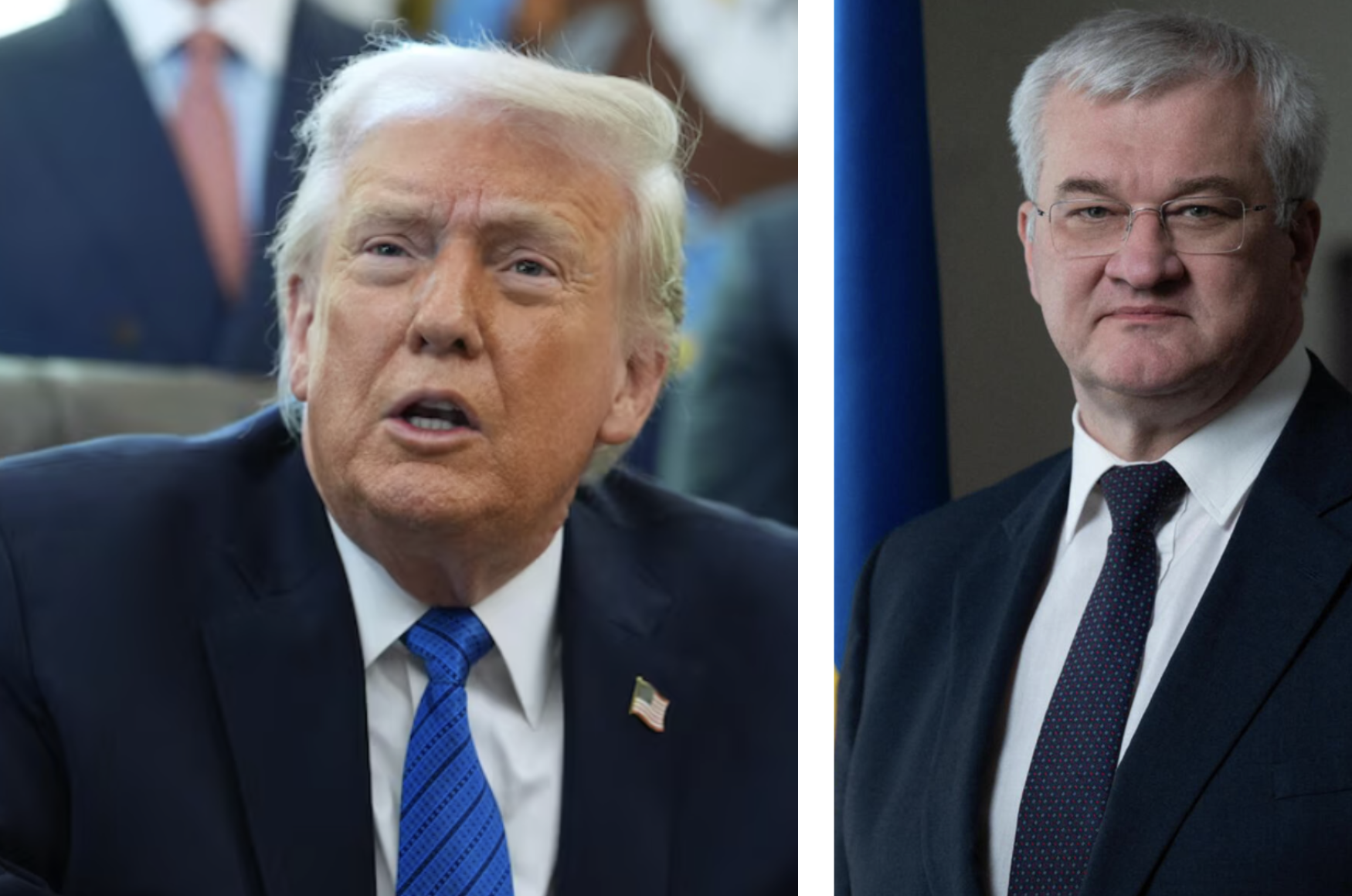
In unusually direct and honest language, Ukrainian Foreign Minister Andrii Sybiha said this week that the remaining obstacles to peace can only be resolved by a leader capable of compelling both sides to the table. That leader, he said, is Donald Trump.
“Only Trump can stop the war,” Sybiha said, highlighting how the diplomatic landscape has shifted since Trump returned to the center of global negotiations.
With its situation having become increasingly dire, Ukraine is now pushing to accelerate peace talks, hoping to capitalize on momentum generated by America-brokered negotiations before political distractions—particularly America’s midterm election cycle—begin to crowd out diplomatic focus.
At this stage, negotiators say most of the framework for peace is already in place. What remains are the hardest questions—territory, security guarantees, and post-war enforcement—issues that can only be settled at the level of heads of state.
From Kyiv’s perspective, the path forward now runs directly through a Trump-led summit between Volodymyr Zelenskyy and Vladimir Putin, something prior administrations failed to achieve despite years of escalation and spending.
Russia, for its part, continues to press maximalist demands, including control over remaining parts of eastern Donetsk and Ukraine’s Zaporizhzhia nuclear power plant, the largest in Europe. Ukraine, so far, has refused those terms.
Despite the tensions, movement in the right direction appears to be underway. A recent round of trilateral talks in Abu Dhabi produced a prisoner exchange involving more than 300 captives—the first such breakthrough since October.
Zelenskyy has confirmed that the United States has proposed another round of talks, potentially to be held in Miami, with Kyiv signaling its readiness to move quickly.
With respect to the battlefield, the strategic picture tells a different story than that told in most headlines in the mainstream press. Geopolitical and war analysts often highlight that since early 2023, Russia, at the cost of hundreds upon hundreds of thousands of soldiers, has gained barely more than one percent of Ukrainian territory—a staggering price for minimal progress.
Meanwhile, Moscow continues to rely on drone and missile strikes, including a recent barrage of more than 100 drones targeting Ukraine’s energy grid and civilian infrastructure.
Zelenskyy has condemned those attacks while simultaneously acknowledging that Trump’s deadline-driven diplomacy—reportedly aiming for a resolution before summer—has injected some urgency into long-stalled negotiations.
Behind the scenes, Ukrainian and American officials have reportedly discussed a timeline that would include a draft agreement by March, followed by a national referendum and elections in Ukraine later this year.
Central to Kyiv’s calculus are American-backed security guarantees. Sybiha—and other foreign ministers across Europe—have made clear that any peace architecture isn’t credible without American military might behind it.
It should be noted that the guarantees currently being discussed would not involve American troops on the ground, aligning with Trump’s America First doctrine of peace through strength, not endless overseas troop deployment.
Enforcement, under the framework being discussed, would rely on monitoring mechanisms, allied deterrence forces, and congressional ratification—tools Trump has repeatedly argued are more effective than American boots on the ground.