
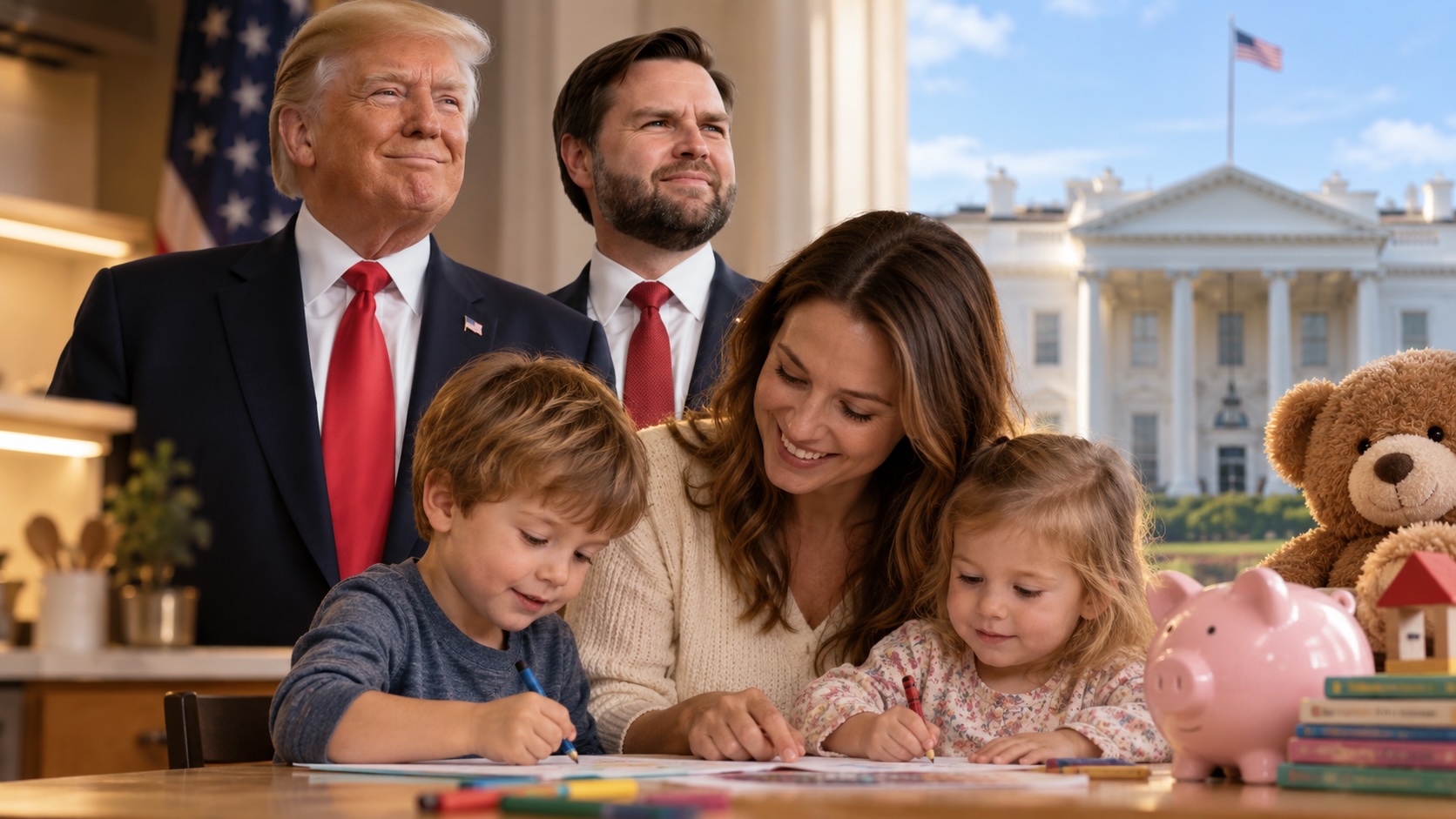
A proposed Trump administration plan would attempt to bolster the finances of families with one stay-at-home parent, by redirecting funds from the Child Care and Development Fund (CCDF.)
Under the drafted proposal, some married couples would reportedly receive around $9,000 a year per child, provided one parent works at least 35 hours a week and the other is staying home. Unmarried couples in a similar situation would not qualify for the subsidy.
Vice President JD Vance is said to be a primary booster of the plan, having pointed out previously that stay-at-home mothers are important for young children’s development. The plan directly contrasts with Democrats’ general approach to childcare costs, where they advocate for daycare funding and are wary of any policy that could be construed as against working or single moms.
Indeed, Democrats have already begun attacking the proposal on these grounds, with Representative Rosa DeLauro (D-CT) stating, “Supporting stay-at-home parents should never come at the expense of working families.” She went on to call the policy “unconscionable” partially because of its restriction to married couples. As ever, Democrats have long ceased viewing marriage as having any connection to raising children.
Interestingly, the plan also provoked backlash from select conservatives who spuriously compared it to socialism. Angela Morabito, who was the Department of Education’s press secretary during the first Trump administration, was particularly dismissive, saying, “Taxing working moms to fund someone’s stay-at-home lifestyle is a gut punch.”
Recent political discourse has widely discussed the increased difficulties of achieving a comfortable middle-class life, the decrease in marriage rates, and strained relations between men and women. While these are broader problems that no single policy will magically fix, the government can certainly provide incentives that make raising a family slightly less financially stressful. Conservatives have long recognized that gender roles matter, and have spoken of the importance of marriage to family stability. The fact that the Trump administration is actively exploring policies in sync with these views, rather than simply debating them, is a positive development.