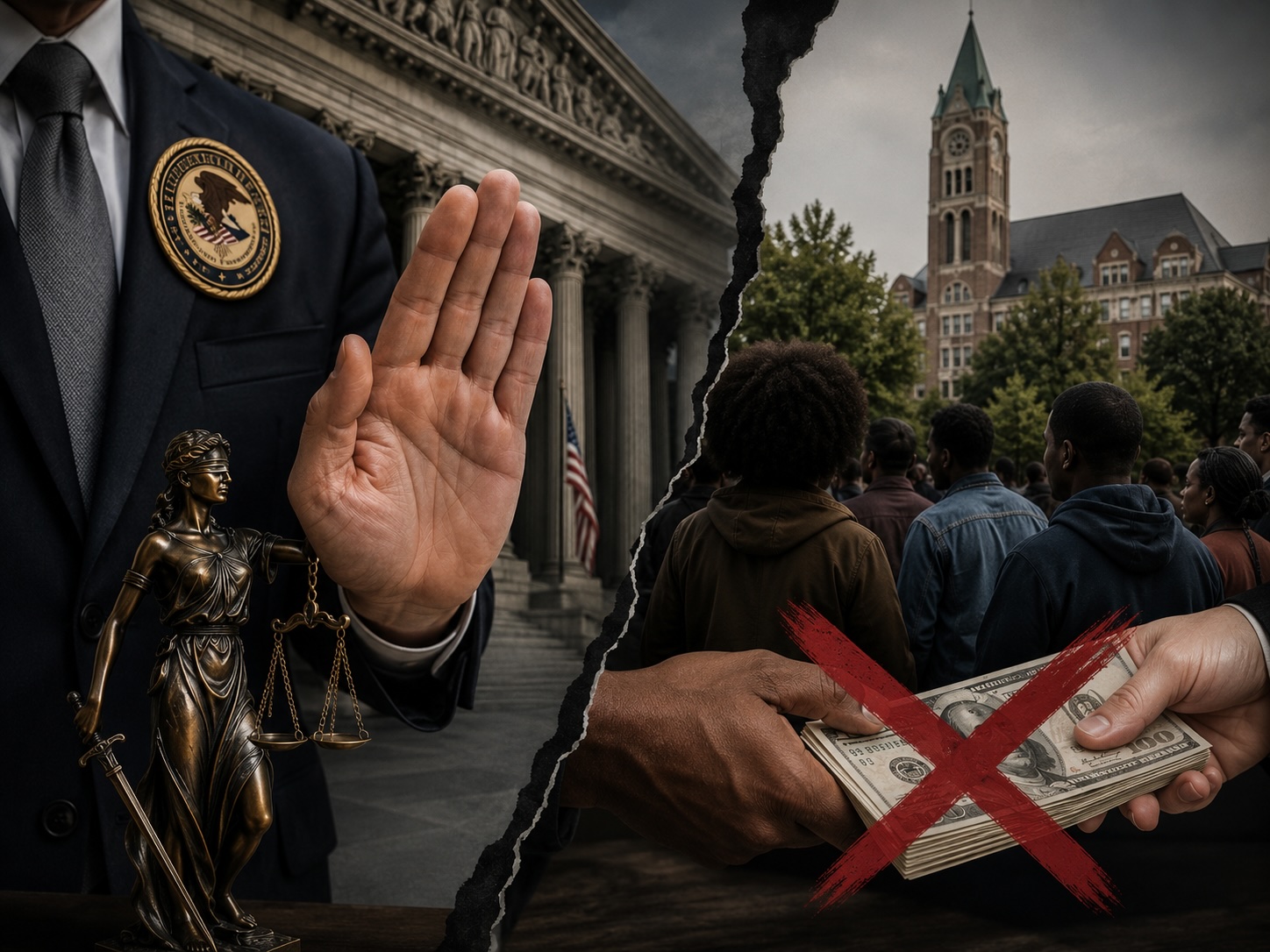
Evanston, a Chicago suburb, became the first U.S. municipality to enact a formal local reparations program in 2019–2021. It used revenue from cannabis sales taxes. Officials initially set aside $10 million for this purpose. The funds provided housing-related assistance, primarily $25,000 cash grants or homeownership and down payment aid. These benefits went to Black residents and their direct descendants who lived in Evanston or were impacted by discriminatory housing policies and practices between 1919 and 1969.
The program has faced a legal challenge in the federal lawsuit Flinn et al. v. City of Evanston(Case No. 1:24-cv-04269, U.S. District Court for the Northern District of Illinois), filed on May 23, 2024. Plaintiffs allege that the race-based eligibility criteria violate the Equal Protection Clause of the 14th Amendment. They claim their parents or grandparents lived in Evanston during the same 50-year time period and would qualify for the grants if they were Black. Instead, they are being excluded solely on the basis of race.
Many contend that applicants are not required to prove they or their ancestors personally suffered discrimination by Evanston officials. Race alone serves as the proxy.
According to the Department of Justice press release:
“Under the pretext of paying reparations for events more than 100 years ago, the City of Evanston has chosen to distribute millions of dollars in cash and housing benefits to people because of the color of their skin or the color of the skin of their parents, grandparents, or great grandparents,” said Assistant Attorney General Harmeet K. Dhillon of the Justice Department’s Civil Rights Division.
“There are sound ways for a city to remedy past discrimination or direct resources to its most vulnerable citizens and neighborhoods. Simply handing out money based on race, however, is not the answer. It is race discrimination, pure and simple. And it is illegal.”
The Department of Justice (DOJ) under the Trump administration intervened in the lawsuit on June 16, 2026, asking the court to halt the race-based program for violating the Equal Protection Clause and the Fair Housing Act. It is seeking to stop what has been described as the nation’s first government-backed initiative providing cash and housing benefits specifically to Black residents.
Eligible recipients are Black adults who lived in Evanston during the 1919–1969 period or their direct descendants, including children, grandchildren, and great-grandchildren. They can receive $25,000 for home repairs, down payments, mortgage relief, or as unrestricted cash payments (since the 2023 amendment). The municipality has already distributed millions, with over $7 million paid out to hundreds of recipients, according to multiple reports (ABC7 Chicago).
Funding for the program comes primarily from a dedicated 3% local tax on recreational cannabis sales. However, cannabis revenue has significantly underperformed expectations, generating far less than the projected $1 million annually, so additional support has come from real estate transfer taxes. In fact, the city committed another $10 million from the real estate transfer tax to ensure the program could continue making payments.
The program gained national attention as a potential model for local reparations efforts, emerging after George Floyd’s murder in 2020.
Alderman Robin Rue Simmons, who helped lead the initiative, argues it directly confronts Evanston’s specific history of discriminatory housing policies that created lasting disparities in homeownership and intergenerational wealth for the area’s roughly 14% Black population.
In May 2024, Judicial Watch filed a class-action lawsuit on behalf of non-Black residents (or their descendants) who lived in Evanston during the covered period. The suit claims the race-based eligibility criteria violates the Equal Protection Clause. A federal judge allowed the case to proceed in March 2026, rejecting the city’s motion to dismiss.
On June 16, 2026, the DOJ’s Civil Rights Division, under Assistant Attorney General Harmeet Dhillon, filed to intervene as a plaintiff, arguing the program constitutes unconstitutional racial discrimination by distributing public benefits based on race and ancestry without sufficiently narrow tailoring to specific past harms by the city.
“The Supreme Court has repeatedly affirmed that government actions classifying citizens by race are presumptively unconstitutional,” said U.S. Attorney Andrew S. Boutros. “The Constitution demands that the government treat citizens as individuals, not as members of a racial class. Distributing public funds based on an individual’s ancestry or race divides the citizenry and establishes the very hierarchy the Equal Protection Clause was designed to dismantle.”
Evanston officials maintain the program’s legality, asserting it is grounded in documented local history of housing discrimination and its effects. The municipality has declined further public comment citing ongoing litigation but previously defended the initiative as a necessary step toward racial equity.
Supporters like Rue Simmons have called the federal action and lawsuit a “fear tactic” intended to deter similar programs elsewhere.
The case reveals broader national tensions over law, discrimination and race-based policies. It follows Supreme Court rulings that limited affirmative action and required strict scrutiny for racial classifications.
The United States alleges that Evanston’s reparations-linked housing program violates the Equal Protection Clause of the Fourteenth Amendment by distributing benefits based on race. It further claims violations of the Fair Housing Act by offering financial assistance explicitly because of an applicant’s race.
As of mid-2026, Evanston continues to distribute payments, with another round of 44 payments planned for summer 2026. Over $7 million has already been paid out to hundreds of recipients, with more planned as revenue comes in.