A federal appeals court decided to accelerate the legal timeline for business organizations contesting a substantial increase in fees for specialty occupation worker visas. The D.C. Circuit granted the motion on January 5.
The legal dispute centers on a Trump administration policy that raised costs for H-1B visas to $100,000 per application. A Washington-based federal judge previously upheld the fee increase in a December 23 ruling that sided with the administration.
U.S. District Judge Beryl Howell declined to block the policy change and granted summary judgment favoring the government's position. Business groups responded by filing an appeal six days later on December 29.
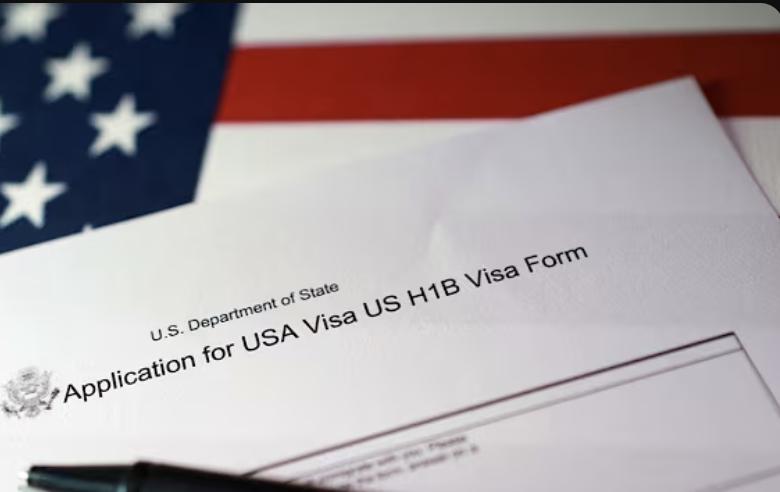
The H-1B program permits American companies to recruit foreign professionals for positions requiring specialized expertise and advanced education. According to federal guidelines, qualifying roles demand both theoretical knowledge and practical application of highly specialized fields, with a bachelor's degree or equivalent serving as the minimum educational requirement.
Fields covered under the program span engineering, mathematics, architecture, medicine and health, education, law, and accounting. Prior to the administration's policy shift, employers paid between $2,000 and $5,000 depending on company size.
The Chamber of Commerce led the legal challenge alongside the Association of American Universities. The business federation represents approximately 300,000 direct members, while the university association speaks for 69 American research institutions.
In their motion requesting accelerated consideration, the plaintiffs argued that swift judicial review was essential to protect employer interests before the annual visa lottery commences in March. The Trump administration offered no objection to the compressed schedule.
The appeals court established a timeline allowing oral arguments to proceed in February. Plaintiffs must submit their initial legal briefs by January 9.
President Donald Trump implemented the new fee structure through Proclamation 10973 on September 19. The order mandates payment of the $100,000 charge before officials will process employer petitions for new H-1B visas.
The presidential proclamation justified the policy shift by citing workforce displacement concerns. "The large-scale replacement of American workers through systemic abuse of the program has undermined both our economic and national security," the proclamation states.
The document elaborated on alleged industry practices affecting wage levels. "Some employers, using practices now widely adopted by entire sectors, have abused the H-1B statute and its regulations to artificially suppress wages, resulting in a disadvantageous labor market for American citizens, while at the same time making it more difficult to attract and retain the highest skilled subset of temporary workers, with the largest impact seen in critical science, technology, engineering, and math (STEM) fields."
Federal law caps annual H-1B visa issuance at 65,000, with an additional 20,000 slots reserved for individuals holding advanced American degrees.
20 states have joined California in mounting a separate legal challenge to the elevated visa fee. New York, New Jersey, and Illinois number among the states participating in the lawsuit.
California Attorney General Rob Bonta characterized the policy as creating improper financial obstacles in a December 12 statement. He argued the $100,000 visa fee "creates unnecessary—and illegal—financial burdens on California public employers and other providers of vital services, exacerbating labor shortages in key sectors."
The Department of Homeland Security unveiled additional modifications to the H-1B visa system in recent weeks. Beginning February 27, 2026, officials will implement a weighted selection approach designed to reform the existing random lottery mechanism.
The new system aims to favor applicants with higher skill levels and salary offerings. U.S. Citizenship and Immigration Services explained the rationale in a December 23 statement, noting that the current random selection process allowed U.S. employers to exploit the system by "flooding the selection pool with lower-skilled foreign workers paid at low wages, to the detriment of the American workforce."
The accelerated legal timeline ensures a court decision will arrive before employers must navigate the March lottery under the new fee structure.
This is a good first step in challenging the excesses of the H-1b system, but ultimately it must be abolished if we want to protect America’s rising elites and prevent the establishment of a foreign overclass.