America’s student loan crisis has crossed from a slow-burning problem into a full-blown national emergency—and it is the direct result of decades of globalist economics, credential worship, and elite indifference to productive American labor.
Following the federal “grace period’s” expiration in mid-2025, the facade collapsed. What followed was an overdue reckoning.
As of now, a total of 3.62 million borrowers are severely delinquent, meaning more than 270 days behind on payments. That figure is eight times higher than the pre-2020 norm, an unmistakable sign that the system was never healed—only artificially suspended. When the bill finally came due, millions of Americans left with thousands of dollars—sometimes tens of thousands dollars—of student loan debt were unprepared and unprotected.
The spike began the moment missed payments once again appeared on credit reports in June 2025. For years, Washington D.C. used pauses, waivers, and accounting gimmicks to claim success. The policies, however, didn’t solve the problem. They merely buried it.
Even more alarming, 14.3% of student loans are now entering serious delinquency, exceeding levels seen during the 2008 financial crisis. This points to the unsettling reality of a structural failure. America’s bloated student loan system appears to be breaking under its own weight.
The scale of the debt explains why. Total student loan obligations now exceed $1.8 trillion, with federal loans making up more than 90% of the total. Nearly 43 million Americans are trapped in this system, carrying an average balance approaching $40,000.
Unfortunately, this didn’t happen overnight or by accident. The federal government has subsidized universities, guaranteed loans regardless of outcomes, and pushed an ideology that equated degrees with dignity. Meanwhile, as a direct result, tuition skyrocketed, credentials were steadily devalued, and working Americans were encouraged to take on ever-greater debt for increasingly marginal credentials—or risk being left behind.
Advocacy groups who track student loan defaults claim that a borrower has defaulted every nine seconds since early 2025, totaling more than $92 billion in new defaults by year’s end. Whether framed dramatically or conservatively, the trend is undeniable. Nearly nine million Americans are now officially in default.
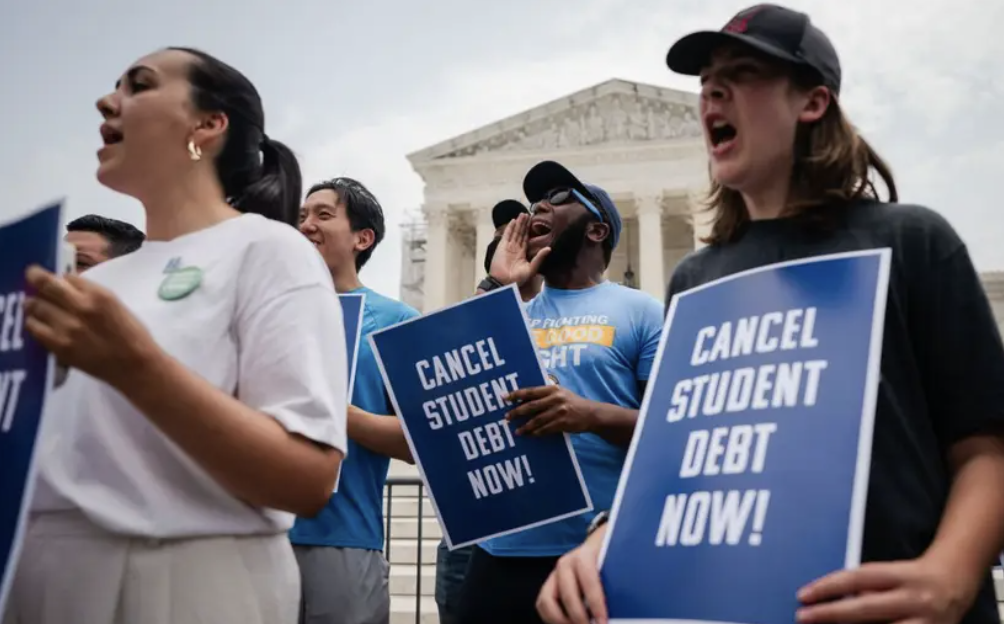
Predictably, progressive activists are blaming enforcement rather than the system itself. With the Trump administration having restarted Administrative Wage Garnishment, the same groups that demanded endless borrowing now demand endless forgiveness.
Here’s the America First reality: a nation cannot forgive its way out of a broken economic model. Pausing payments didn’t fix anything. It simply delayed accountability while inflation rose, wages stagnated, and universities—with their bloated administrations—continued cashing checks and getting rich.
The deeper problem is that student loans became a substitute for real national development. Instead of investing in American industry, trades, and manufacturing, the country financed degrees disconnected from labor demand. Young Americans were saddled with debt while factories were outsourced and borders left open.
President Donald Trump offered a different path. His focus on rebuilding domestic manufacturing, especially steel, represents a kind of economic realism we haven’t seen for many years. High-wage industrial jobs create stability, dignity, and upward mobility without trapping workers in lifelong debt.
This vision directly threatens the credential class and the globalist education cartel. Universities profit from federal loans. Bureaucracies grow from complexity. Activist groups thrive on crisis. None benefit from structural reform.
Meanwhile, millions of Americans are waking up to the truth. A degree no longer guarantees security, but the debt is very real. The promise that “it will work out” has proven hollow.
The student loan explosion is inseparable from mass immigration and globalization. Flooding the labor market while deindustrializing the country suppresses wages and magnifies debt burdens. You cannot import millions of low-wage workers and expect college debt to remain manageable.
An America First economy prioritizes production over paper credentials. It rewards work that builds, repairs, and sustains the nation. And it demands accountability when taxpayer-backed systems fail.
The choice now is unavoidable. Either the country reforms higher education, restores domestic industry, and ends the debt-credential pipeline—or it continues down a path of endless defaults and political panic. Delay is no longer an option.
This crisis was not caused by borrowers. It was engineered by elites who treated education as a financial product rather than a public good tied to national strength. Now the system is cracking, and the consequences are unavoidable.